




Do trekking poles improve walking posture and prevent back pain?
Yes – trekking poles can improve walking posture and help prevent back pain, but the benefit is entirely technique‑dependent. Used correctly, they encourage an upright stance, reduce the forward lean that often causes lower back strain, and transfer load from your spine to your arms and shoulders. However, using poles with poor technique—incorrect length, overreaching, or ignoring the wrist straps—can actually worsen posture by promoting a hunched, unnatural gait. This article explains the biomechanics of how poles affect posture, the research on back pain, and how to use them correctly for maximum benefit.
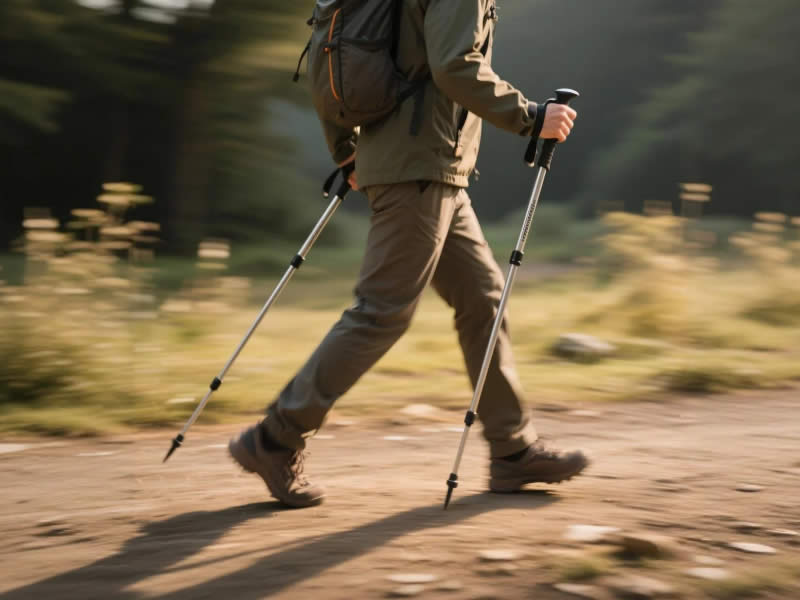
1. How walking without poles affects posture
When you walk without poles, your arms swing naturally, but your body tends to lean forward, especially when walking uphill or carrying a pack. This forward lean places strain on your lumbar spine, engaging the back muscles to keep you upright. Over long distances, this strain can lead to lower back pain, particularly if you have weak core muscles or carry a heavy load.
2. How trekking poles improve posture
a. Upright stance – When you plant a pole and push down, your arms and shoulders engage, which encourages you to lift your chest and straighten your back. This reduces the forward lean that causes lower back pain.
b. Load transfer – By transferring some of your body weight (and pack weight) through the poles to your arms and shoulders, you reduce the compressive load on your spine. This can relieve pressure on the lumbar discs.
c. Engagement of core muscles – The alternating rhythm of pole planting (left pole with right foot) engages your core stabilisers, which support your spine and improve overall posture.
d. Reduced slouching – The poles act as a physical reminder to keep your chest open and your shoulders back, counteracting the slouching tendency that develops on long, tired walks.
3. The research – what studies show
A 2018 study in the Journal of Applied Biomechanics found that using trekking poles reduced lower back muscle activity by 10–15% on descents. A separate study on backpackers found that pole users had significantly less lower back pain at the end of a multi‑day trek compared to non‑users. However, the benefits were most pronounced in walkers who used the poles with correct technique—particularly those who engaged their core and maintained a relaxed, upright posture.
4. The technique factor – why some walkers get no benefit
Poles are not a magic solution. If used incorrectly, they can actually worsen posture:
- Poles too long – Forces you to reach forward, rounding your shoulders and arching your back, increasing lower back strain.
- Poles too short – Causes you to hunch forward, again straining the lower back.
- Overreaching – Planting the pole too far ahead pulls you forward, disrupting your natural posture.
- Ignoring the straps – If you are not using the wrist straps, you are missing the load‑transfer benefit, and your grip fatigue may cause you to slouch.
- No core engagement – The poles should be used in conjunction with your core muscles, not as a crutch.
5. How to use poles for posture improvement
a. Set the correct length – On flat ground, your elbows should be at 90° when the tip is on the ground. On ascents, shorten by 5–10 cm; on descents, lengthen by 5–10 cm.
b. Use the wrist straps – The strap should sit across the base of your palm. Push down through the strap, not your grip. This transfers load to your arms and shoulders, reducing the strain on your lower back.
c. Maintain an upright chest – Focus on keeping your chest lifted and your shoulders back. The poles should support this posture, not replace it.
d. Engage your core – Gently tighten your abdominal muscles as you walk. This stabilises your spine and reduces the risk of back pain.
e. Relax your grip – A tense grip transfers tension up your arm and into your shoulders and neck. Keep your grip relaxed.
6. When poles may not help back pain
- If you have existing back pain from a specific injury – The poles may not address the underlying issue. Consult a physiotherapist.
- If you have a heavy pack and poor core strength – Poles will help, but you may also need to lighten your load or strengthen your core.
- If you are not using the straps – Without strap use, the poles are just arm crutches, not load‑sharing tools.
7. Additional tips for preventing back pain on long walks
- Strengthen your core – Regular core exercises (e.g., planks, bird‑dogs) help support your lower back.
- Keep your pack light – Every kilogram you carry increases the load on your spine.
- Take breaks – Rest your back and stretch your hamstrings and lower back.
- Stretch after the walk – Gentle stretching can reduce muscle tension.
8. Final verdict
Trekking poles can improve walking posture and help prevent back pain, but the benefit depends on correct technique. Used with the right length, proper wrist straps, and a relaxed, upright stance, they encourage a better posture, reduce load on the spine, and engage core stabilisers. Without good technique, they may provide little benefit or even worsen posture. For regular walkers, poles are a valuable tool—but they are only as good as the technique behind them. Practice correct use, and your back will thank you.




