




How to use trekking poles for trail running on the South Downs Way?
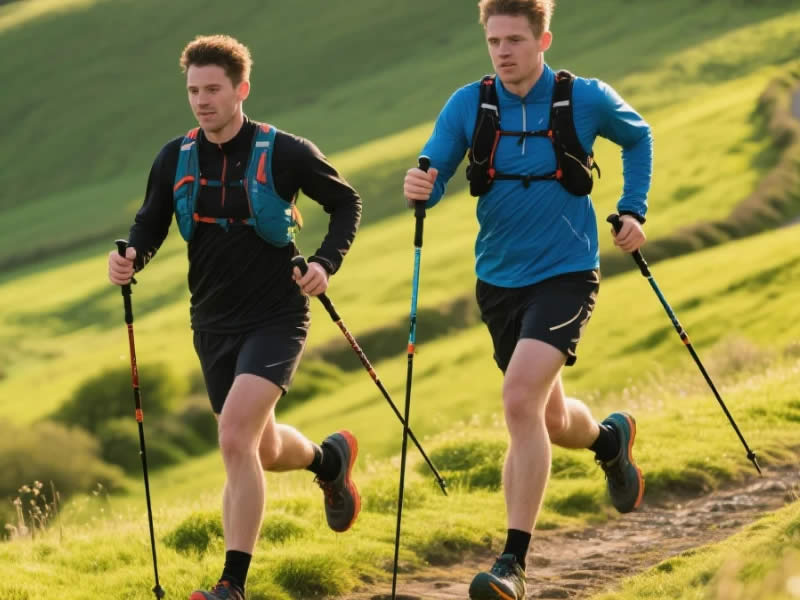
Trail running the South Downs Way – a 100‑mile (160 km) route along the rolling chalk hills of southern England – demands a specific set of skills. The terrain is a mix of steep, short climbs, fast descents, and long, undulating ridges. Many runners use ultralight folding poles (e.g., Black Diamond Distance Z, Leki Micro Vario) to give their legs a break on the climbs while keeping their hands free for the flats and downhills. The key is to use a short, rapid arm swing—plant the pole with a light touch, matching your running cadence in an alternating rhythm: left pole with right foot, right pole with left foot. On descents, lengthen poles by 2–3 cm for braking. Stow them on the flats to run freely. Frequent transitions are the hallmark of South Downs running, so practice quick deployment and stowage before race day. This article provides a comprehensive guide to using poles effectively on the South Downs Way, from choosing the right equipment to mastering the rhythm and transitions.
1. Why trail running poles are different from walking poles
Trail running poles are designed for speed and efficiency. They are:
- Lighter – Typically under 250 g per pole (carbon fibre or thin‑wall aluminium).
- Shorter – Often used at a shorter length than walking poles to allow a rapid, short swing.
- Folding – Collapse to 35–40 cm for easy stowage in a running vest or pack.
- Quick‑deploy – Push‑button or lever‑lock systems that extend in seconds.
They are not meant for heavy planting. On the South Downs' firm chalk, a light touch is enough to transfer energy without slowing your rhythm.
2. Setting the correct length
For trail running, poles should be shorter than your walking length. On flat ground, your elbows should be at about a 90° angle when the tip is on the ground. This is typically 5–10 cm shorter than your walking pole setting.
- On ascents – Shorten by a further 2–3 cm (if your poles are adjustable).
- On descents – Lengthen by 2–3 cm to use them for braking.
- For fixed‑length poles – Choose a length that works for the majority of the terrain (e.g., 120 cm for a runner of average height).
3. Rhythm and planting technique
- Alternating stride – Left pole with right foot, right pole with left foot. This is the same as walking, but faster.
- Light touch – On chalk downland, the ground is firm. A light plant is enough to get the benefit. Over‑planting slows you down.
- Short, rapid arm swing – Your arm should move with a short, quick motion, not a long, sweeping arc. This matches the high cadence of running.
- Plant near your body – Do not reach far ahead. Plant the pole level with your heel or slightly ahead, then push back gently.
4. Using poles on the South Downs' specific terrain
- Steep climbs – On short, sharp climbs (e.g., up to the ridge at Devil's Dyke), use the poles to push up the slope. Shorten your stride, shorten your poles, and push down through the straps.
- Rolling descents – On the fast, grassy descents, lengthen poles slightly and use them for braking. This protects your quads and reduces fatigue on the long downhills.
- Flat ridges – On the long, flat sections (e.g., along the top of the Seven Sisters), stow the poles in your running vest. Running with poles on flat terrain is inefficient and can disrupt your rhythm.
- Technical sections – On chalky, flinty sections, the poles give you extra stability. Plant on firm ground, avoiding loose flints.
5. Stowing and deploying poles
The rolling terrain of the South Downs means you will transition between using and stowing poles frequently. A good running vest with front‑mounted pole holders (e.g., Salomon, Osprey, or Ultimate Direction) allows you to stow folded poles quickly without stopping.
- Stow – Fold the poles, slide them into the front or side holders, and secure with the elastic cord.
- Deploy – Pull out the poles, unfold them, and lock them in place.
- Practice – This process should take 5–10 seconds. Practice it on a gentle trail before race day.
6. Choosing the right poles for the South Downs
- Black Diamond Distance Z – Lightweight folding poles with push‑button locks. Quick deployment and stowage.
- Leki Micro Vario – Folding poles with SpeedLock Plus lever locks. More reliable on gritty chalk but slower to deploy.
- Decathlon Forclaz MT900 Folding – Budget‑friendly folding poles with lever locks. Heavier than premium options but good value.
7. Nutrition and hydration with poles
Carrying poles can make it harder to eat and drink while running. Practice taking a gel or grabbing a water bottle while holding a pole. Some runners use a pole‑mounted bottle holder or carry a hydration pack.
8. Training with poles
Before the South Downs, practise with poles on similar terrain – rolling hills with firm surfaces. Focus on rhythm, transitions, and the light touch. Run short sections with the poles, then without, to get used to the feeling.
9. Final verdict
Trail running on the South Downs Way with poles is a balance between efficiency and rhythm. Use ultralight folding poles, set them short, and use a light, rapid arm swing. Alternate your planting, and stow the poles on the flats. The terrain demands frequent transitions, so invest in a good running vest with pole holders and practice your deployment. With the right technique, poles will save your legs on the climbs and protect your knees on the descents, helping you enjoy this iconic trail.




