




Can I use trekking poles as a makeshift clothesline at camp?
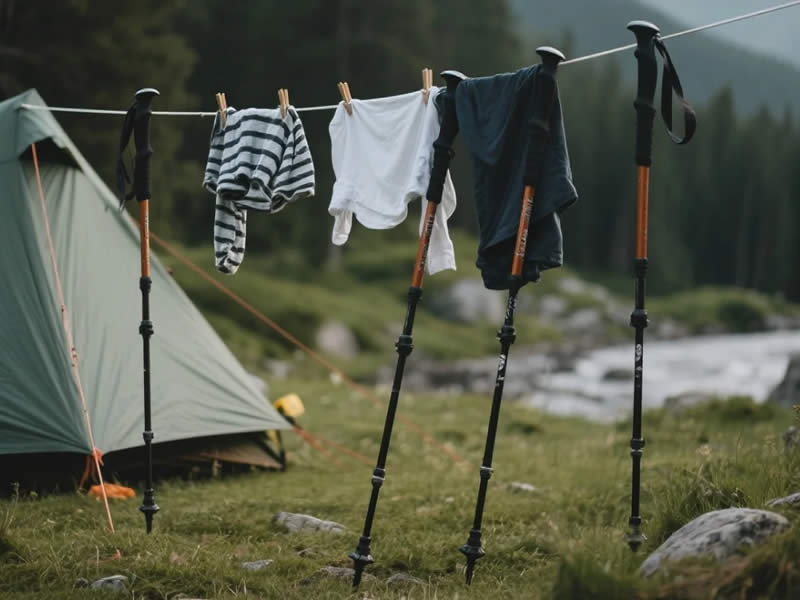
Yes – trekking poles can be used as a makeshift clothesline at camp. Extend both poles to maximum height and plant them firmly into the ground a few metres apart. String a length of paracord or guy line between the grips or tips (use a clove hitch or taut‑line hitch). Hang wet socks, base layers, or a towel on the line. To protect your poles, pad the contact points with a cloth or tape – the line can abrade the shaft coating. Avoid overloading or using on very windy, exposed sites where the poles could be pulled over. It works best on flat, soft ground where tips sink securely. Always collapse poles before packing them away – don't leave them extended in high wind.
1. Why use trekking poles as a clothesline?
In a wild camping scenario, drying wet clothing is a common challenge. Wet socks, base layers, or a damp towel can make the next day's walk uncomfortable. A dedicated clothesline adds weight and bulk to your pack. Using your trekking poles – which you are already carrying – as support for a line is a simple, effective, and weight‑saving solution.
2. Setting up the poles
- Choose the site – Find a flat, open area with soft ground (grass, moss, or soft soil) where the pole tips can sink securely. Avoid rocky or hard‑packed ground where the tips may slide.
- Extend the poles – Set both poles to their maximum length. This gives you the highest line and keeps your clothes off the ground.
- Plant the poles – Push the carbide tips firmly into the ground, ensuring they are vertical and stable. On soft ground, they will sink a few centimetres for extra security.
- Space the poles – Place them about 2–3 metres apart, depending on the length of your cord and the amount of clothing you need to hang.
3. Attaching the line
- Use paracord or guy line – A length of 2–3 mm cord is ideal. It is lightweight, strong, and takes little space in your repair kit.
- Secure the line – Tie the cord to the grip or just below the grip (around the shaft) using a secure knot. The clove hitch or taut‑line hitch is ideal for this, as it allows you to tension the line.
- Tension the line – Pull the cord tight between the poles, and tie it off securely. The taut‑line hitch lets you adjust tension easily.
4. Hanging clothes
- Place heavier items – Hang heavier items (wet trousers, towels) in the middle of the line, where the sag is greatest, to keep the line balanced.
- Distribute weight evenly – Evenly space items to prevent the line from pulling the poles over.
- Use a clothespin alternative – If you don't have pegs, you can tuck socks and small items through the line or use a loop of cord to hold them.
5. Protecting your poles
- Pad the contact points – The cord can abrade the shaft coating, especially in windy conditions. Place a small piece of cloth, tape, or a rubber band around the shaft where the cord touches.
- Avoid over‑tightening – A very tight line can put excessive lateral force on the poles, potentially bending or stressing them. Keep the line taut but not guitar‑string tight.
- Use the wrist straps – You can loop the line through the wrist straps rather than around the shaft, which reduces abrasion.
6. Avoiding common pitfalls
- Don't overload – A line full of heavy wet clothing can topple the poles, especially if the ground is soft or the wind picks up. Keep the load light – enough for a few socks and a t‑shirt.
- Avoid high wind – In windy conditions, the line acts like a sail. The lateral force can pull the poles over or even bend them. If it is windy, find a sheltered spot or consider an alternative drying method.
- Don't leave extended overnight – If you are not using the line, collapse the poles. Extended poles left in the ground can be knocked over by wildlife or wind, damaging the poles.
- Check the tips – After use, inspect the carbide tips for any damage from the ground or from the cord.
7. Alternatives
- Natural supports – If there are trees or bushes at your campsite, you may not need poles. Tie the line between two trees for a more stable clothesline.
- A single pole and a tree – If you only have one pole, you can tie one end of the line to a tree or rock and the other to the pole.
- A dedicated line – For very wet conditions, a dedicated lightweight clothesline (e.g., a length of bungee cord with hooks) adds only a few grams and can be tied to any available support.
8. Final verdict
Yes – trekking poles make an effective, lightweight clothesline support at camp. They are versatile and save you carrying an extra piece of gear. To use them safely, choose a sheltered, soft‑ground site, pad the contact points to protect the shaft, and keep the load light. In calm conditions with minimal wet gear, they are a practical solution. In high wind or with heavy loads, consider an alternative. With a little care, your poles will keep your gear dry and your pack light.




