




How to use trekking poles to clear spiderwebs or ferns on narrow paths?
On narrow, overgrown paths, use your trekking pole as an extension of your arm – hold it horizontally in front of you, swinging it in a gentle figure‑eight motion as you walk. This clears spiderwebs and pushes aside ferns without damaging the plants or snapping your pole. For tall ferns, raise the pole vertically and sweep it side to side. Keep your grip loose and use the shaft, not the tip, to avoid snagging. On very overgrown sections, shorten your poles for better control. Always check for wildlife before sweeping – you may disturb nesting birds or resting snakes.
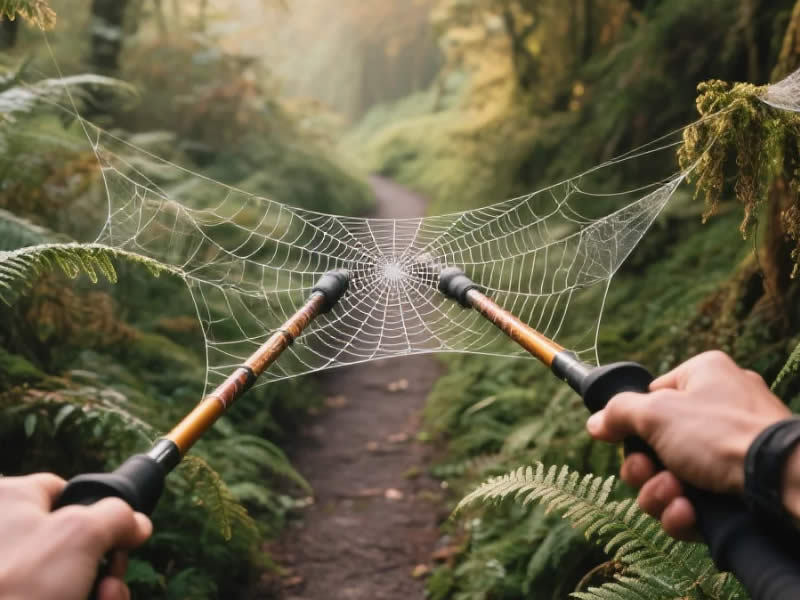
This simple skill is essential on many UK trails, especially in summer when vegetation is at its peak and spiderwebs are strung across the path. Here is a comprehensive guide to using trekking poles as a clearance tool, including techniques, safety considerations, and equipment tips.
1. Why use trekking poles for clearing?
Trekking poles are already in your hands, so they are the most convenient tool for clearing light vegetation and spiderwebs. Using your pole saves you from having to stop, reach for a separate tool, or use your hands (which may be carrying a map, camera, or water bottle). It also keeps you moving, maintaining your rhythm and pace.
2. The figure‑eight technique
The most effective method for clearing spiderwebs is the horizontal figure‑eight:
- Hold the pole horizontally in front of you, with your hand near the centre of the shaft (just below the grip). This gives you balance and control.
- Swing the pole in a gentle figure‑eight motion, moving it from side to side in front of your face and torso. The figure‑eight motion clears a wider area than a simple sweep.
- Keep the motion smooth – do not jab or stab; a gentle sweep is enough to break the web's anchor points.
- Adjust the height – for different heights of web, vary the height of your swing. Keep the motion continuous as you walk.
3. Clearing ferns and tall vegetation
For ferns and tall grasses that overhang the path:
- Hold the pole vertically – raise the pole so it is vertical, with the tip pointing upward.
- Sweep side to side – use the upper shaft to push the ferns aside. This is more effective than a horizontal sweep, which can get caught in the vegetation.
- Use a gentle push – do not slash or hack; simply push the ferns out of the way. This reduces the risk of breaking the pole or damaging the plants.
- For very tall vegetation – you may need to raise the pole above your head and sweep in a wide arc.
4. The tip vs. the shaft
- Use the shaft – For clearing webs and light vegetation, use the shaft, not the tip. The tip can snag on branches or catch in the web, making it harder to clear.
- Avoid the carbide tip – The carbide tip is sharp and can damage plants or get caught in clothing. It also abrades the shaft coating over time if used for clearing.
- Protect the tip – If you are using the tip to clear vegetation (e.g., pushing aside a thick fern), ensure the tip is not damaged. Use rubber tip protectors when not in use.
5. Shortening poles for overgrown sections
On very overgrown paths where you need to clear vegetation constantly, shorten your poles by 5–10 cm. A shorter pole gives you better control and reduces the risk of the tip catching on the ground. You can lengthen them again when the path opens up.
6. Safety considerations
- Watch for wildlife – Before sweeping, check for nests, resting snakes, or other wildlife. A sudden sweep could disturb or harm an animal.
- Watch your companions – Be aware of walkers behind you. A sudden backward sweep could catch someone off guard.
- Watch the terrain – Do not let your clearing motion distract you from the path ahead. Maintain awareness of the ground underfoot.
- Avoid overgrown brambles – Thick brambles or thorny vegetation can snag your pole. It may be better to use your hands or a separate tool for heavy clearance.
7. When to use the pole as a pair of "scissors"
On narrow, overgrown paths where the vegetation is dense on both sides, you can use two poles to create a "scissor" effect:
- Hold one pole in each hand – hold them like a pair of scissors, with the tips pointing forward.
- Open and close – as you walk, open the poles wide to push the vegetation on both sides, then close them as you pass through. This creates a clear passage without excessive arm movement.
8. After clearing – checking your pole
After using your pole to clear vegetation, check the shaft and tip:
- Remove any plant sap – Sap can attract dirt and affect grip. Wipe with a damp cloth.
- Check for scratches – If you have been clearing rough vegetation, inspect the shaft for scratches. Deep scratches can weaken carbon poles.
- Check the tip – Ensure the carbide tip is still in good condition. If it has been used to push against hard vegetation or ground, it may need sharpening or replacement.
9. Equipment considerations
- Aluminium vs. carbon – Aluminium is less likely to be damaged by the occasional knock against a branch. Carbon is more vulnerable.
- Lever locks – Lever locks are easier to adjust on the go, particularly when shortening poles for overgrown sections.
- Grip material – Cork is less slippery in sweaty conditions, which is useful when you are using one hand to clear vegetation.
10. Final verdict
Using your trekking poles to clear spiderwebs and ferns on narrow paths is a simple, practical skill that keeps you moving and protects your hands from sap, thorns, and sticky webs. Use the shaft, not the tip, in a figure‑eight motion for webs; use a vertical sweep for tall ferns. Shorten your poles for better control on overgrown sections, and always be aware of wildlife and companions. With a little practice, this technique becomes second nature, making narrow, overgrown paths less of a chore and more of a seamless part of your walk. A small adjustment, but one that can make a big difference to your comfort and rhythm on the trail.




