




Do trekking poles help reduce upper arm fatigue on long walks?
Yes – trekking poles can reduce upper arm fatigue on long walks, but only when used correctly. They transfer load to your entire upper body, not just your arms, engaging your shoulders, back, and core. The wrist straps distribute the effort across a wider muscle group, reducing the strain on your biceps and forearms. However, without proper technique – relaxed grip, correct strap adjustment, and a steady rhythm – you may overuse your arms, leading to fatigue. The goal is to let the straps do the work; your arms should feel like they are "pushing" rather than "lifting." For best results, alternate grip positions occasionally and keep your shoulders relaxed. This article explains the biomechanics, the right technique, and how to avoid common mistakes that cause arm fatigue.
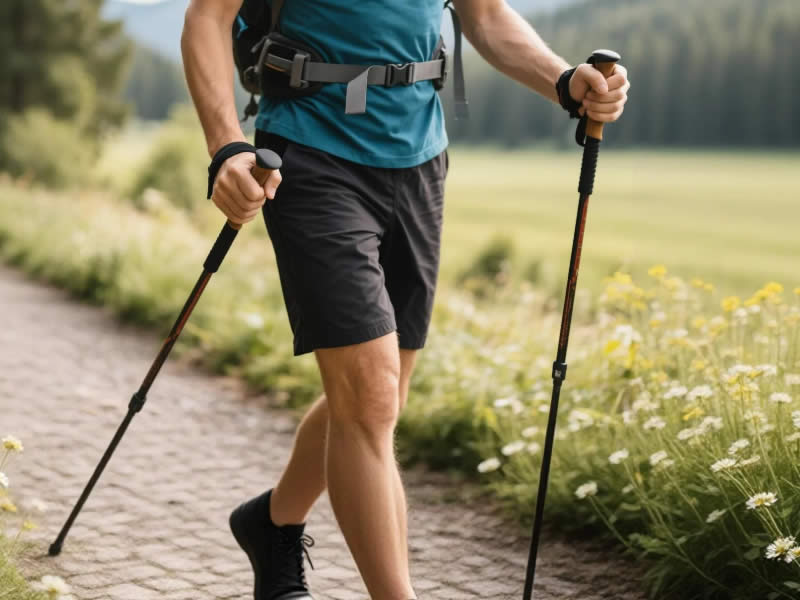
1. How trekking poles affect upper arm muscles
When you walk without poles, your arms swing naturally, but they do not bear load. When you use poles, your arms become part of the propulsion and support system. The muscles involved include:
- Biceps and triceps – For pulling and pushing the pole.
- Deltoids (shoulders) – For lifting and swinging the pole.
- Forearms – For gripping and controlling the pole.
- Latissimus dorsi (back) – For the pulling phase.
- Core – For stabilising your torso during the alternating stride.
The load on these muscles depends on how you use the poles. Used correctly, the work is spread across your shoulders and back, reducing the strain on your biceps and forearms. Used incorrectly, the biceps and forearms take the brunt, leading to early fatigue.
2. The role of the wrist strap
The wrist strap is the most important feature for reducing arm fatigue. When correctly adjusted, it transfers the downward force of your body weight directly to the pole, bypassing your grip and forearm muscles.
- Correct strap position – The strap should sit across the base of your palm (the fleshy area between your thumb and wrist), not across your wrist.
- Load transfer – When you push down on the pole, the load goes through the strap, not your grip. Your hand remains relaxed.
- Reduced grip fatigue – Because your fingers are not doing the work, your forearms are less fatigued.
Without the correct strap adjustment, your grip has to do the work, and your forearms will tire quickly.
3. The "push, not lift" principle
Many walkers lift the pole with each step, which engages the biceps and shoulders more than necessary. The correct technique is to push down through the pole, not lift it. The pole should be planted and then pushed back, not lifted and carried forward.
- Push down – On each plant, push down through the strap. This engages your triceps and lats (larger muscles) rather than your biceps (smaller muscles).
- Swing from the shoulder – The forward movement of the pole should come from a relaxed shoulder swing, not from lifting the pole with your biceps.
4. The correct rhythm
A steady, alternating rhythm (left pole with right foot, right pole with left foot) distributes the work evenly across both sides of your body. An irregular rhythm can cause one side to work harder, leading to early fatigue on that side.
5. Common mistakes that increase arm fatigue
- Gripping too tightly – This is the most common cause of forearm fatigue. The grip should be relaxed; the strap does the work.
- Strap too loose – If the strap is loose, your grip has to do the work, fatiguing your forearms.
- Strap too tight – A tight strap can restrict blood flow, causing numbness and discomfort.
- Lifting the pole – Lifting the pole with each step engages your biceps unnecessarily. Focus on pushing down, not lifting.
- Arms too straight – Over‑extending your arms can tire your triceps. Keep a slight bend in your elbows.
- Uneven rhythm – An inconsistent rhythm forces one side to work harder, leading to uneven fatigue.
6. How to prevent arm fatigue on long walks
- Adjust the straps correctly – Spend a few minutes at the start of your walk to get the straps right. The strap should sit across the base of your palm, and you should be able to slide one finger between the strap and your hand.
- Relax your grip – Hold the pole loosely, like you are holding a butterfly. The strap does the work.
- Use the "push, not lift" technique – Focus on pushing down through the pole on each plant, rather than lifting it.
- Maintain a steady rhythm – A consistent rhythm distributes the work evenly across your upper body.
- Alternate your grip – On flat sections, you can occasionally rest your hand on top of the grip to vary the muscle engagement.
- Take breaks – On a long walk, take short breaks to shake out your arms and shoulders.
7. The role of core and back muscles
Efficient pole use engages your core and back muscles, not just your arms. When you push down on the pole, your core and back stabilise your torso, reducing the need for your arms to provide stability. A strong core and back improve your efficiency, reducing overall arm fatigue.
8. What to avoid on long walks
- Do not over‑grip – A tight grip is the enemy of efficient pole use. Relax your fingers.
- Do not swing the pole too far back – The arm swing should be controlled. Over‑swinging can strain your shoulders.
- Do not ignore your posture – Poor posture (rounded shoulders, forward head) can cause you to over‑compensate with your arms. Stand upright.
9. Final verdict
Yes – trekking poles can reduce upper arm fatigue on long walks, but they are not a magic solution. The benefit depends entirely on correct technique: using the wrist strap to transfer load, relaxing your grip, and pushing down rather than lifting. When used correctly, the work is spread across your shoulders, back, and core, reducing the strain on your biceps and forearms. Without good technique, they can actually increase arm fatigue. Take the time to adjust your straps, practice the push‑down motion, and maintain a steady rhythm. Your arms will thank you at the end of a long day.




