




How to stop trekking pole locking mechanisms from slipping?
A slipping locking mechanism is one of the most common and frustrating issues with trekking poles. It can also be dangerous, especially on steep descents where a sudden collapse could cause a fall. The good news is that in most cases, slipping locks can be fixed with simple cleaning, adjustment, or component replacement. Here is a comprehensive guide to diagnosing and fixing slipping lever locks, twist locks, and push‑button mechanisms on trekking poles.
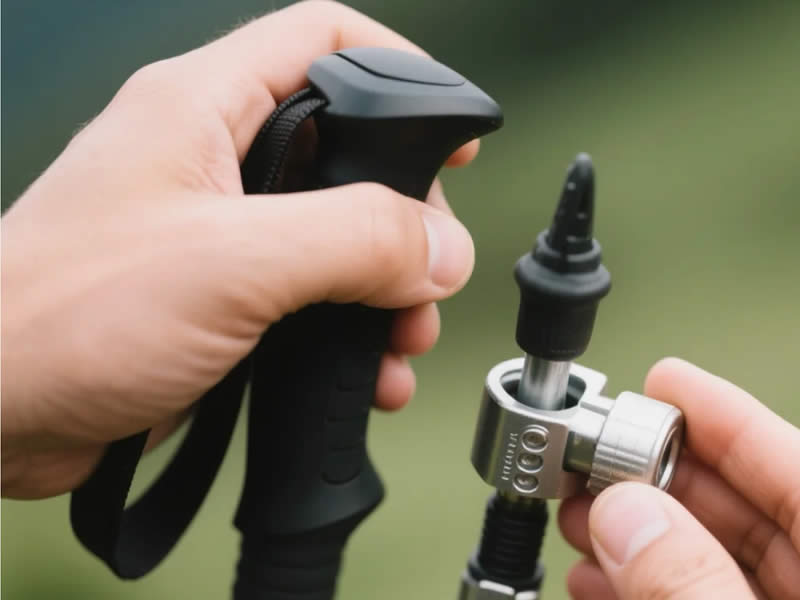
1. Understanding the three main lock types
Before you can fix a slipping lock, you need to know which type your poles use:
- Lever locks (cam locks) – Found on most quality poles (Leki SpeedLock, Black Diamond FlickLock, Decathlon cam locks). A mechanical clamp that tightens around the outer shaft when the lever is closed.
- Twist locks – Common on budget and older poles. An internal expander that presses against the inner wall when you twist the lower section.
- Push‑button locks – Found on folding (Z‑pole) poles. A small button that clicks into a hole in the outer shaft.
2. Lever locks – the most common fix
Lever locks are generally the most reliable, but they can still slip. Here is how to fix them:
a. Clean the mechanism – Mud and grit are the most common cause of slipping. Open the lever fully and rinse the clamp and pivot area with water. Use a small brush (e.g., an old toothbrush) to remove any compacted dirt. Dry thoroughly.
b. Tighten the adjusting screw – Most lever locks have a small hex screw (usually 2.5 mm or 3 mm) on the lever. Turn it clockwise (tighten) in small increments. Close the lever. It should close with a firm, positive click. If it is too easy to close, tighten further. If it is too hard to close, loosen slightly.
c. Check the teeth – The clamp has small teeth that bite into the shaft. If they are worn or rounded, the clamp may not grip properly. If the teeth are worn, you may need to replace the lock assembly.
d. Clean the shaft – Wipe the section of the shaft where the clamp sits with a cloth. Any dirt or grease on this surface reduces friction.
3. Twist locks – the friction issue
Twist locks rely on friction between an internal expander and the inner wall of the shaft. They are more prone to slipping than lever locks, especially in wet or muddy conditions.
a. Clean the threads – Mud and grit in the threads can prevent the lock from tightening fully. Twist the sections while rinsing with water to work the grit out. If the threads are very dirty, you may need to disassemble the lock (consult the manufacturer's instructions).
b. Dry thoroughly – Moisture reduces friction. Ensure the internal expander and the inner shaft are completely dry before tightening.
c. Check the expander – Over time, the expander (the plastic part that expands) can wear down, reducing friction. If the expander is worn, you need to replace it. Replacement expanders are available from some brands or online.
d. Avoid over‑tightening – Over‑tightening a twist lock can damage the expander. Tighten only until the sections are secure.
4. Push‑button locks (folding poles)
Folding poles use a push‑button that locks into a hole in the outer section. Slipping can occur if the button is stuck, the spring is weak, or the hole is worn.
a. Clean the button – Rinse the button mechanism to remove grit. Push the button in and out several times while rinsing to free it.
b. Check the button – If the button is stuck, tap it gently with a small hammer or the handle of a tool. If it is broken, the section may need replacing.
c. Check the hole – If the hole is worn or enlarged, the button may not lock securely. This is a more serious issue and may require replacing the section.
5. General fixes for all lock types
a. Clean the shaft – Dirt on the shaft can cause a lever lock to slip. Wipe the section where the lock sits with a cloth.
b. Check for damage – A bent shaft can prevent proper locking. Check each section for straightness by rolling it on a flat surface. If bent, replace the section.
c. Replace worn components – If cleaning and adjustment do not work, the lock mechanism may be worn. Replacement lever locks, twist‑lock expanders, and push‑button assemblies are available for many brands.
6. Where to buy replacement parts
- Decathlon – Forclaz replacement locks and parts.
- Adventure Sport – Leki and Black Diamond genuine parts.
- Amazon UK – Generic replacement parts (check compatibility).
- Go Outdoors – May stock common parts.
7. Preventing slipping
- Clean regularly – After muddy walks, rinse the locks and dry thoroughly.
- Check adjustment – Before each long walk, test your locks. Tighten them if they feel loose.
- Lubricate – A tiny drop of silicone spray on lever lock pivots (not on the clamp) keeps them smooth.
- Avoid WD‑40 – It attracts grit and can make slipping worse.
8. When to seek professional help
- If the lock mechanism is broken (cracked lever, seized expander, broken button).
- If the shaft is bent and cannot be straightened.
- If the pole is under warranty – contact the manufacturer.
9. Safety reminder
A slipping lock on a steep descent can be dangerous. If you cannot fix the slipping, replace the lock mechanism or the pole. Do not use a pole with a slipping lock – it is a safety hazard. Your knees and balance depend on reliable poles. Invest the time in maintaining them, and they will serve you well for many years.




