




How to repair a bent aluminium trekking pole at home?
A slight bend in an aluminium trekking pole section can often be repaired at home with basic tools. However, it is important to assess the damage first—severe bends or cracks mean the section should be replaced, not repaired. For minor bends (less than about 10–15°), straightening is possible. Here is a step‑by‑step guide to safely straightening an aluminium pole section at home.
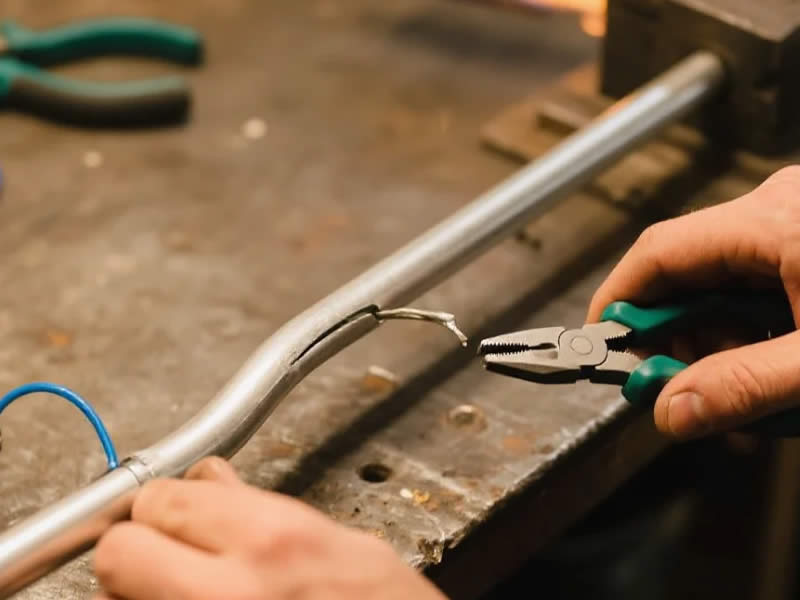
1. Safety first – when NOT to repair
Before you start, check the following:
- If the bend is severe (more than 15° or the shaft is kinked), the aluminium has been over‑stretched and will be weak. Replace the section.
- If the shaft is cracked or split, the pole is compromised. Replace it.
- If the bend is in the upper section (near the grip) or in a folding (Z‑pole) section, it may be difficult to straighten without damaging the locking mechanism. Consider replacement.
Do not attempt to straighten carbon fibre poles – they will splinter and fail catastrophically.
2. Tools you will need
- Flat, hard surface – A wooden workbench, a smooth concrete floor, or a flat piece of wood.
- Rubber mallet (optional) – For tapping out stubborn bends.
- Clean cloth – To protect the shaft from scratches.
- Vernier caliper or a ruler – To check straightness.
- Sandpaper (fine grit) – To smooth any sharp edges if the coating has been damaged.
3. Step‑by‑step repair process
a. Remove the bent section – Separate the bent section from the rest of the pole. If it is the lower section, you can usually unscrew or pull it out. For many poles (e.g., Leki Makalu, Decathlon Forclaz), lower sections are replaceable and available as spares.
b. Clean the section – Wipe off any mud or grit to avoid scratching the surface during straightening.
c. Roll the section on a flat surface – Place the section on a flat, hard surface. Roll it under your palm with firm, even pressure. As you roll, the bend will gradually reduce. Rotate the section to work on different parts of the curve. This is the most effective and safest method.
d. Check straightness – Roll the section on the flat surface and watch for any wobble. If it rolls smoothly without lifting off the surface, it is straight. If it still wobbles, repeat the rolling process.
e. For stubborn bends – tapping – If rolling does not fully straighten the section, place it on a piece of wood (to protect the surface) and tap the bent area gently with a rubber mallet. Use light, controlled taps. Do not use a metal hammer – it will dent the shaft.
f. Check again – Roll the section again. If it still wobbles, repeat the process.
4. Test the repaired section
- Check the locking mechanism – Fit the straightened section back into the pole. Close the lever lock or twist lock. It should slide smoothly and lock securely.
- Check for play – If the section is now too loose in the lock, the straightening may have slightly reduced its diameter. This can happen if the bend was severe. If the lock no longer holds securely, you should replace the section.
- Test under load – Before relying on the pole on a walk, put your weight on it in a safe place (e.g., at home). Lean on it firmly. If it holds, it is safe. If it bends again or the lock slips, replace the section.
5. Finishing touches
- Sand any sharp edges – If the anodised coating has been scratched or chipped, use fine sandpaper to smooth the edges to prevent them from catching on clothing or skin.
- Lubricate the lock – Apply a tiny drop of silicone spray to the lock mechanism (if lever) or to the threads (if twist) to ensure smooth operation.
6. When to replace instead of repair
- If the bend returns after straightening – the aluminium has fatigued.
- If the lock no longer holds – the section may have lost its correct diameter.
- If the section is cracked – aluminium cracks mean failure is imminent.
- If the bend is in the upper section – near the grip or lock, replacement is safer.
7. Where to buy replacement sections
- Decathlon – Replacement lower sections for Forclaz poles.
- Adventure Sport – Leki and Black Diamond replacement parts.
- Amazon UK – Generic aluminium sections (check compatibility).
- Go Outdoors / Cotswold – May stock sections for popular models.
8. Prevention – avoiding bends in the future
- Plant carefully – Avoid planting the pole in gaps between rocks where it can get wedged.
- Shorten on steep ground – A shorter pole reduces leverage and the risk of bending.
- Inspect regularly – After a heavy fall or a hard plant, check the lower section for straightness.
9. Final verdict
A minor bend in an aluminium trekking pole section can often be repaired at home by rolling the section on a flat surface. For stubborn bends, light tapping with a rubber mallet can help. However, if the bend is severe, or if the lock no longer holds, the section should be replaced. Straightened aluminium is weaker and may be more prone to bending again. For safety, test the repaired pole thoroughly before using it on a walk. If in doubt, replace the section – it is a small investment for the safety of your knees and balance.




