




How to store trekking poles over winter to prevent corrosion?
Proper winter storage is essential to prevent corrosion, lock seizure, and premature wear of your trekking poles. The combination of residual moisture, dirt, and salt from winter trails can cause steel components to rust and aluminium to oxidise if left unchecked. Here is a step‑by‑step guide to storing your poles safely over the off‑season.
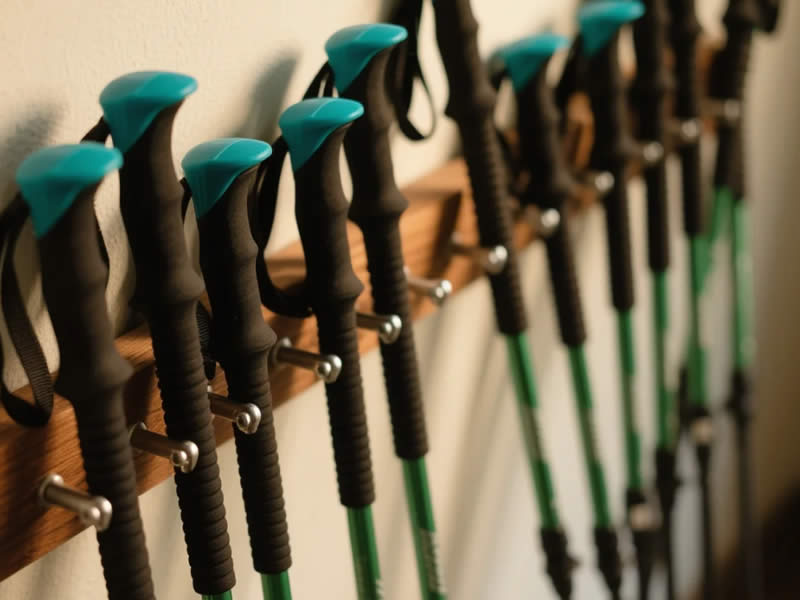
1. Clean thoroughly – the most important step
Before storing, your poles must be completely clean. Mud, salt, and grit left on the poles will attract moisture and accelerate corrosion.
a. Extend the poles fully – This gives you access to all sections.
b. Wash with mild soap – Use a soft cloth or sponge with warm water and a mild dish soap. Pay special attention to the locking mechanisms, the tip ferrule, and the area around the basket.
c. Rinse thoroughly – Ensure all soap residue is removed.
d. Dry completely – Use a clean cloth to wipe down all parts. Extend the poles fully and leave them to air‑dry in a warm, ventilated area for several hours. Do not store them until they are completely dry—moisture trapped inside will cause corrosion.
2. Lubricate moving parts
After cleaning, lubricate the moving parts to protect them from moisture and keep them smooth.
- For lever locks – Apply a tiny drop of silicone spray or PTFE dry lube to the pivot pins (not the clamp). Wipe off any excess.
- For twist locks – Apply a very thin layer of silicone grease to the threads. Wipe off any excess.
- For steel screws and bolts – Wipe them with an oily rag to prevent rust.
3. Loosen all locks
Store your poles with all locks slightly loosened. This relieves tension on the internal components (especially twist‑lock expanders) and prevents them from becoming permanently compressed or seizing over the winter.
- Lever locks – Open the lever slightly, or turn the adjusting screw so the lever closes with less resistance.
- Twist locks – Turn the lower section 1–2 turns counter‑clockwise to loosen.
- Folding poles – Store them folded with the push‑buttons released.
4. Protect steel components
Steel parts (screws, tip ferrules, internal springs) are the most vulnerable to rust.
- Wipe with an oily rag – Use a light machine oil (e.g., sewing machine oil) on a cloth and wipe over all exposed steel surfaces.
- For heavily corroded parts – Consider replacing them before storage.
5. Choose the right storage location
- Indoors – Store your poles in a dry, indoor location. A cupboard or wardrobe is ideal.
- Avoid damp areas – Do not store in a garage, shed, or basement where humidity is high.
- Avoid temperature extremes – Extreme cold or heat can affect the locks and the resin in carbon poles.
- Avoid direct sunlight – UV exposure can degrade grips and plastic components.
6. Storage position
- Collapsed – Store the poles collapsed to save space.
- Remove baskets – Remove mud or snow baskets and store them separately. This prevents them from being bent or cracked.
- Use a storage bag – If you have a padded pole bag, use it to protect the poles from dust and accidental damage.
7. Periodic checks
Even during winter storage, check your poles every 1–2 months:
- Extend them – Check that the locks still operate smoothly.
- Check for rust – Inspect steel parts for any signs of corrosion.
- Re‑lubricate – If you notice any stiffness, apply a tiny drop of lubricant.
8. What to avoid
- Storing with mud or salt – This is the biggest cause of corrosion. Always clean before storing.
- Storing with locks fully tightened – This can cause the expanders to take a set.
- Storing in a damp place – Moisture is the enemy.
- Using WD‑40 as a storage lubricant – It dries out and leaves a sticky residue. Use silicone‑based lubricants instead.
- Storing carbon poles with oil‑based lubricants – These can damage the resin. Use dry lube on carbon.
9. A final tip – use silica gel
Place a small packet of silica gel (the kind that comes in shoe boxes) inside your storage bag. It absorbs moisture and helps keep the interior dry.
10. Final verdict
Winter storage is a simple but essential part of trekking pole maintenance. Clean thoroughly, lubricate moving parts, loosen all locks, and store in a dry, indoor location. Check periodically and re‑lubricate if needed. With proper storage, your poles will emerge from winter in perfect condition, ready for the next walking season. A few minutes of care now will save you the cost and frustration of replacing corroded or seized poles in the spring.




