




How to sharpen blunt carbide trekking pole tips?
Don't sharpen carbide tips – replace them. Tungsten carbide is incredibly hard (8.5–9 on the Mohs scale) and cannot be sharpened with household tools like files, sandpaper, or grindstones. Attempting to file or grind them will damage the tip's hardened surface and accelerate wear, making them worse. Instead: clean the tip to remove mud and grime (dirt can make them feel blunter). If the tip is visibly rounded or chipped, replace it—most quality tips are user‑replaceable and cost around £10–15 per pair. The only tool that can reshape carbide is a diamond burr on a rotary tool, but this is not recommended—you will likely ruin the tip's geometry and compromise its grip. For maximum grip, always carry spares and replace worn tips before they become dangerously blunt. Here is a comprehensive guide to understanding when and how to replace your carbide tips, and why sharpening is not the answer.
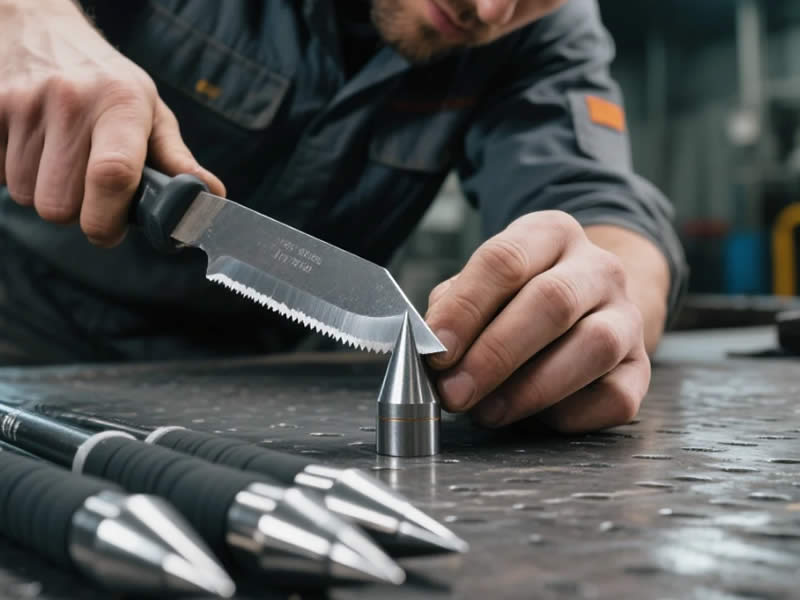
1. Why carbide tips are not meant to be sharpened
Tungsten carbide is a composite material—tungsten carbide particles held together in a cobalt matrix. It is extremely hard (8.5–9 Mohs), second only to diamond. This hardness gives it excellent wear resistance, but it also makes it brittle. If you attempt to sharpen a carbide tip with a file or a grinding wheel, you are not actually "sharpening" the carbide; you are abrading the cobalt binder, which weakens the tip and causes it to crumble. The tip will become softer and wear faster than before.
2. When to replace – not sharpen
A worn carbide tip will have a rounded or flattened point. It may also be chipped or cracked. The signs that you need to replace your tip are:
- Visible rounding – The tip no longer has a distinct point.
- Chipping – Small pieces have broken off.
- Reduced grip – The pole slides on rock or hard ground.
- Wear down to the ferrule – The metal collar is exposed.
If any of these apply, replace the tip. Do not attempt to sharpen it.
3. The only exception – diamond burr (not recommended)
If you have a rotary tool (e.g., Dremel) with a diamond‑tipped burr, you can reshape a slightly worn carbide tip. However, this is a delicate operation:
- Use a fine diamond burr – Not a stone or carbide burr.
- Work slowly – Remove minimal material. The goal is to restore the point, not to reshape the entire tip.
- Avoid overheating – Excessive heat can damage the cobalt binder.
- Expect reduced lifespan – A reshaped tip will not last as long as a new one.
For most walkers, this is not worth the effort. A new tip costs £10–15 and takes two minutes to fit. A diamond burr costs £5–10 and you risk ruining the tip. The cost‑benefit is clear.
4. How to replace carbide tips
Replacement is simple and quick:
a. Press‑fit tips (most common) – Grip the old tip with pliers, twist and pull. If stuck, heat the ferrule with a hairdryer for 10 seconds. Clean the ferrule, then push the new tip in firmly.
b. Threaded tips – Unscrew the old tip, clean the threads, screw in the new tip.
5. Preventing tip wear
- Use rubber tips on road sections – Tarmac is abrasive and will wear down carbide tips.
- Plant deliberately – Avoid dragging the tip on rocks.
- Carry spares – On a long trek, a spare pair of tips is a lightweight addition to your repair kit.
- Replace before they are completely blunt – A blunt tip reduces grip and can be a safety hazard.
6. Where to buy replacement tips
- Decathlon – Forclaz tips, widely available.
- Adventure Sport – Leki and Black Diamond genuine tips.
- Amazon UK – Generic tips, check compatibility.
7. Final verdict
Do not attempt to sharpen tungsten carbide trekking pole tips with household tools. You will damage the tip's hardened surface and accelerate wear. The only safe and effective option is to replace worn or chipped tips. Replacement tips are cheap, widely available, and take minutes to fit. For maximum grip and safety, carry a spare pair and replace tips as soon as they show signs of wear. Your knees and balance depend on a secure tip – don't compromise on safety.




