




Can I use WD-40 on trekking pole locks and joints?
No – WD‑40 should not be used on trekking pole locks or joints. While it is a great solvent and water displacer, WD‑40 is not a lubricant – it evaporates quickly, leaving a sticky, resinous residue that attracts dust and grit. On lever locks, this can cause the clamp to slip; on twist locks, it can gum up the threads and make them harder to turn. Use a dry lubricant like PTFE spray or silicone spray on lever lock pivots, and silicone grease on twist‑lock threads. Clean the mechanism thoroughly with a degreaser first, then apply the correct lube. For stuck joints, WD‑40 can help loosen corrosion, but always clean it off and apply proper lubrication afterwards. This article explains why WD‑40 is the wrong choice, what to use instead, and how to maintain your locks correctly.
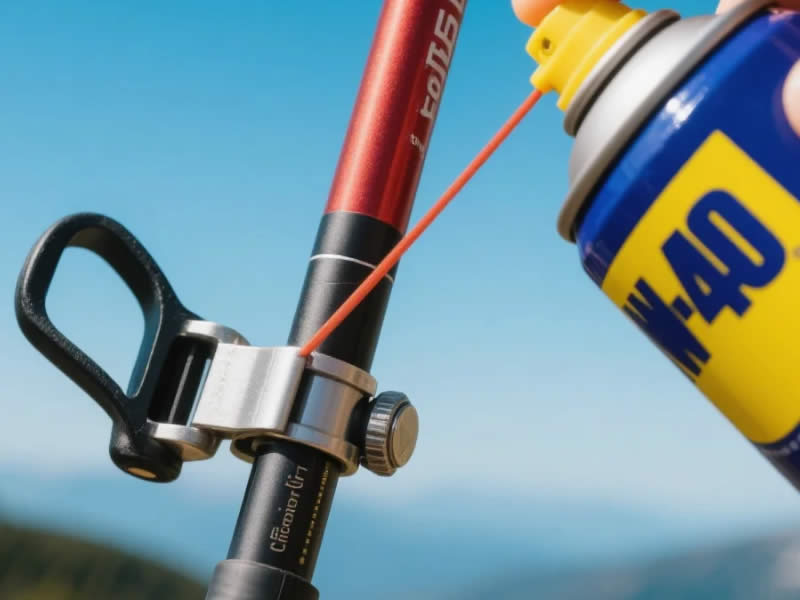
1. What is WD‑40?
WD‑40 stands for "Water Displacement, 40th formula." It is a solvent and penetrating oil, designed to displace moisture, loosen rusted parts, and clean grease. It is not a lubricant in the traditional sense – it does not provide long‑lasting lubrication. When applied to a lock or joint, it temporarily penetrates and loosens, but it evaporates over time, leaving behind a thin, sticky film that attracts dirt and grit.
2. Why WD‑40 is harmful on trekking pole locks
a. Lever locks (cam locks) – The clamp relies on friction between the clamp and the shaft. Any residue on the clamp reduces this friction, causing the lock to slip under load. WD‑40 can get onto the clamp if oversprayed, or if the residue migrates. This can make the lock dangerously unreliable.
b. Twist locks – Twist locks rely on the friction of an internal expander against the inner wall. WD‑40 can get onto the expander and the inner wall, reducing friction and causing the lock to slip. It can also dissolve the grease that is meant to lubricate the threads, leaving them dry and prone to seizing.
c. Gumming – The residue left by WD‑40 attracts dust and grit, which can eventually form a sticky paste that jams the mechanism. This can make a lock harder to operate and more prone to seizing.
3. What to use instead
- Silicone spray – A light, dry lubricant that does not attract dirt. Ideal for lever lock pivots and general moving parts.
- PTFE dry lube – A lubricant that dries to a film, reducing friction without leaving a sticky residue. Good for lever locks and carbon poles.
- Silicone grease – A thicker lubricant for twist‑lock threads. Apply sparingly.
- Graphite powder – For carbon poles or where a dry lubricant is preferred.
4. How to clean a WD‑40‑contaminated lock
If you have already used WD‑40 on your locks, you need to clean them thoroughly before applying the correct lubricant.
a. Lever locks – Open the lever fully. Use a degreaser (e.g., isopropyl alcohol, brake cleaner) on a cloth to wipe the clamp and the pivot area. Rinse with water and dry thoroughly.
b. Twist locks – Disassemble the lock if possible (consult the manufacturer's instructions). Clean the threads and the expander with degreaser. Rinse and dry.
c. Re‑lubricate – Apply the correct lubricant (silicone spray for lever locks, silicone grease for twist locks).
5. When is WD‑40 useful?
WD‑40 does have a role in pole maintenance, but it is limited:
- Loosening seized parts – If a screw or joint is stuck due to corrosion, a spray of WD‑40 can help penetrate and loosen it.
- Cleaning – It can be used to clean off old grease or dirt from a lock mechanism, but it must be wiped off completely before applying new lubricant.
Never use WD‑40 as a lubricant on a lock or joint.
6. The correct maintenance routine
- Clean – After every muddy walk, rinse locks with water and dry.
- Lubricate – Apply silicone spray to lever lock pivots once or twice a year. Apply silicone grease to twist‑lock threads annually.
- Adjust – Check lever lock tension with a hex key if needed.
- Store – Store poles with locks slightly loosened.
7. Final verdict
WD‑40 is the wrong product for trekking pole locks and joints. Its sticky residue attracts dirt, reduces friction, and can cause locks to slip or seize. Use silicone spray or PTFE dry lube for lever locks, and silicone grease for twist‑lock threads. If you have already used WD‑40, clean the mechanisms thoroughly and apply the correct lubricant. With the right care, your locks will operate smoothly and reliably for many years. The golden rule: never use WD‑40 where a lubricant is needed.




