




What are the best all-season trekking poles for British winters?
For British winters—which can be wet, muddy, icy, and snowy—the best all‑season trekking poles are durable aluminium models with lever locks, cork grips, and the ability to fit snow baskets. The Leki Makalu is the gold standard, with a steel lower section that resists abrasion on frozen rock and SpeedLock Plus that holds reliably in wet and cold conditions. The Decathlon Forclaz MT900 offers exceptional value, with 7075 aluminium, reliable lever locks, and cork grips—just add snow baskets separately. The Black Diamond Trail Pro is a solid premium alternative. All three are built to handle the UK's variable winter conditions, from muddy lowland paths to snowy Scottish ridges. Here is a comprehensive guide to choosing the best all‑season poles for British winters.
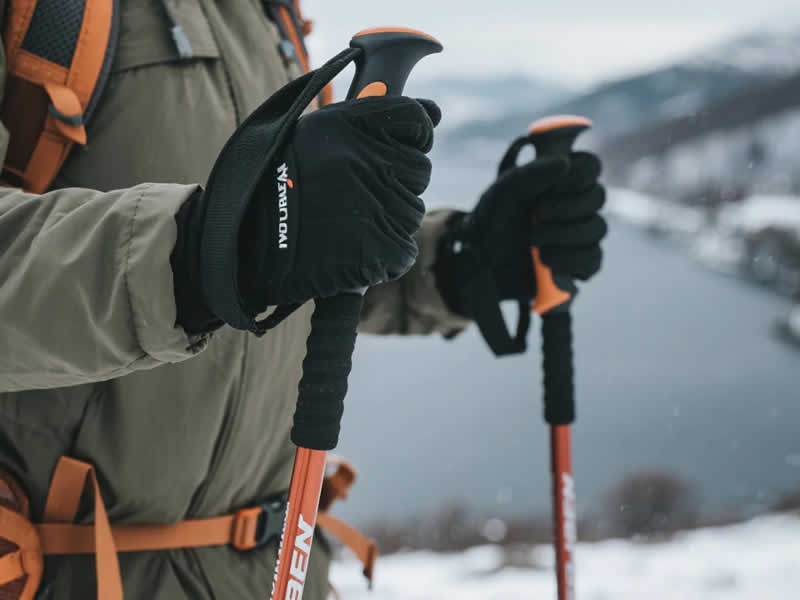
1. Why you need "all‑season" poles, not just winter poles
British winters are unpredictable. You might start a walk in snow, descend through ice, and finish on wet mud—all in one day. Your poles need to handle all of these conditions. An "all‑season" pole is one that is robust enough for winter's challenges (ice, snow, cold) but still comfortable and efficient for summer walking. The key difference from a purely summer pole is the ability to fit snow baskets and the durability to withstand winter's abrasive conditions.
2. Key features for British winter conditions
a. 7075 aluminium – not carbon – Carbon fibre poles are lightweight but brittle. In sub‑zero temperatures, the resin can become more brittle, increasing the risk of splintering from a side impact on frozen rock. Aluminium (especially 7075 alloy) bends but rarely breaks, and a bent section can often be straightened in the field. For British winters, 7075 aluminium is the safer choice.
b. Steel lower section – The lower section of the pole is subjected to constant abrasion from ice, grit, and frozen mud. A steel ferrule (found on the Leki Makalu) resists this wear much better than aluminium, extending the pole's life.
c. Lever locks (cam locks) – Twist locks are difficult to operate with thick gloves and can freeze up. Lever locks (Leki SpeedLock, Black Diamond FlickLock, Decathlon's cam locks) are easier to use with gloves and are more reliable in freezing conditions. They are also easier to clean of mud and grit.
d. Cork grips – Cork grips are comfortable in wet, cold conditions. They become tacky when damp, providing a secure hold even with gloves. Foam grips can become slippery when wet, and rubber grips can be cold and hard.
e. Snow baskets – For any winter walk with snow on the ground, you need snow baskets (7–10 cm diameter). They prevent the pole from sinking into deep snow. Ensure your poles accept snow baskets.
f. Replaceable carbide tips – The abrasive winter terrain (grit, ice, frozen mud) wears down carbide tips quickly. Poles with replaceable tips are more economical.
3. Top recommendations for British winters
- Leki Makalu – The gold standard. 7075 aluminium, steel lower section, SpeedLock Plus, cork grips, replaceable tips. Virtually indestructible and field‑repairable. Used by many Scottish mountain guides. Price: £90–100.
- Decathlon Forclaz MT900 – The best value. 7075 aluminium, reliable lever locks, cork grips, replaceable tips. Lacks a steel lower section, but is durable enough for most winter walks. Add snow baskets separately (£5–10). Price: £55.
- Black Diamond Trail Pro – An excellent alternative. 7075 aluminium, FlickLock, comfortable foam/cork hybrid grip, replaceable tips. Lacks the steel lower section, but still robust. Price: £80–90.
- Black Diamond Trail Back – Similar to Trail Pro, slightly lighter. Good option if you prefer a slightly lighter pole. Price: £75–85.
4. What to avoid for British winters
- Carbon fibre poles – They can splinter on side impacts in cold conditions.
- Twist locks – They can freeze or become difficult to operate with gloves.
- Folding (Z‑pole) carbon poles – The push‑button joints can jam with ice and grit.
- Poles without snow basket compatibility – You will sink into deep snow.
5. Maintenance for all‑season use
- Rinse after winter walks – Salt and grit from winter trails can corrode locks and shafts. Rinse with fresh water and dry thoroughly.
- Lubricate locks – A tiny drop of silicone spray on lever lock pivots keeps them smooth in cold conditions.
- Carry spare tips – The abrasive winter terrain wears down carbide tips quickly. Carry a spare pair.
- Check locks regularly – The cold can cause locks to contract; check and tighten them before each walk.
6. Snow baskets – don't forget them
Snow baskets are essential for winter walking. Without them, your poles will sink into deep snow, offering no support. Most poles do not come with snow baskets as standard – you need to buy them separately (around £5–15). Check compatibility with your pole's shaft diameter.
7. Final verdict
For British winters, the Leki Makalu is the best all‑season pole, combining durability, reliability, and comfort. If you are on a budget, the Decathlon Forclaz MT900 is an excellent alternative, though it lacks a steel lower section. Whichever you choose, ensure you have 7075 aluminium, lever locks, cork grips, and snow baskets. Carry spare tips, and inspect your poles regularly. With the right poles, you can tackle the UK's winter conditions with confidence and safety, from the muddy lowlands to the snowy ridges of the Highlands.




