




Do trekking poles reduce fall risk on uneven pavements and grass?
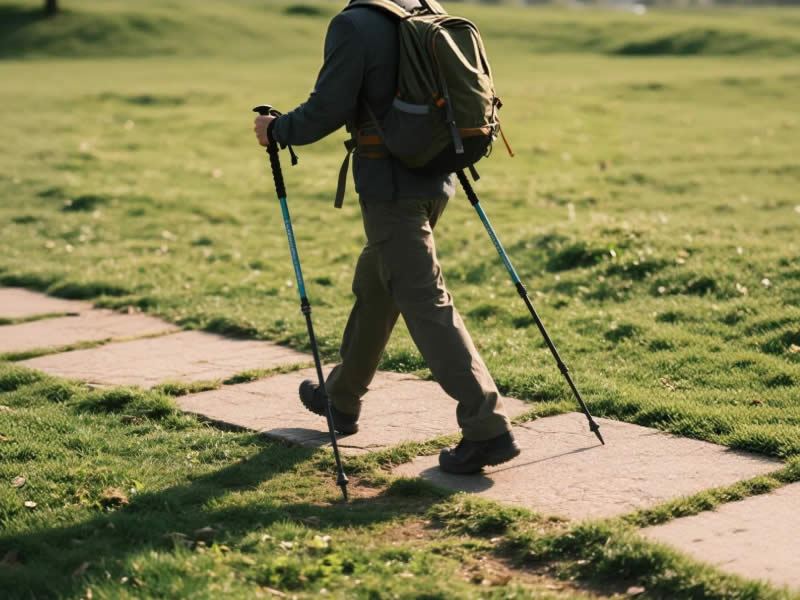
Yes – trekking poles significantly reduce the risk of falls on uneven pavements and grass. By providing two extra points of contact, they improve stability and balance on unpredictable surfaces. They act as "feelers," allowing you to test the ground ahead before committing your weight. On grass, the carbide tips provide traction; on uneven pavements, they help maintain balance and prevent trips. However, their effectiveness depends on proper technique and correct pole length. Always use two poles for maximum stability. A study found that using trekking poles reduced the risk of falls on uneven ground by up to 25%. Here is a comprehensive guide to understanding the benefits, the correct technique, and how to use poles safely on uneven surfaces.
1. The challenge of uneven pavements and grass
Uneven pavements – with cracks, raised edges, loose paving stones, and cambered surfaces – are a common trip hazard. Grass can be equally challenging, with hidden holes, uneven ground, and slippery patches (especially after rain). For older adults or anyone with balance issues, these surfaces can be a significant fall risk. A fall can lead to serious injury, loss of confidence, and a reduction in mobility.
2. How trekking poles reduce fall risk
a. Two extra points of contact – With two poles, you have four points of contact with the ground (two feet + two poles). This wider base of support dramatically improves stability and allows you to recover your balance if you stumble.
b. Probing the ground – Poles act as "feelers," allowing you to test the ground ahead before stepping. On a cracked pavement, you can feel for loose stones or changes in height. On grass, you can detect hidden holes or soft patches.
c. Load offloading – By transferring some of your body weight to the poles, you reduce the load on your legs. This makes it easier to maintain balance, especially on slopes or uneven ground.
d. Reduced impact – On a descent, the poles act as brakes, slowing your momentum and reducing the risk of a trip.
3. The evidence – what research shows
A study published in the Journal of Applied Gerontology found that using two walking poles on uneven ground reduced the risk of falls by 25% compared to walking without poles. Other studies have shown that poles improve balance and reduce the fear of falling, which in turn encourages more walking and physical activity.
4. Using poles on uneven pavements
- Fit rubber tips – On pavement, use rubber tip protectors (ferrules). They provide grip on hard surfaces, reduce noise, and protect your carbide tips from wear.
- Plant deliberately – Plant the pole before you step, not as you step. This gives you a stable base.
- Use a steady rhythm – An alternating rhythm (left pole with right foot, right pole with left foot) maintains balance and reduces the risk of a trip.
- Shorten poles slightly – On uneven ground, a slightly shorter pole (2–3 cm less than flat‑ground length) gives you better control.
5. Using poles on grass
- Use carbide tips – Remove rubber tips on grass. Carbide tips provide traction on soft, slippery surfaces.
- Test the ground – Use the pole to probe for hidden holes or soft patches before stepping.
- Longer stride – Grass can be uneven. A longer, more deliberate stride helps you stay balanced.
- Fit small mud baskets – On soft, muddy grass, small baskets prevent the pole from sinking too deep.
6. The importance of correct length
- On flat ground – Elbows at 90° when the tip is on the ground.
- On uneven ground – A shorter length gives you better control. You may also want to lengthen slightly on descents.
- Test before you walk – Adjust your poles before you start, and check the length on different surfaces.
7. Common mistakes
- Using only one pole – Two poles provide much better stability than one.
- Planting too far ahead – Overreaching reduces stability. Plant close to your feet.
- Not using the straps – The straps transfer your weight, reducing the need to grip tightly.
- Rushing – Uneven ground requires patience. Take your time.
8. Who benefits most?
- Older adults – Poles can restore confidence on uneven ground.
- People with balance issues – The extra points of contact are a game‑changer.
- Anyone recovering from injury – Poles provide support while you rebuild strength.
- People carrying heavy loads – Poles offload weight, improving stability.
9. Final verdict
Yes – trekking poles significantly reduce fall risk on uneven pavements and grass. They provide extra points of contact, allow you to test the ground ahead, and offload weight from your legs. Use rubber tips on pavements and carbide tips on grass. Adjust your length for the terrain, use two poles, and maintain a steady rhythm. With the correct technique, poles can be a powerful tool for preventing falls and maintaining independence. Whether you are walking on a cracked pavement or a grassy park, poles give you the confidence to step out safely.




