




Do I really need trekking poles for walking the UK's national trails?
Not strictly, but they are highly recommended for most walkers. On long, hilly trails (e.g., Pennine Way, Coast to Coast), poles reduce knee strain on descents, improve stability on muddy/rocky ground, and reduce fatigue by engaging your upper body. On flat, gentle trails (e.g., Thames Path, Norfolk Coast), they are less essential – many walkers manage fine without them. The key factors are terrain, pack weight, and knee health – the more uneven the ground, the heavier your pack, and the more sensitive your knees, the greater the benefit. For a multi‑day trail, I'd recommend them. For a day on flat ground, you can skip them. Try a pair on a short walk – you'll soon know if they suit you. Here is a comprehensive guide to help you decide.
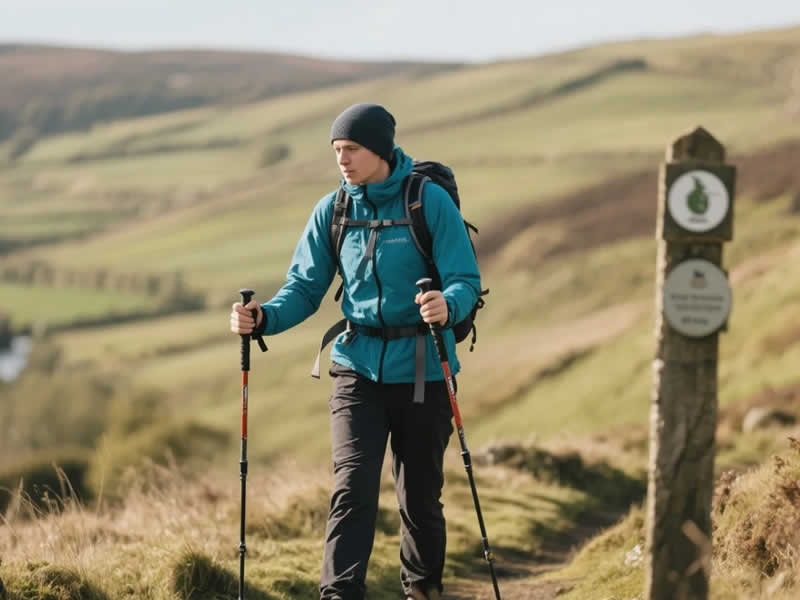
1. The case for using trekking poles
a. Knee protection – The most compelling reason. On descents, each step can generate impact forces of 3–5 times your body weight. Trekking poles can reduce knee joint forces by 20–25%, protecting your knees over a multi‑day trail. This is especially important on hilly trails like the Pennine Way, Coast to Coast, and the South West Coast Path.
b. Stability – Two poles provide four points of contact with the ground, improving balance on uneven, muddy, or rocky ground. On slippery sections, they can be a lifesaver.
c. Fatigue reduction – By engaging your upper body, poles reduce the load on your leg muscles. Studies show that using poles can reduce perceived exertion by 10–15% on long ascents.
d. Testing the ground – On boggy ground or stream crossings, poles allow you to probe the ground ahead, reducing the risk of a surprise slip or sink.
e. Support for your tent – On a multi‑day trek, your poles can double as supports for a lightweight tent or tarp, saving you from carrying dedicated tent poles.
2. The case against using trekking poles
a. Weight – A pair of poles adds 500–600g to your pack. For ultralight walkers, this is a significant addition.
b. Learning curve – There is a technique to using poles effectively (the alternating rhythm, wrist straps, length adjustment). Without proper technique, they can actually increase fatigue and provide little benefit.
c. Hassle – On flat, well‑maintained trails, poles can feel unnecessary and awkward. You have to carry them or stow them when not in use.
d. Cost – A good pair of poles costs £50–100. For occasional use, this may not be a worthwhile investment.
3. When poles are essential
- Hilly, rocky trails – Pennine Way, Coast to Coast, West Highland Way, South Downs Way (some sections).
- Muddy or boggy trails – Dartmoor, Peak District moorland, the Flow Country.
- Heavy pack – If you are carrying camping gear, the extra load makes poles more valuable.
- Knee or joint issues – If you have any history of knee pain, poles are a game‑changer.
4. When poles are unnecessary
- Flat, well‑maintained trails – Thames Path, Norfolk Coast Path, parts of the Ridgeway.
- Short walks – For a day walk on gentle terrain, you may not need them.
- Ultralight walkers – If you are counting every gram, you may prefer to go without.
5. The technique factor
Poles are only useful if you use them correctly. Common mistakes include:
- Gripping too tightly – The strap should do the work.
- Planting too far ahead – Reduces efficiency and stability.
- Incorrect length – Too long or too short reduces the benefit.
6. How to decide – the trial approach
The best way to decide is to try a pair on a short, hilly walk. Borrow a pair or buy a budget set (e.g., Decathlon Forclaz MT900 at £55). Use them with correct technique. You will quickly see if they improve your comfort and confidence.
7. Final verdict
Do you need trekking poles for walking the UK's national trails? No – but they are a highly recommended investment for safety, comfort, and knee protection on long, hilly, or muddy trails. On flat trails, they are optional. For a multi‑day walk, I recommend them. For a day on flat ground, you can skip them. Ultimately, it comes down to terrain, pack weight, and your own knee health – and the best way to know is to try them. Happy walking.




