




What are the most common mistakes beginners make with trekking poles?
1. Gripping too tightly – A death grip fatigues your forearms and hands. The strap should take your weight—hold the pole loosely, like holding a butterfly.
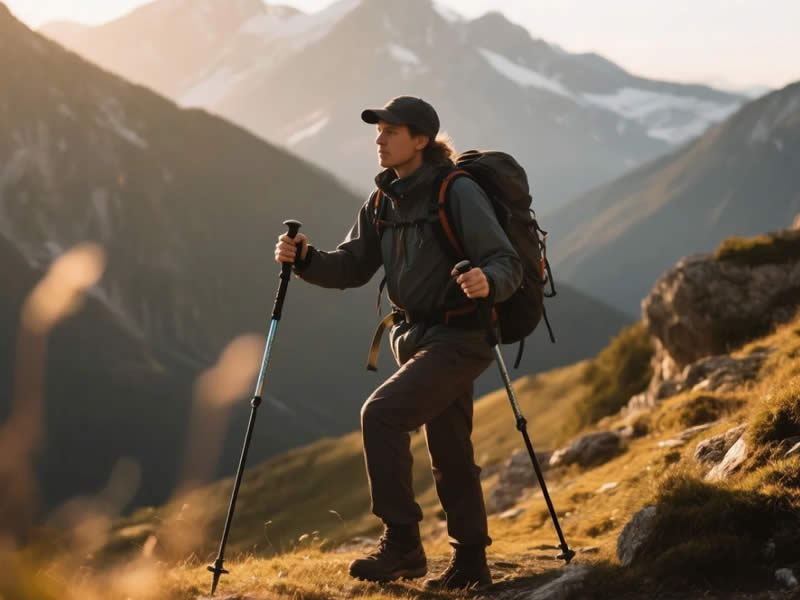
2. Poles too long or too short – Elbows should be at 90° on flat ground. Too long strains your shoulders; too short strains your back. Adjust regularly for terrain.
3. Not using the straps correctly – The strap should sit across the base of your palm (not your wrist). Push down through the strap, not your grip. This transfers load to your arms and saves energy.
4. Planting too far ahead – Overreaching reduces stability and wastes energy. Plant the pole level with your heel, not far ahead.
5. Rubber tips on soft ground – Rubber ferrules slide on mud, grass, or gravel. Remove them and use the bare carbide tip for grip on soft terrain.
6. Not adjusting for terrain – Shorten poles by 5 cm for ascents; lengthen by 5 cm for descents. Walking with a fixed length on variable terrain is inefficient.
7. Using only one pole – Two poles provide better balance, weight distribution, and knee protection than a single pole.
8. Stowing poles incorrectly – Loose poles on a pack can snag or fall. Use the side pocket or compression straps, and always cover the tips.
9. Ignoring maintenance – Dirty locks slip. Clean after muddy walks, lubricate moving parts, and replace worn tips.
10. Not learning the rhythm – A steady alternating rhythm (left pole with right foot) is the most efficient. Practice on flat ground first.
Pro tip: Start on flat ground—get the rhythm and grip right before tackling hills. With a little practice, these mistakes are easily avoided.
1. Gripping too tightly – the most common error
The most common mistake is gripping the handle tightly. This tires out your forearms and hands, and it reduces the efficiency of the poles. The correct technique is to let the wrist strap take the weight. Your hand should be relaxed—just guiding the pole. Think of holding a butterfly: gentle pressure, not a death grip.
2. Incorrect pole length – too long or too short
The standard rule is: on flat ground, your elbows should be at 90° when the tip is on the ground. If the poles are too long, you'll reach up, straining your shoulders. If they are too short, you'll hunch forward, straining your back. Adjust the length for ascents (shorten by 5 cm) and descents (lengthen by 5 cm).
3. Ignoring the wrist straps
Many beginners simply put their hand through the strap and grip the handle. This is a mistake. The strap should sit across the base of your palm (the fleshy area between your thumb and wrist). When you push down on the pole, the force should go through the strap, not your grip. This transfers the load to your arms and saves your grip strength.
4. Overreaching – planting too far ahead
Planting the pole too far ahead of your body creates a braking effect and wastes energy. The pole should be planted level with your heel, or just ahead of it. A short, controlled plant is more efficient and stable.
5. Rubber tips on soft ground
Rubber tip protectors (ferrules) are designed for hard surfaces (pavement, indoors). On soft ground (mud, grass, gravel), they have no grip and can cause you to slip. Remove them and use the bare carbide tip for traction.
6. Not adjusting for terrain
Many beginners set their poles to one length and never change it. This is inefficient. On ascents, shorten the poles by 5 cm to get better leverage. On descents, lengthen them by 5 cm to create a braking effect. This simple adjustment saves energy and protects your knees.
7. Using only one pole
Some beginners use just one pole, thinking they only need support on one side. Two poles provide far better balance, weight distribution, and knee protection. Use two poles—it's safer and more efficient.
8. Stowing poles incorrectly
When you are not using poles (on flat sections, when scrambling), you need to stow them securely on your pack. Loose poles can snag on branches or fall out. Use the side pocket or compression straps, and always cover the carbide tips with rubber protectors to prevent punctures.
9. Ignoring maintenance
Trekking poles need care. Mud and grit can damage locks. After a muddy walk, rinse the poles with fresh water and dry them thoroughly. Lubricate lever lock pivots with a tiny drop of silicone spray once or twice a year. Replace worn tips and baskets as needed.
10. Not learning the rhythm
The most efficient way to walk with poles is the alternating rhythm: left pole with right foot, right pole with left foot. This mimics your natural arm swing and distributes the effort evenly. Some beginners plant both poles together (the "double plant") on flat ground, which is inefficient. Practice the alternating rhythm on flat ground before tackling hills.
Final verdict
The most common mistakes beginners make with trekking poles are: gripping too tightly, using the wrong length, ignoring the straps, overreaching, using rubber tips on soft ground, not adjusting for terrain, using only one pole, stowing them incorrectly, ignoring maintenance, and failing to learn the rhythm. With a little practice and awareness, these mistakes are easily avoided. Start on flat ground, focus on the rhythm and grip, and soon the poles will feel like a natural extension of your arms. Happy walking.




