




Can I use just one trekking pole for general rambling?
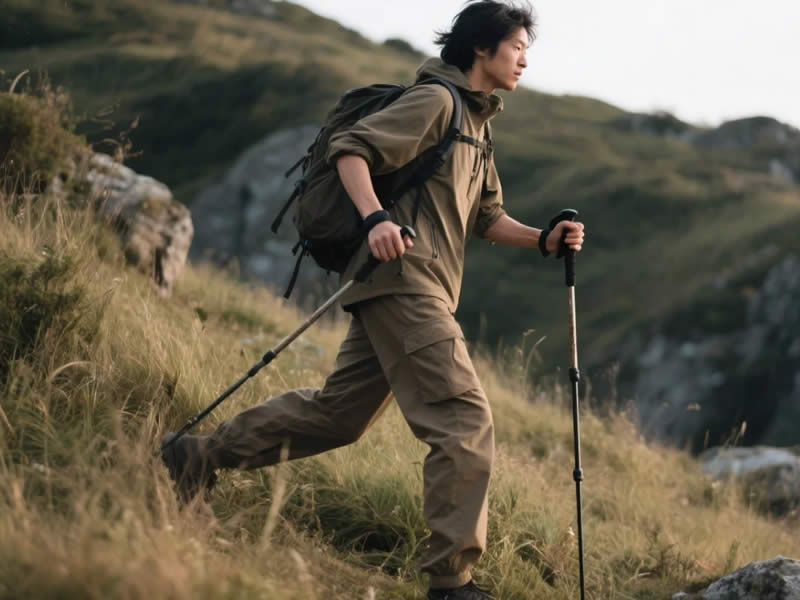
Yes – you can use just one trekking pole for general rambling, but it is not ideal. A single pole provides some support and stability, but two poles are far better for balance, weight distribution, and knee protection. If you are just starting, one pole can help you get used to the feel without the coordination challenge of two. A single pole works well on flat, well‑maintained trails and short walks, or for those with a weak side. For hilly or uneven terrain, longer walks, or heavy packs, two poles are recommended.
1. The case for using one pole
a. Less coordination needed – If you are new to using poles, one pole is easier to manage. You only need to think about one hand and one rhythm.
b. Flat, well‑maintained trails – On towpaths, forest tracks, and gentle park paths, you don't need the extra stability of a second pole. A single pole can help maintain rhythm and provide a little support.
c. Short walks – For a 1–2 hour walk, the benefit of two poles is less significant. One pole is simpler and lighter.
d. A weak side – If you have an injury or weakness on one side (e.g., a sore knee, a weak ankle), a single pole on the affected side can provide targeted support.
e. Cultural preference – In the UK, many older walkers use a single walking stick out of habit. It's a traditional approach and works well for moderate walking.
2. The limitations of one pole
a. Balance – One pole provides only one extra point of contact. On uneven, muddy, or rocky ground, this is not as stable as two poles. Two poles give you a wider base of support.
b. Knee protection – One pole offloads weight from only one side. It does not protect the knees as effectively as two poles, which distribute the load more evenly.
c. Fatigue – With one pole, the effort is concentrated on one arm. This can cause muscle imbalance and fatigue in that arm. Two poles spread the effort across both arms, reducing fatigue.
d. Rhythm – The alternating rhythm (left pole with right foot) is the most efficient way to walk. With one pole, you cannot maintain this rhythm – you either plant the pole with the same side foot (creating a limp) or try to mimic the rhythm with one pole (which is difficult).
3. The science – one vs. two poles
Studies show that two poles reduce knee joint forces by 20–25% on descents, while a single pole reduces the force on that side only. For overall efficiency and joint protection, two poles are significantly better. The energy savings with two poles are also greater – you engage both arms, distributing the load across your upper body.
4. Which side to hold the pole?
If you use one pole, hold it in the hand opposite your weak side. For example, if your right knee is sore, hold the pole in your left hand. This seems counter‑intuitive, but it works because the pole supports the opposite side of your body, reducing the load on the sore knee.
5. Switching hands
To avoid muscle imbalance, switch the pole from one hand to the other every 20–30 minutes. This distributes the load evenly across both arms and prevents one arm from getting tired. It also helps maintain symmetrical posture.
6. When two poles are essential
- Hilly terrain – On steep ascents and descents, two poles provide the support you need.
- Longer walks – If you are walking all day, two poles reduce fatigue and protect your knees.
- Heavy pack – Extra weight makes two poles essential.
- Muddy or boggy ground – Two poles allow you to test the ground and maintain balance.
7. The "one pole as a transition" approach
One pole can be a great way to start. If you are new to poles, start with one pole on flat ground. Once you are comfortable with the rhythm and grip, consider adding a second pole for the benefits of balance, knee protection, and efficiency. Many walkers start with one and quickly upgrade to two.
8. Final verdict
Can you use just one trekking pole for general rambling? Yes – but it is not ideal for most situations. One pole works on flat, short walks and for those with a specific weakness. For hilly terrain, longer walks, and knee protection, two poles are significantly better. If you are just starting, one pole is a good way to learn, but you will likely appreciate the benefits of a second pole once you are used to the rhythm. For serious hillwalking, two poles are a game‑changer – they protect your knees, improve your balance, and reduce fatigue. If you walk regularly, invest in a pair. If you walk occasionally on flat ground, one pole is perfectly adequate. Happy walking.




