




How to choose trekking poles for steep climbs in Serra dos Órgãos?
For the steep, rocky, and often wet trails of Serra dos Órgãos—home to iconic peaks like Pedra do Sino and the classic Travessia Petrópolis–Teresópolis—choose 7075 aluminium poles with lever locks and replaceable carbide tips. Carbon fibre is a risk—it shatters on the sharp granite edges. Lever locks let you quickly shorten for ascents (better leverage) and lengthen for descents (knee protection). Cork grips stay comfortable in the region's humidity, and carbide tips grip wet rock and roots.
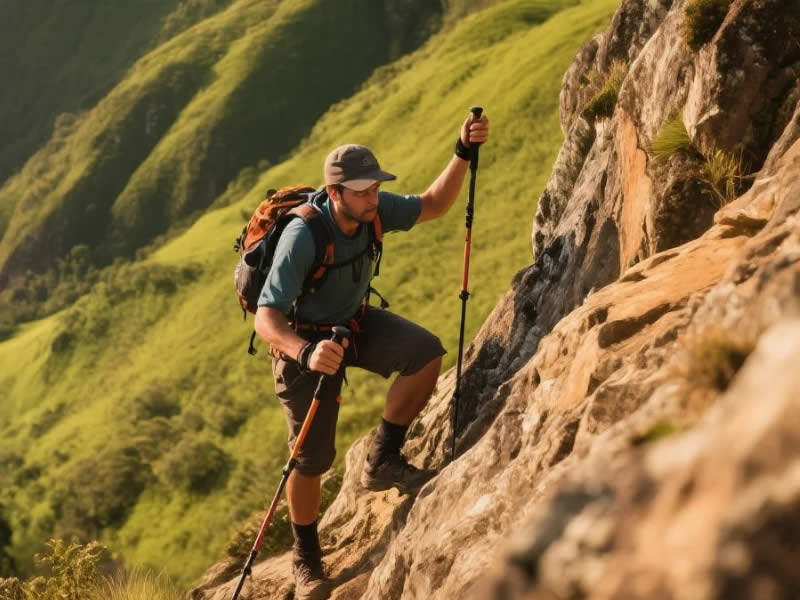
Top picks:
- Decathlon Forclaz MT900 – Best value (R$400), 7075 aluminium, lever locks, cork grips, replaceable tips. Widely available in Brazil.
- Leki Makalu – Premium durability (R$700+), steel lower section resists abrasion, SpeedLock Plus, cork grips.
Avoid:
- Carbon fibre – splinters on side impacts.
- Twist locks – slip in wet conditions.
- Non-replaceable tips – the granite wears them down fast.
Technique tip: Shorten poles by 5–10 cm for steep climbs to improve leverage. On descents, lengthen them to brake and protect your knees. For the steep, exposed sections of Serra dos Órgãos, reliable locks and durable shafts are non‑negotiable.
Verdict: Choose 7075 aluminium poles with lever locks and cork grips. The Decathlon Forclaz MT900 offers the best value; the Leki Makalu is the premium choice for frequent hikers. Avoid carbon and twist locks—they won't survive the terrain.
1. Why Serra dos Órgãos demands specific poles
The Serra dos Órgãos mountain range in Rio de Janeiro state is a world-class hiking destination. Its trails are characterised by:
- Steep, continuous ascents – The climbs are relentless, often gaining 800–1,000 metres over a few kilometres.
- Granite and gneiss rock – The rock is hard, sharp, and abrasive. It wears down tips and can damage carbon shafts.
- Wet conditions – Rain and mist are common, making the rock slippery. Grips and tips need to perform in wet conditions.
- Exposed ridges – High winds can affect your balance. Reliable locks are essential.
2. Key features for Serra dos Órgãos
a. 7075 aluminium – The best material for this terrain. It bends under impact but rarely breaks. Carbon fibre is lighter but brittle—a side impact against a rock can cause it to splinter. Aluminium is the safer, more durable choice.
b. Lever locks – Essential for adjusting length quickly. On a steep ascent, you need to shorten the poles for better leverage. On a descent, you lengthen them to brake and protect your knees. Lever locks (cam locks) are mechanical and hold securely in wet conditions. Twist locks slip in mud and moisture.
c. Replaceable carbide tips – The abrasive granite wears down tips quickly. Poles with replaceable tips are more economical. Carry a spare pair for multi‑day treks.
d. Cork grips – Stay comfortable in the heat and humidity. Cork becomes tacky when damp, providing a secure hold even with sweaty hands. Foam grips can become slippery; rubber becomes uncomfortable.
e. Mud baskets – Useful on the wet, boggy sections that are common in the Atlantic Forest. They prevent the pole from sinking into soft ground.
3. Top recommendations
- Decathlon Forclaz MT900 – The best value. 7075 aluminium, lever locks, cork grips, replaceable tips. Available at Decathlon stores across Brazil (~R$400). Proven on Brazilian trails.
- Leki Makalu – Premium durability. Steel lower section resists abrasion; SpeedLock Plus lever locks; cork grips. Imported, available via Adventure Sport (~R$700+). A lifetime investment for frequent walkers.
- Decathlon Forclaz MT500 – A budget‑friendly alternative. 7075 aluminium, lever locks, replaceable tips. Available at Decathlon (~R$250–300). A good option if the MT900 is outside your budget.
4. What to avoid
- Carbon fibre – Splinters on side impacts. Not recommended for Serra dos Órgãos.
- Twist locks – Slip in wet conditions.
- Folding (Z‑pole) designs – The push‑button joints can jam with mud and grit. Not as durable as telescoping poles.
- Non‑replaceable tips – Once the tip wears down, the pole is useless.
5. Technique for steep climbs
- Shorten for ascents – Reduce the pole length by 5–10 cm. This lowers your hands, giving you better leverage to push up the slope. Your quads will thank you.
- Lengthen for descents – Extend the poles by 5–10 cm. This allows you to plant the pole ahead of your feet, creating a braking effect that reduces knee impact.
- Plant deliberately – On steep, rocky ground, plant the pole firmly on a stable surface. Avoid planting in gaps between rocks where the tip could get wedged.
6. Maintenance for Serra dos Órgãos
- Rinse after muddy walks – Mud and grit can damage locks and shafts. Rinse with fresh water and dry thoroughly.
- Lubricate locks – Apply a tiny drop of silicone spray to lever lock pivots once or twice a year.
- Replace tips – Carry spare tips and replace them when they become blunt.
- Check locks – Lever locks can loosen with use; tighten with a hex key.
7. Final verdict
For the steep, rocky trails of Serra dos Órgãos, choose 7075 aluminium poles with lever locks, cork grips, and replaceable tips. The Decathlon Forclaz MT900 offers the best value for most hikers. For frequent walkers on rugged terrain, the Leki Makalu is the premium choice. Avoid carbon, twist locks, and non‑replaceable tips. With the right poles, you can tackle the steep climbs and exposed ridges of Serra dos Órgãos with confidence and comfort. Happy hiking.




