




What is the most durable trekking pole lock system for tropical use?
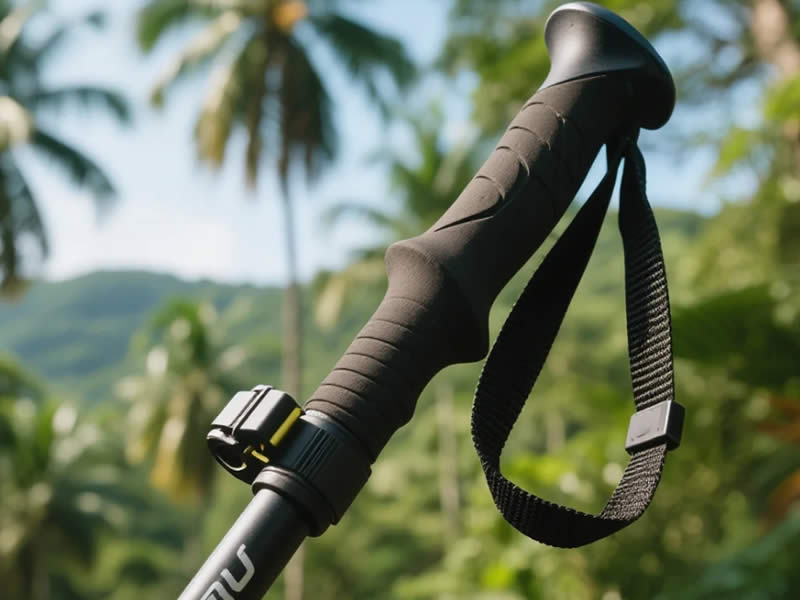
For tropical conditions, the most durable lock system is the external lever lock (cam lock). It is a mechanical clamp that holds securely regardless of mud, dust, or humidity. Twist locks rely on friction and fail when wet or gritty. Push-button locks (on folding poles) can jam with grit. Lever locks are field-adjustable, easy to clean, and reliable in the mud, dust, and humidity of tropical environments. The best systems are Leki's SpeedLock Plus, Black Diamond's FlickLock, and Decathlon's cam locks.
1. Why tropical conditions are hard on locks
Tropical hiking—whether in Brazil's Atlantic Forest, Southeast Asia's jungles, or Central America's rainforests—presents specific challenges for locking mechanisms:
- High humidity – Moisture can cause twist locks to slip and corrode metal components.
- Mud and grit – Fine particles can jam push-button locks and abrade twist-lock threads.
- Dust – In dry tropical regions, dust can get into mechanisms and cause sticking.
- Frequent rain – Wet conditions cause twist locks to lose friction.
2. Lever locks – the durable choice
Lever locks (cam locks) are mechanical clamps that tighten around the outer shaft. They are the most reliable lock system for tropical conditions.
How they work: When you close the lever, it compresses a metal band around the inner shaft, locking the sections together. The grip is mechanical, not friction-based.
Why they are durable:
- Unaffected by water – The clamp holds securely regardless of moisture.
- Field-adjustable – If the lock loosens over time, you can tighten it with a hex key (usually 2.5 or 3 mm).
- Easy to clean – Mud and grit can be rinsed out of the mechanism.
- Works with gloves – Lever locks are easy to operate with wet or muddy hands.
- Corrosion-resistant – Quality lever locks are made from anodised aluminium or stainless steel.
Best lever lock systems:
- Leki SpeedLock Plus – The gold standard. Smooth, durable, and field-repairable.
- Black Diamond FlickLock – Simple, robust, and reliable.
- Decathlon cam lock – Good value; reliable for the price.
3. Twist locks – the unreliable option
Twist locks rely on friction between an internal expander and the inner wall of the shaft. They are the least reliable lock system for tropical conditions.
Why they fail:
- Water reduces friction – Water acts as a lubricant, causing the lock to slip.
- Mud and grit – Particles get into the threads, preventing the lock from tightening fully.
- Corrosion – Moisture can corrode the threads, making the lock stiff or impossible to adjust.
- Sudden slip – In wet conditions, a twist lock can slip suddenly under load, causing a fall.
When twist locks are acceptable: On gentle, dry trails only. For tropical conditions, avoid them.
4. Push-button locks – the risk of jamming
Push-button locks (found on folding Z-pole designs) can jam with grit and mud.
Why they are less reliable:
- Grit ingress – Fine particles can get into the button mechanism, preventing it from locking or releasing.
- Hard to clean – The button is small and internal, making it difficult to flush out dirt.
- Can freeze – In cold conditions (less common in the tropics), water can enter the button and freeze.
When push-button locks are OK: On well-maintained trails in dry conditions. In tropical mud and dust, they are a risk.
5. The tropical test – real-world experience
Walkers in tropical environments consistently report that lever locks are the only reliable system. Twist locks slip in the rain; push-button locks jam with mud. Lever locks—once they are adjusted correctly—hold securely through mud, rain, and dust. This is why guides in tropical regions (including Brazil) overwhelmingly prefer lever-lock poles.
6. How to maintain lever locks in the tropics
- Rinse after muddy walks – Mud and grit can accumulate in the mechanism. Rinse with fresh water and dry thoroughly.
- Tighten with a hex key – Lever locks can loosen over time. Use a 2.5 or 3 mm hex key to tighten the screw on the lever.
- Lubricate sparingly – Apply a tiny drop of silicone spray to the pivot pin (not the clamp). Wipe off any excess.
- Check before each trip – Test the lock by putting your weight on the pole. If it slips, tighten it.
7. What about folding poles with lever locks?
Some folding poles (e.g., Leki Micro Vario) have lever locks instead of push-button locks. These are a good compromise for tropical conditions—they offer the packability of a folding pole with the reliability of a lever lock. However, the locking mechanism is still more complex than a telescoping lever lock.
8. Final verdict
For tropical conditions, external lever locks (cam locks) are the most durable and reliable lock system. They are mechanical, field-adjustable, and easy to clean. Twist locks and push-button locks are prone to failure in mud, dust, and humidity. If you are hiking in Brazil, Southeast Asia, or any tropical environment, choose poles with lever locks—they are the only system you can trust. Your safety depends on reliable locks, especially on steep descents. Choose lever locks, and walk with confidence.




