




Do carbon trekking poles snap easily on rocky Brazilian trails?
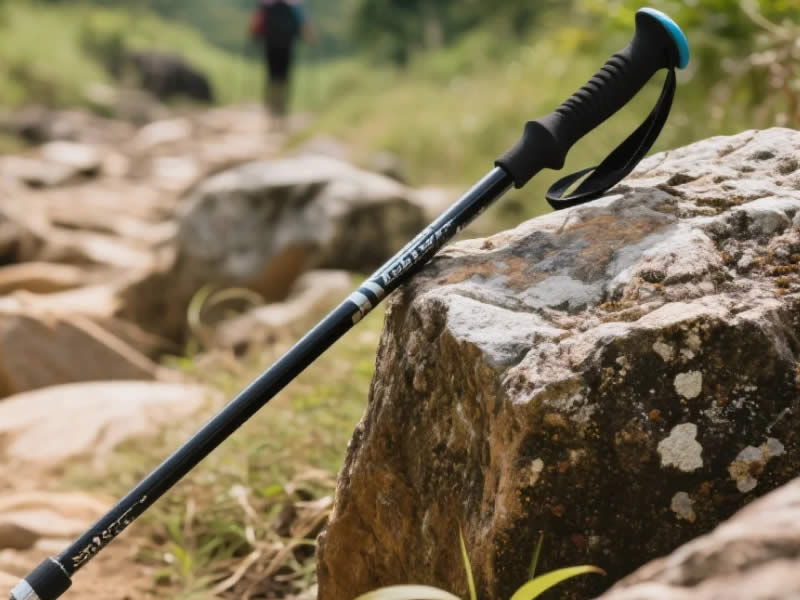
Yes – carbon trekking poles can snap on rocky Brazilian trails if subjected to side impacts. Carbon is strong under vertical load but brittle under lateral forces. A single knock against a quartzite or granite rock can splinter the shaft, leaving the pole useless. This is a common occurrence on Brazilian trails (Chapada Diamantina, Serra do Mar, Serra da Mantiqueira). For rocky terrain, 7075 aluminium poles are the safer, more reliable choice. If you choose carbon, carry a spare pole or repair kit. For most Brazilian hikers, aluminium is the better option.
1. Why carbon snaps
Carbon fibre is a composite material—carbon fibres embedded in a polymer resin. It is exceptionally strong under compression (vertical load) but brittle under impact or lateral forces. When you plant a pole between rocks or knock it sideways against a sharp edge, the resin can crack and the fibres can splinter. This is a catastrophic failure—the pole cannot be repaired.
2. Why Brazilian trails are high‑risk for carbon
Brazil's trails are notoriously rocky. The quartzite and granite that form the country's mountain ranges are sharp and abrasive. Side impacts are common when you are walking on narrow, rocky paths. A single knock against a sharp rock can splinter a carbon shaft.
3. Aluminium – the safer choice
Aluminium (especially 7075 alloy) is ductile. It bends under impact but rarely breaks. A bent aluminium section can often be straightened in the field—a carbon pole cannot be repaired. Aluminium is also more affordable and has better spare parts support in Brazil.
4. When carbon is acceptable
- Well‑maintained trails – If you are walking on gentle, non‑rocky paths (e.g., urban parks, coastal promenades), carbon is fine.
- Careful walkers – If you avoid planting between rocks and handle your poles with care.
- Ultralight hiking – If you prioritise weight and accept the risk.
5. What to do if you choose carbon
- Carry a spare pole – For multi‑day treks, a spare pole or a repair kit is essential.
- Inspect before each trip – Check for cracks or nicks.
- Avoid planting between rocks – This is the most common cause of carbon failure.
6. Final verdict
For rocky Brazilian trails, 7075 aluminium poles are the safer, more reliable choice. Carbon is lighter but more fragile—a single side impact can ruin your pole. If you choose carbon, be careful, carry spares, and accept the risk. For most Brazilian hikers, aluminium is the better option. Happy hiking.




