




Do ultralight trekking poles survive rough Brazilian granite terrain?
Not usually – ultralight trekking poles are risky on rough Brazilian granite terrain. The main risk is side impacts – a knock against a sharp granite edge can splinter a carbon pole or bend a thin aluminium section. Brazilian trails (Serra da Mantiqueira, Serra do Mar) are rocky and demanding. Ultralight poles have thinner walls to save weight, making them vulnerable to bending or snapping under lateral stress. Carbon is particularly fragile – it splinters on side impacts. A broken ultralight pole is often terminal and cannot be repaired. For Brazilian granite terrain, choose 7075 aluminium poles with a 16–18 mm lower section, lever locks, and a steel lower section for abrasion resistance. The Decathlon Forclaz MT900 is the best value; the Leki Makalu is the premium choice. If you use ultralight poles, carry a spare and be very careful on rocks.
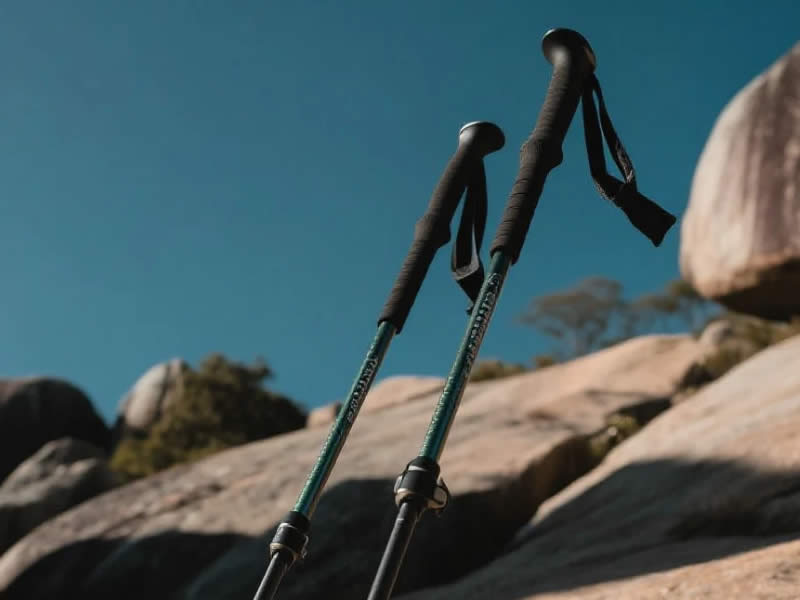
1. Why Brazilian granite is tough on poles
Brazil's granite terrain is hard, sharp, and abrasive. It is not smooth like some other rocks – it has sharp edges and rough surfaces. When you plant a pole, you are often placing it between rocks, on uneven surfaces, or against sharp edges. The lateral forces on the pole are significant. A pole that is too thin will flex and may bend or break.
2. Ultralight poles – the design trade‑off
Ultralight poles achieve their low weight through:
- Thinner walls – The tubing is thinner, saving weight but reducing strength.
- Thinner diameter – Lower sections are often 14–16 mm, compared to 16–18 mm for standard poles.
- Carbon fibre – Some ultralight poles use carbon, which is lighter but brittle under side impacts.
3. The risk on granite
- Side impacts – A knock against a sharp granite edge can splinter a carbon pole or bend a thin aluminium section.
- Abrasion – The rough granite surface can wear down the shaft over time.
- Wedging – If the tip gets wedged between rocks, the lateral force can bend the pole.
4. What to choose for Brazilian granite
- 7075 aluminium – The best material for Brazilian granite. It bends but rarely breaks.
- 16–18 mm lower section – Provides the stiffness needed for lateral forces.
- Lever locks – Reliable in mud and grit; twist locks slip.
- Steel lower section – For abrasion resistance (e.g., Leki Makalu).
- Weight – Accept 500–550g per pair for durability.
5. Top picks for Brazilian granite
- Leki Makalu – 7075 aluminium, steel lower section, SpeedLock Plus. The gold standard.
- Decathlon Forclaz MT900 – 7075 aluminium, lever locks, cork grips. Best value.
- Black Diamond Trail Back – 7075 aluminium, FlickLock. A solid alternative.
6. When ultralight poles are OK
- Gentle, well‑maintained trails – No rocky sections.
- You are very careful – You avoid planting between rocks.
- You accept the risk – And carry a spare pole.
7. Final verdict
Ultralight trekking poles are not recommended for rough Brazilian granite terrain. For safety and durability, choose 7075 aluminium telescoping poles with lever locks and a steel lower section. The Decathlon Forclaz MT900 is the best value; the Leki Makalu is the premium choice. If you use ultralight poles, carry a spare and be very careful on rocks. Happy hiking.




