




How to use trekking poles correctly for steep ascents in Pico da Neblina?
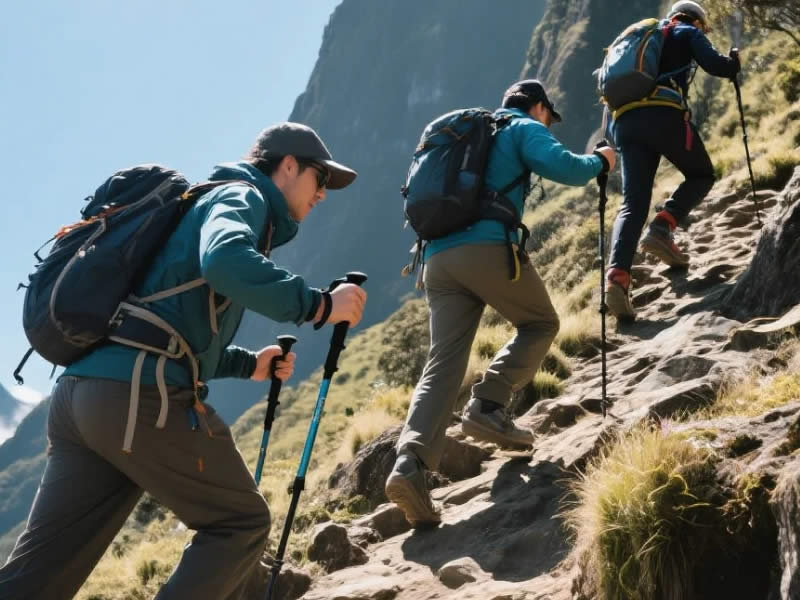
For steep ascents on Pico da Neblina (Amazon rainforest, 2,994m), shorten poles by 5–10 cm for better leverage. Use a double-plant: place both tips ahead, push down through wrist straps, and step up—this transfers effort from legs to arms. Maintain a steady, rhythmic pace. On very steep, rooty sections, plant carefully to avoid wedging between rocks. Pico da Neblina's trails are muddy, rooty, and humid—use 7075 aluminium poles (carbon is risky on side impacts) with lever locks and spare carbide tips. For the steep, technical ascents, double-plant and short steps are your best tools.
1. Understanding Pico da Neblina's terrain
Pico da Neblina, Brazil's highest peak at 2,994 metres, is located in the Amazon rainforest. The trail is unlike any other in Brazil—it is steep, muddy, rooty, and humid. The ascent is relentless, with sections of slippery mud, exposed roots, and steep climbs. The conditions are wet and humid, making reliable gear essential.
2. Why shorten poles for ascents
On flat ground, your elbows should be at 90° when the tip is on the ground. On a steep ascent, this length becomes too long—your hands are too high, reducing leverage and increasing shoulder strain. Shortening your poles by 5–10 cm lowers your hands, allowing you to push down vertically rather than forward. This vertical push transfers load from your legs to your arms, offloading your quads.
3. The double-plant technique for steep sections
On the steepest sections of Pico da Neblina, use the double-plant:
- Plant both poles together on the step or ground ahead of you, shoulder‑width apart.
- Push down through both straps simultaneously as you step up.
- This gives you a powerful upward thrust, reducing the load on your legs and providing stability on loose mud or roots.
4. Wrist straps – the key to efficiency
Your wrist straps are not just to prevent you from dropping the pole. They are the primary mechanism for load transfer.
- Adjust the strap so it sits across the base of your palm (the fleshy part between your wrist and palm).
- Push down through the strap, not your grip. This allows your hand to remain relaxed, reducing forearm fatigue.
5. Planting position and rhythm
- Plant close – On steep slopes, plant the pole close to your front foot, not far ahead. This gives you a vertical push rather than a forward reach.
- Alternating rhythm – Maintain a steady rhythm: left pole with right foot, right pole with left foot. This distributes the load evenly.
- Short steps – Take shorter steps on steep sections. This keeps your centre of gravity stable and makes the pole push more effective.
6. Equipment for Pico da Neblina
- 7075 aluminium – Carbon fibre is risky on side impacts. Aluminium bends but rarely breaks.
- Lever locks – Reliable in muddy, humid conditions. Twist locks slip.
- Replaceable carbide tips – The abrasive mud and rock will wear down tips. Carry spares.
- Mud baskets – Useful on the wet, muddy sections.
7. What to avoid
- Gripping too tightly – This fatigues your forearms and reduces efficiency.
- Planting too far ahead – This turns your pole into a brake, not a propellant.
- Ignoring the straps – If you are not using the straps, you are missing the main benefit.
- Not adjusting length – A fixed length on a changing slope reduces efficiency.
8. Pro tips for Pico da Neblina
- Spare tips – Carry spares; the abrasive mud will wear them down.
- Hex key – For adjusting lever locks if they loosen.
- Slow and steady – The ascent is long and steep. Take breaks and use your poles for support.
- Protect your poles – Mud and moisture can damage locks; rinse with fresh water and dry.
9. Final verdict
For steep ascents on Pico da Neblina, shorten your poles, use the double-plant, and push through the wrist straps. The technique is simple but requires practice. With the right equipment and technique, you can conquer the steep, muddy slopes of Brazil's highest peak. Happy hiking.




