




How to use trekking poles with a heavy backpack in the Brazilian Highlands?
With a heavy pack in the Brazilian Highlands, use trekking poles as load‑sharing tools. Set your flat‑ground length so elbows are at 90°. On ascents, shorten by 5–10 cm for leverage; on descents, lengthen by 5–10 cm to brake. Push through the wrist straps, not your grip. The key is to let the straps take the weight, saving your legs and back. With a heavy pack, every bit of load transfer helps.
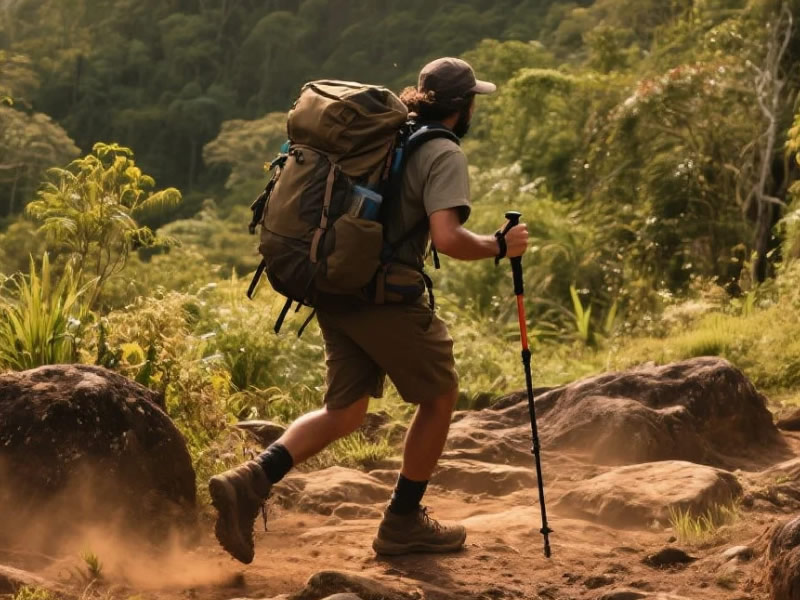
Key techniques:
- Load transfer – The straps should bear your weight, not your grip.
- Rhythm – Use the diagonal stride (left pole with right foot).
- Double‑plant – On steep climbs, plant both poles together for extra power.
Equipment for heavy packs:
- 7075 aluminium – stronger than carbon for heavy loads.
- Lever locks – hold tension reliably under weight.
- Steel lower section – resists abrasion on rocky terrain.
- Spare tips – heavy loads wear them faster.
Pro tips for the Highlands:
- Adjust length frequently – The terrain changes quickly.
- Take breaks – use poles for support.
- Keep your back straight – poles help you maintain posture.
- Carry a hex key – for lever locks if they loosen.
Verdict: With the right technique and equipment, trekking poles are invaluable for managing a heavy pack on Brazilian Highland trails. Practice load transfer and adjust your length for the terrain.
1. Why the Brazilian Highlands are demanding
The Brazilian Highlands (Planalto Brasileiro) are a vast region of rolling hills, rocky outcrops, and steep ascents. Trails can be long, with significant elevation gain. Carrying a heavy pack (camping gear, food, water) adds to the challenge. Efficient pole use is essential for saving energy and protecting your knees.
2. Load transfer – the most important technique
With a heavy pack, the wrist straps are your best friend. When you plant a pole and push down, the strap should bear your weight, not your grip. This transfers a portion of your body weight (and pack weight) from your legs to your arms. Studies show that this can reduce knee joint forces by 20–25% on descents.
3. Adjusting for terrain
- Flat ground – Set poles so elbows are at 90° when tips are on the ground.
- Ascents – Shorten by 5–10 cm for better leverage. This reduces the work on your legs.
- Descents – Lengthen by 5–10 cm for braking. This reduces knee impact.
- Variable terrain – Adjust as needed. A few cm can make a big difference.
4. The diagonal stride – maintaining rhythm
The diagonal stride (left pole with right foot, right pole with left foot) is the most efficient way to walk. It distributes the effort across your upper body and maintains a steady pace. With a heavy pack, a consistent rhythm is key to reducing fatigue.
5. Equipment for heavy loads
- 7075 aluminium – Stronger than carbon for heavy loads. Carbon is lighter but more brittle.
- Lever locks – Hold tension reliably under weight. Twist locks slip.
- Steel lower section – Resists abrasion on rocky terrain (e.g., Leki Makalu).
- Replaceable carbide tips – Heavy loads wear them faster; carry spares.
- Mud baskets – Useful on wet sections to prevent sinking.
6. Common mistakes to avoid
- Gripping too tightly – This fatigues your forearms and reduces the load‑sharing benefit.
- Ignoring the straps – If you are not using the straps, you are missing the main benefit.
- Not adjusting length – Incorrect length reduces efficiency and increases fatigue.
- Rushing – A steady, rhythmic pace is more efficient than stop‑start.
7. Pro tips for the Brazilian Highlands
- Adjust length frequently – The terrain changes quickly. A few cm can make a big difference.
- Take breaks – Use your poles for support when resting.
- Keep your back straight – Poles help you maintain posture, reducing back strain.
- Carry a hex key – For adjusting lever locks if they loosen under the load.
- Spare tips – Heavy loads wear them faster; carry spares.
- Hydrate – The Highlands can be hot; drink water regularly.
8. Final verdict
With a heavy pack in the Brazilian Highlands, trekking poles are invaluable for managing the load. Use them for load transfer, adjust your length for the terrain, and maintain a steady rhythm. With the right technique and equipment, you can tackle the Highlands' demanding trails with less fatigue and more enjoyment. Happy hiking.




