




How to use trekking poles for trail running on Rio de Janeiro coastal mountains?
For trail running on Rio's coastal mountains, use ultralight folding carbon poles with a short, rapid arm swing. Plant lightly with an alternating rhythm (left pole with right foot), matching your cadence. Shorten poles by 5 cm for steep climbs (better leverage) and lengthen by 5 cm for fast descents (knee protection). The terrain is steep, rocky, and humid—pole technique here is about rhythm and efficiency.
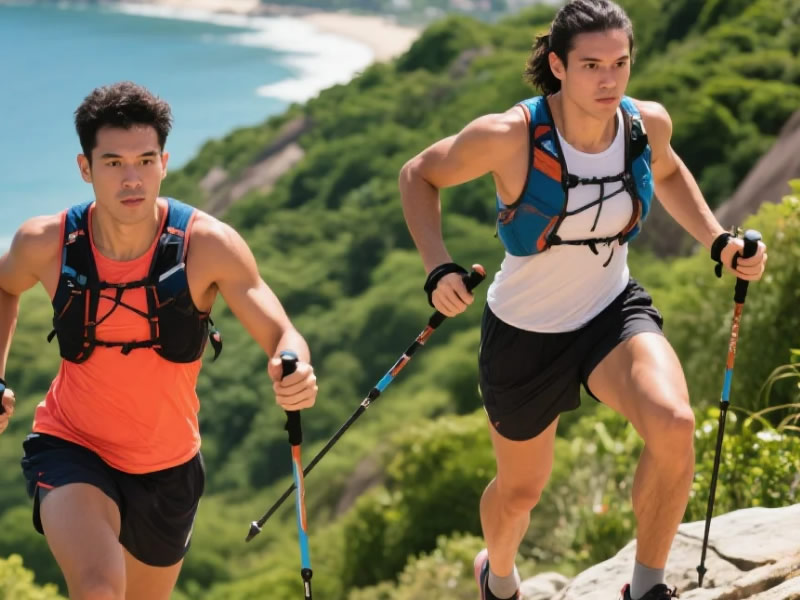
Key tips:
- Light touch – Don't plant heavily; a light tap is enough.
- Stow on flats – Collapse and stow poles on long flat sections.
- Use wrist straps – The strap transfers load, not your grip.
- Carbide tips – Grip on wet rock; remove rubber tips.
What to avoid:
- Gripping too tightly – forearm fatigue.
- Over‑reaching – disrupts rhythm.
- Stowing poorly – use a running vest with pole holders.
Pro tip: Rio's trails (Pedra da Gávea, Dois Irmãos) are steep and technical – practice the alternating rhythm on a gentle slope before going fast. For descending, lengthen poles and use them as brakes. Happy running!
1. Why Rio's coastal mountains are unique
Rio de Janeiro's coastal mountains (the Serra do Mar) are a stunning but challenging environment for trail running. The terrain is steep, rocky, humid, and often slippery. Trails like Pedra da Gávea, Dois Irmãos, and the Tijuca Forest trails are popular with runners. The combination of steep climbs, fast descents, and technical sections makes pole use a valuable skill.
2. Choosing the right poles for trail running
- Ultralight folding carbon poles – Lightweight and packable. Examples: Black Diamond Distance Carbon Z, Leki Micro Vario Carbon.
- Short length – Poles should be slightly shorter than walking poles. On flat ground, your elbows should be at about a 90° angle when the tip is on the ground.
- Lever locks – Quick to adjust; twist locks are slower.
- Cork grips – Comfortable in humid conditions; foam can become slippery.
3. Technique for flat sections
On the flat sections of Rio's coastal trails, use the alternating rhythm: left pole with right foot, right pole with left foot. The plant should be light—a gentle tap is enough. The goal is to maintain a steady cadence and reduce leg fatigue.
4. Technique for climbs
On steep climbs, shorten your poles by 5 cm. This lowers your hands, giving you better leverage to push up the slope. Use a short, rapid arm swing, planting the pole close to your body. On very steep sections, you may use a double plant: plant both poles together and push up.
5. Technique for descents
On fast descents, lengthen your poles by 5 cm. This allows you to plant the tip ahead of your feet, creating a braking effect that protects your knees. Plant lightly and use the poles to control your speed.
6. Stowing and deploying poles
Rio's trails are a mix of steep sections and flat sections. You will need to stow and deploy your poles frequently. Use a running vest with dedicated pole holders (e.g., Salomon, Osprey, Ultimate Direction). Practice the transition so it becomes automatic.
7. Safety considerations
- Carbide tips – Grip on wet rock; remove rubber tips.
- Wrist straps – Use them to transfer load, not your grip.
- Be careful on wet rock – Rio's trails can be slippery after rain. Test each plant before committing your weight.
8. Common mistakes to avoid
- Gripping too tightly – This fatigues your forearms and reduces efficiency.
- Over‑reaching – Planting too far ahead disrupts your rhythm.
- Stowing poorly – Loose poles can snag on vegetation.
- Ignoring the straps – If you are not using the straps, you are missing the main benefit.
9. Final tips for Rio's trails
- Practice on a gentle slope – Before going fast, practice the alternating rhythm.
- Use rubber tips on road sections – Rio has some road sections; rubber tips save your carbide.
- Stay hydrated – The heat and humidity are intense; drink water regularly.
- Enjoy the view – Rio's coastal mountains are stunning. Take a moment to appreciate it.
10. Final verdict
Trail running on Rio's coastal mountains with poles is a combination of rhythm, efficiency, and technique. Use ultralight folding poles, a short arm swing, and a light plant. Adjust your length for climbs and descents, and practice stowing and deploying your poles. With the right technique,




