




What is the correct way to adjust trekking pole straps for Brazilian humid weather?
For Brazilian humid weather, adjust your wrist straps to sit across the base of your palm (not your wrist) with a snug but not tight fit. The goal is to let the strap transfer your weight, so your grip stays relaxed—this prevents sweaty-hand slippage and forearm fatigue. In high humidity, sweat causes hands to swell slightly, so keep the strap a little looser than you would in dry conditions. Neoprene or padded straps with perforated linings breathe better and reduce chafing. Before a long walk, test the fit with wet hands—if the strap slips, tighten it slightly, but leave enough room for a finger to slide between the strap and your skin.
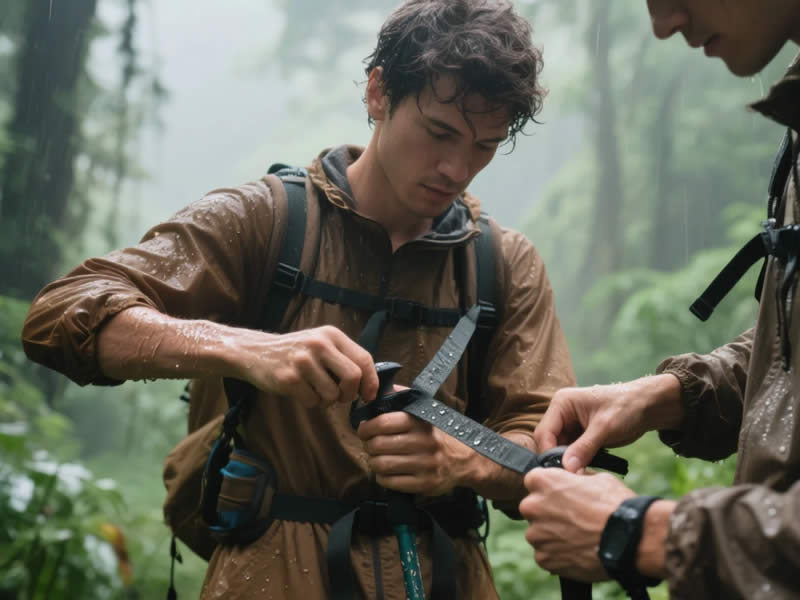
Pro tips for Brazil:
- Rinse straps after humid hikes—sweat and humidity can make them sticky and smelly.
- Choose perforated or mesh-backed straps for breathability.
- Avoid leather – it absorbs moisture and stiffens.
- For Leki trigger straps – ensure the clip centres on the back of your hand and the padding isn't saturated.
1. Why humidity changes how you adjust straps
Brazil's humid environments—the Atlantic Forest, the Amazon, and coastal trails—mean you will sweat. Sweat makes your hands swell slightly, reduces friction, and can make straps slippery and smelly. A strap that fits perfectly in dry conditions may feel too tight or slip in high humidity.
2. The correct strap position
The strap should sit across the base of your palm (the fleshy area between your thumb and wrist), not across your wrist. This transfers the load directly to your skeletal structure, reducing strain on your grip and allowing you to keep your hand relaxed.
- Why the palm? – The base of your palm is the strongest part of your hand. It can bear weight without tiring.
- Why not the wrist? – A strap across the wrist compresses the veins, causing numbness and tingling. It also reduces power transfer.
3. Adjusting the tension – "snug but not tight"
In humid weather, your hands will swell. Adjust the strap so it is snug—but not tight—against the base of your palm. You should be able to slide one finger between the strap and your skin.
- Test with wet hands – Before a long walk, wet your hands and test the grip. If the strap slips, tighten it slightly. If it feels restrictive, loosen it.
- Re‑adjust during the walk – As you sweat, your hands may swell further. Stop and re‑adjust your straps if they feel uncomfortable.
4. Strap materials for humid conditions
- Nylon webbing with perforated padding – The best choice. Perforations allow airflow, reducing sweat build-up and chafing.
- Neoprene – Soft and comfortable, but can retain moisture. Choose neoprene with perforations.
- Mesh-backed straps – Breathable and quick‑drying.
- Leather – Avoid. Leather absorbs moisture, becomes stiff, and can chafe.
- Rubber or silicone – Not recommended. They trap sweat and can cause heat rash.
5. Adjusting different strap types
Traditional loop straps – Most trekking poles have a simple webbing loop strap. To adjust:
- Loosen the strap and slide your hand up through it from underneath.
- Tighten the strap so it sits across the base of your palm.
- Ensure you can slide one finger between the strap and your skin.
Leki trigger straps – The trigger system uses a clip and a padded strap. To adjust:
- Ensure the clip centres on the back of your hand.
- Adjust the width using the slider on the strap.
- Check that the padding isn't saturated with sweat—if it is, rinse and dry it.
6. Maintenance for humid weather
- Rinse after each hike – Salt and sweat degrade webbing. Rinse straps with fresh water and air‑dry.
- Don't use fabric softener – It coats the fibres and reduces wicking ability.
- Air‑dry in shade – UV rays can degrade the material.
- Replace when frayed – Frayed straps can break under load.
7. A simple hack – antiperspirant on your hands
A light application of antiperspirant on your palms before a walk can reduce sweating and improve grip. This is a common technique used by Brazilian hikers in the Atlantic Forest.
8. Common mistakes to avoid
- Strap too tight – Restricts blood flow and causes numbness.
- Strap too loose – The strap doesn't bear the load, causing you to grip tightly and tire out your forearms.
- Strap across the wrist – Reduces power transfer and can cause wrist pain.
- Not adjusting during the walk – As you sweat, your hands swell. Re‑adjusting is essential.
- Ignoring maintenance – Salt and sweat degrade webbing. Rinse and dry after each hike.
9. Final verdict
In Brazilian humid weather, the correct strap adjustment is snug but not tight, sitting across the base of your palm, with room for one finger. Test with wet hands, re‑adjust during the walk, and choose breathable materials like perforated nylon or neoprene. Rinse straps after each hike to prevent degradation. With the right adjustment and care, your straps will stay comfortable and secure in any humidity. Happy hiking!




