




How to use trekking poles to maintain proper posture during long descents?
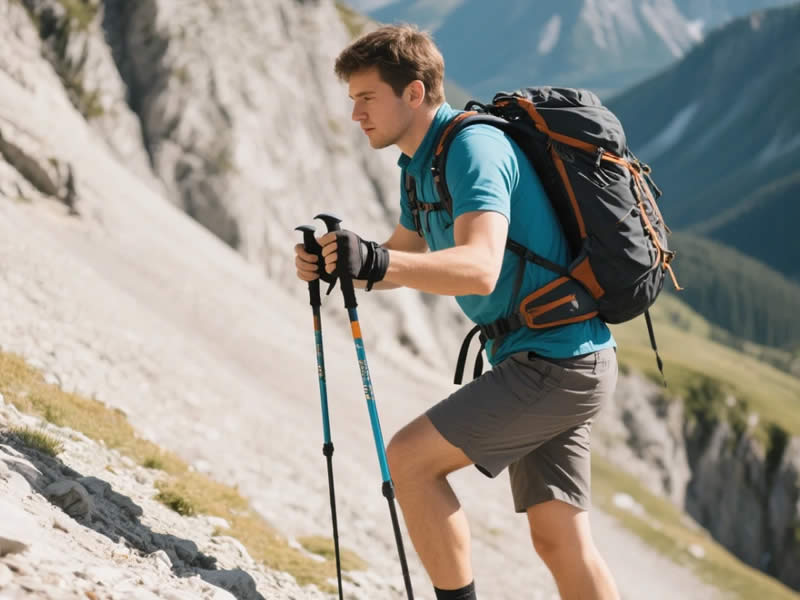
On long descents, lengthen poles by 5–10 cm and plant them ahead of your feet—this creates a braking effect that keeps your torso upright, prevents forward lean, and reduces knee impact. Push down through wrist straps (not your grip) to transfer load from your legs to your arms, preserving your quadriceps. Keep your shoulders back, chest open, and take short, controlled steps. On steep sections, use a double-plant for maximum stability. The result: a straighter back, less knee strain, and less fatigue on the descent.
1. Why long descents are a posture challenge
On long descents, your body naturally leans forward. This forward lean shifts your centre of gravity ahead of your feet, increasing the load on your knees and lower back. Your quads work overtime to brake your descent, and your back muscles strain to keep you upright. This posture—rounded shoulders, forward head, and a bent back—is inefficient and can lead to pain and fatigue.
2. The braking technique – lengthen and plant
The key to maintaining proper posture on descents is to lengthen your poles and use them as brakes.
- Lengthen poles – Extend your poles by 5–10 cm compared to your flat‑ground length. This allows you to plant the tip ahead of your feet, creating a braking effect.
- Plant ahead – On each step, plant the pole tip 20–30 cm ahead of your front foot. This gives you a forward anchor point.
- Push down – Apply firm downward pressure through the wrist strap, not your grip. The strap transfers the load to your arms and shoulders.
3. How this keeps your posture upright
When you plant the pole ahead and push down, you create a counterforce that keeps your torso upright. Instead of leaning forward, you are supported by the poles. This:
- Reduces knee impact – The braking effect slows your descent, reducing the impact on your knees.
- Protects your lower back – By keeping your torso upright, you reduce the strain on your lumbar spine.
- Engages your core – The upright position engages your abdominal muscles, supporting your spine.
4. Step‑by‑step guide
- Lengthen poles – Before starting the descent, extend your poles by 5–10 cm.
- Plant ahead – On each step, plant the pole tip ahead of your front foot.
- Push down – Apply firm downward pressure through the wrist strap.
- Keep your shoulders back – Open your chest and keep your shoulders back.
- Take short steps – Short steps keep your centre of gravity stable.
- Maintain a rhythm – A steady alternating rhythm (left pole with right foot) keeps you balanced.
5. The double‑plant on steep sections
On very steep descents, use a double plant:
- Plant both poles – Place both tips ahead of your feet, shoulder‑width apart.
- Push down – Push down through both straps simultaneously.
- Step down – Take a short step with one foot, then the other.
- Repeat – This gives you maximum stability and braking.
6. Common mistakes
- Poles too short – If your poles are not lengthened enough, you cannot plant ahead effectively.
- Gripping too tightly – A tight grip fatigues your forearms and reduces the load‑sharing benefit.
- Leaning forward – The poles are there to support you; use them to keep your torso upright.
- Ignoring the straps – The straps transfer your weight to the poles. If you are not using them, you are missing the main benefit.
7. Pro tips for Brazilian descents
Brazil's long descents (e.g., in Chapada Diamantina, Serra do Mar) can be punishing. Here are a few specific tips:
- Take breaks – Use your poles for support when resting.
- Keep your weight centred – The braking technique works best when your weight is centred over your feet.
- Use rubber tips on road sections – To save your carbide tips.
- Spare tips – The abrasive rock wears down tips; carry spares.
8. Final verdict
On long descents, lengthening your poles and using them as brakes is the most effective way to maintain proper posture, reduce knee impact, and prevent back strain. Plant ahead, push down through the straps, and keep your shoulders back. With the right technique, you can descend longer, more comfortably, and with less fatigue. Happy hiking!




