




How to fix a stuck trekking pole locking mechanism due to tropical dirt?
Tropical dirt—a mix of red clay, fine grit, and organic matter—can seize any locking mechanism. The fix depends on your lock type. For lever locks (cam locks): open the lever, rinse thoroughly with water, and use a brush to clear grit from the pivot and clamp. If still stuck, use a hex key to gently adjust the screw. For twist locks: soak the lower section in warm soapy water for 10 minutes to soften hardened mud, then twist while rinsing to clear the threads. Dry fully and apply silicone grease to the threads. For push‑button locks (folding poles): rinse the button mechanism with water and tap gently to free it—never use oil, as it will attract more dirt. Once cleaned, test the lock before your next walk. If the mechanism is still stuck, the expander (twist) or cam (lever) may be worn and need replacing. The golden rule: never force a stuck lock—you will damage the threads or bend the shaft.
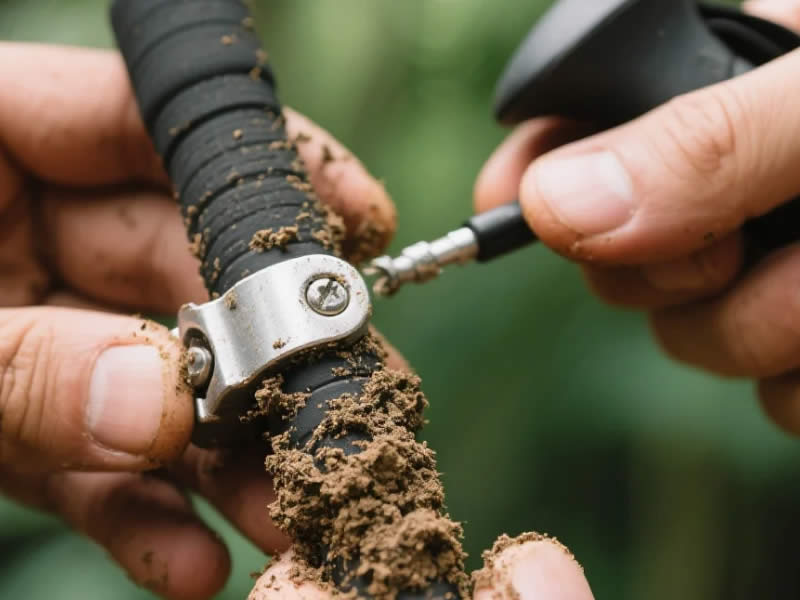
1. Why tropical dirt is a special problem
Tropical dirt—whether from Brazil's Atlantic Forest, the Amazon, or Southeast Asia—is different from the mud you find in temperate climates. It often contains:
- Red clay – Sticky, fine‑grained, and highly abrasive.
- Fine grit – Acts like sandpaper on locking mechanisms.
- Organic matter – Leaf litter and peat that break down into acidic compounds.
- High humidity – Keeps the mud wet and sticky for longer.
This combination can seize any locking mechanism. The mud can dry inside the lock, forming a hard, concrete‑like substance that jams the moving parts.
2. Lever locks (cam locks) – the fix
Lever locks are the most common locking mechanism on quality poles. They use a mechanical clamp that tightens around the outer shaft. When dirt gets into the mechanism, it can prevent the lever from closing fully or cause it to slip.
Step‑by‑step fix:
- Open the lever – Open the lever fully to expose the pivot and clamp.
- Rinse thoroughly – Rinse the mechanism with cold water. A garden hose or a tap works well. Direct the water into the pivot and clamp area.
- Scrub – Use a small brush (old toothbrush) to scrub away any compacted mud.
- Dry – Dry the mechanism with a cloth.
- Test – Close the lever. It should click firmly.
- Tighten if needed – If the lever feels loose, use a hex key to tighten the screw on the lever.
- Lubricate – Apply a tiny drop of silicone spray to the pivot pin (not the clamp).
3. Twist locks – the fix
Twist locks rely on an internal expander that presses against the inner wall of the shaft. When dirt gets into the threads, the lock can become stiff or impossible to adjust.
Step‑by‑step fix:
- Soak – If the lock is seized, soak the lower section in warm (not hot) soapy water for 10 minutes. This softens the hardened mud.
- Rinse – Rinse the threads with cold water while twisting the sections back and forth.
- Dry – Dry the threads and the inner shaft thoroughly.
- Lubricate – Apply a very thin layer of silicone grease to the threads.
- Test – Tighten and loosen the lock a few times to work in the grease.
4. Push‑button locks (folding poles) – the fix
Push‑button locks (found on folding Z‑poles) can jam with grit and mud. The button is small and internal, making it difficult to clean.
Step‑by‑step fix:
- Rinse – Rinse the button mechanism with water. Push the button in and out while rinsing to clear the grit.
- Tap gently – If the button is stuck, tap it gently with the handle of a tool or a small hammer.
- Dry – Dry the mechanism thoroughly.
- Avoid oil – Never use oil or grease on push‑button locks. It will attract more dirt.
5. What to avoid
- Do not use excessive force – Forcing a stuck lock can damage the threads or bend the shaft.
- Do not use hot water – Hot water can soften the anodised coating and damage seals.
- Do not use WD‑40 – WD‑40 is a solvent, not a lubricant. It will wash away existing grease and leave a sticky residue that attracts dirt.
- Do not use pliers directly on the shaft – They will scratch or dent the aluminium.
6. When to replace
If the lock is still stuck or damaged after cleaning:
- Lever locks – Replace the lever lock assembly. Many brands (Leki, Black Diamond, Decathlon) sell replacement locks.
- Twist locks – Replace the expander (the plastic part inside the lock). These are available for some brands.
- Push‑button locks – If the button is broken, you may need to replace the entire section.
7. Prevention – avoiding stuck locks
- Rinse after every muddy walk – Mud and grit are the main culprits. Rinse with fresh water and dry thoroughly.
- Lubricate locks – Apply silicone spray to lever lock pivots once or twice a year.
- Carry a small brush – For cleaning locks on the trail.
- Check locks regularly – Before a long walk, test your locks. If they feel stiff, clean them.
8. Pro tips for tropical hikes
- Rinse at the trailhead – If there's a stream or water source, rinse your poles before packing them.
- Carry a spare lock – If you are on a remote multi‑day trek, carry a spare lever lock or twist‑lock expander.
- Use a small brush – An old toothbrush is ideal for cleaning locks.
9. Final verdict
A stuck locking mechanism due to tropical dirt can be fixed with rinsing, soaking, and gentle scrubbing. The method depends on your lock type—lever, twist, or push‑button. Avoid excessive force, and do not use WD‑40. With regular cleaning and lubrication, you can prevent most lock issues. Happy hiking!




