




How to remove rust from aluminum trekking poles after coastal use?
Aluminum doesn't rust—steel does. On trekking poles, the aluminum shaft oxidizes, but rust is only a problem on steel components: screws, tip ferrules, and internal springs. After coastal use, act quickly: rinse thoroughly with fresh water, paying special attention to locks and tip ferrules. Dry fully. For light corrosion, use baking soda paste (baking soda + water) on a soft cloth – wipe, rinse, dry. For stubborn steel rust, use a brass brush and fine sandpaper, then apply a light oil. Prevention is easier than cure: rinse after every coastal walk – salt accelerates corrosion.
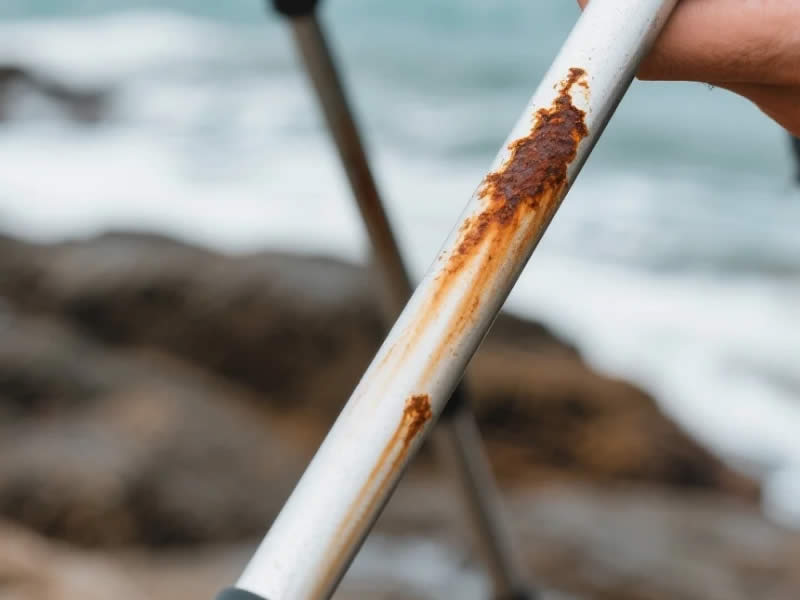
1. Understanding the problem
- Aluminum – Does not rust. It forms a protective oxide layer (dull grey). Surface oxidation is harmless.
- Steel – Rusts. Steel components are the only parts that rust: screws, tip ferrules, internal springs.
- Saltwater – Accelerates corrosion by acting as an electrolyte, causing galvanic corrosion where aluminum meets steel.
2. Materials you'll need
- Fresh water (or a garden hose)
- Soft cloths
- Baking soda
- White vinegar
- Brass brush (soft, won't scratch aluminum)
- Fine sandpaper (400–800 grit)
- Light oil (sewing machine oil or similar)
- Silicone spray
3. Step‑by‑step cleaning
a. Rinse immediately
- After coastal walking, rinse poles with fresh water. A quick rinse at the trailhead or at home is essential.
- Pay special attention to lever locks and tip ferrules – salt accumulates in crevices.
- Extend poles and rinse inner sections.
b. Remove salt and light oxidation
- Baking soda paste: Mix baking soda with water to form a thick paste. Apply to aluminum shafts with a soft cloth. Wipe, rinse, and dry.
- White vinegar: For stubborn salt residue, wipe with a cloth dampened with white vinegar – rinse well afterwards.
c. Remove rust from steel components
- For steel tip ferrules, screws, or internal springs:
- Use a brass brush (soft) to remove loose rust.
- For stubborn rust, use fine sandpaper (400–800 grit), then wipe with a cloth.
- Apply a light oil (e.g., sewing machine oil) to protect the metal.
d. Dry thoroughly
- Extend the poles fully and leave them to air‑dry.
- Do not store collapsed – moisture trapped inside can cause corrosion.
e. Lubricate locks
- Apply a tiny drop of silicone spray to lever lock pivots.
4. What to avoid
- Abrasive pads – They will scratch the aluminum.
- Strong acids – They can attack the anodised coating.
- Steel wool – Will leave particles that can rust.
- WD‑40 – Not a long‑term rust inhibitor; use a light oil instead.
5. Prevention for coastal use
- Rinse after every walk – Salt is the main culprit.
- Dry thoroughly – Never store poles damp.
- Lubricate steel parts – A light coat of oil on steel ferrules prevents rust.
- Keep locks loose – Store with locks slightly loosened to relieve pressure.
6. When to replace
- Pitting – If the aluminum is pitted (small holes), the strength is compromised.
- Cracked anodising – If the coating is worn, the aluminum is exposed.
- Severe rust – If steel components are heavily rusted, replace them.
7. Where to find replacement parts in Brazil
- Decathlon – Forclaz replacement tips and parts.
- Adventure Sport – Genuine Leki and Black Diamond parts.
- Mercado Livre – Generic parts.
8. Pro tips
- Rinse at the trailhead – If there's a stream or water source, rinse your poles before packing them.
- Use rubber tips on road sections – To protect carbide tips from wear.
- Carry a small cloth – For wiping down your poles at the end of the day.
9. Final verdict
Removing rust and corrosion from aluminum trekking poles after coastal use is simple with the right materials. Rinse with fresh water, scrub with baking soda paste for aluminum, and use a brass brush and oil for steel. Prevention is the key—rinse after every coastal walk and store dry. With proper care, your poles will survive many coastal hikes. Happy hiking!




