




How to lubricate trekking pole locks for smooth operation in humid weather?
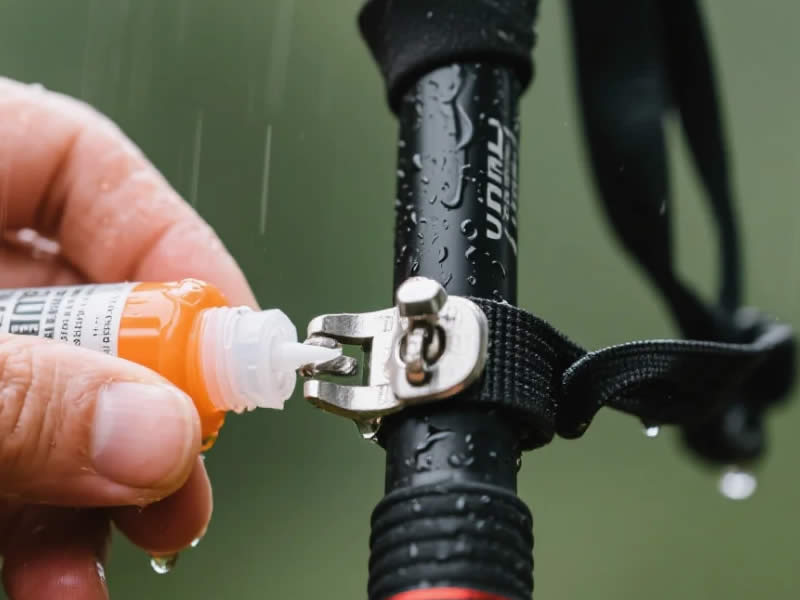
For humid weather, use silicone spray on lever lock pivots – never on the clamp. For twist locks, apply a thin layer of silicone grease to the threads. Clean locks first – any dirt will turn to grinding paste. Avoid WD‑40 or oil, which attract grit and cause slipping. In Brazil's humidity, lubricate locks every 3–6 months to prevent corrosion and keep them smooth. For lever locks, open the lever, apply one drop of silicone spray, and work it in. Wipe excess. For twist locks, extend the pole, wipe threads, apply a tiny amount of silicone grease, twist a few times, and wipe excess. A dry lock is a sticking lock; a greasy lock is a failing lock.
1. Why humidity is hard on locks
Brazil's humid conditions—whether in the Atlantic Forest, the Amazon, or coastal areas—are tough on locking mechanisms. Moisture can cause:
- Corrosion – Rust on steel components, pitting on aluminium.
- Sticking – Dirt and moisture combine to form a sticky paste that jams locks.
- Slipping – Oil-based lubricants attract dirt, causing the lock to slip.
- Seizing – Locks left dry can seize and be impossible to adjust.
2. The right lubricant for each lock type
| Lock Type | Recommended Lubricant | What to Avoid |
|---|---|---|
| Lever (cam) locks | Silicone spray | WD-40, oil, grease |
| Twist locks | Silicone grease | Oil, WD-40 |
| Push-button locks | Silicone spray (sparingly) | Oil, grease |
- Silicone spray – A light, dry lubricant that does not attract dirt. Ideal for lever lock pivots and general moving parts.
- Silicone grease – A thicker lubricant for twist‑lock threads. Apply sparingly.
- PTFE dry lube – A dry lubricant that leaves a film, good for carbon poles.
- Avoid WD-40 – It is a solvent, not a lubricant. It will wash away existing grease and leave a sticky residue.
- Avoid oil – Oil attracts dirt and can cause slipping.
3. Lubricating lever locks (cam locks)
Lever locks have a pivot pin and a cam mechanism. These are the only parts that need lubrication.
- Open the lever fully – This gives you access to the pivot points.
- Clean the mechanism – Before lubricating, ensure the pivot area is free of mud and grit. Use a small brush (old toothbrush) and water to clean it. Dry thoroughly.
- Apply lubricant – Spray a tiny amount of silicone spray or PTFE dry lube onto the pivot pins and the cam's moving surfaces. Just one or two small drops are enough.
- Wipe off excess – Wipe off any excess immediately. The clamp itself must remain dry—if you accidentally get lubricant on the clamp, wipe it clean with a cloth and a little isopropyl alcohol.
- Work it in – Open and close the lever a few times to distribute the lubricant.
- Test – The lever should close with a firm, positive click. If it feels gritty or stiff, clean and repeat.
4. Lubricating twist locks
Twist locks rely on threads to expand an internal mechanism. Lubrication should be applied to the threads, not the expanding part.
- Extend the pole fully – This gives you access to the threaded area.
- Clean the threads – Wipe the threads of the lower section with a cloth. If they are dirty, use a small brush and water to clean them. Dry thoroughly.
- Apply silicone grease – Using a small brush or your finger, apply a very thin, even coat of silicone grease to the threads of the lower section. A little goes a long way—too much grease will attract dirt.
- Work it in – Twist the sections together and apart a few times to spread the grease evenly.
- Wipe off excess – Wipe away any excess grease from the outside of the shaft. The expander (the internal part) should remain dry—only the threads need lubrication.
5. Lubricating push-button locks (folding poles)
Push‑button locks have a spring-loaded button that needs minimal lubrication.
- Clean the button – Rinse the button mechanism to remove grit.
- Apply lubricant – Apply a tiny drop of silicone spray to the button and press it a few times.
- Wipe off excess – Wipe away any excess.
- Avoid oil – Oil will attract dirt and jam the button.
6. How often to lubricate
- Lever locks – Lubricate the pivot pins every 3–6 months, or if the lever feels stiff.
- Twist locks – Lubricate the threads every 6–12 months, or after hiking in saltwater or very gritty conditions.
- Push‑button locks – Only when the button becomes stiff.
- After coastal use – Rinse and dry, then re‑lubricate if needed.
7. Preventative maintenance for humid weather
- Clean before lubricating – Always clean the mechanism thoroughly before applying new lubricant. Applying new lubricant over dirt will make it worse.
- Store poles with locks slightly loosened – This relieves pressure on the internal components and prevents them from seizing.
- Rinse after muddy walks – Mud and grit are the main culprits. Rinse with fresh water and dry thoroughly.
- Use rubber tips on road sections – To protect carbide tips from wear.
8. Pro tips for Brazilian conditions
- Rinse at the trailhead – If there's a stream or water source, rinse your poles before packing them.
- Carry a small brush – For cleaning locks on the trail.
- Use a hex key – For tightening lever locks if they loosen.
- Store indoors – Keep poles in a dry place, not a damp garage.
9. Common mistakes
- Over‑lubricating – Too much lubricant attracts dirt. Use a tiny amount.
- Lubricating the clamp – On lever locks, the clamp must stay dry. Lubricant on the clamp causes slipping.
- Using the wrong lubricant – WD‑40 and oil‑based lubricants are not suitable.
- Not cleaning first – Applying new lubricant over dirt traps the grit and accelerates wear.
10. Final verdict
Lubrication is a simple but essential part of trekking pole maintenance in humid conditions. Use the correct lubricants—silicone spray for lever locks, silicone grease for twist locks—and apply them sparingly to the moving parts only. Clean before lubricating, and avoid common mistakes like using WD‑40 or over‑lubricating. A little care will keep your locks smooth, reliable, and safe for years of walking in Brazil's humid conditions. Happy hiking!




