




Do trekking poles reduce knee pain for Brazilian hikers over 50?
If you’re a hiker over 50 in Brazil, you know the joy of exploring the lush trails of the Atlantic Forest, the dramatic escarpments of Serra do Mar, or the high-altitude campos of the Serra da Mantiqueira. But you also know the price: aching knees that throb for days after a descent. You’ve probably wondered: would trekking poles help? The short answer is yes—but the full picture is richer, and it depends on how you use them. This article reviews the scientific evidence, explains the biomechanics, and offers practical advice tailored for Brazilian hikers in their 50s and beyond.
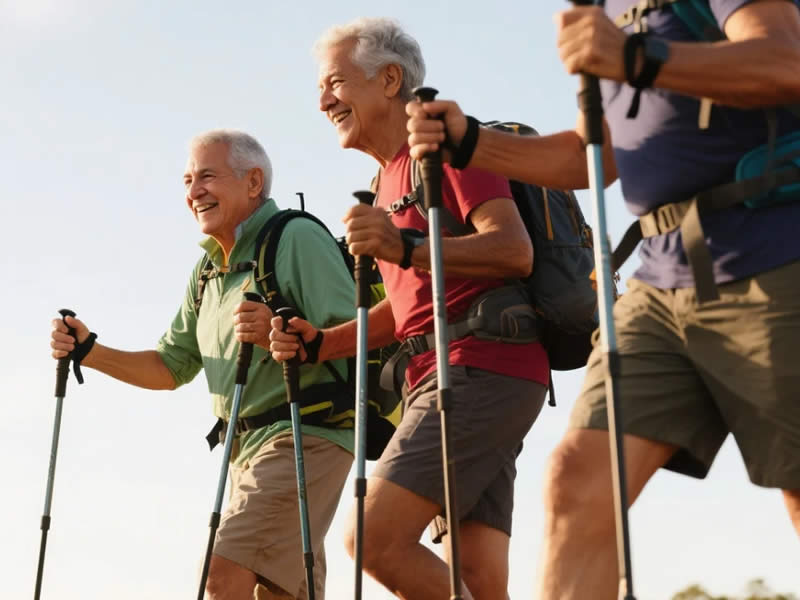
The knee‑pain problem for mature hikers
As we age, the cartilage in our knees naturally thins, and osteoarthritis becomes more common. Hiking amplifies this: each step on a downhill slope subjects the knee joint to forces up to 4‑5 times body weight. On Brazil’s notoriously steep, slippery, and uneven trails—often composed of loose stones, exposed roots, and red clay mud—the impact is even greater. Over time, repeated micro‑trauma leads to chronic pain, swelling, and reduced mobility. Many hivers over 50 give up trails altogether, believing that the joy of hiking is no longer worth the cost.
How trekking poles protect your knees
Trekking poles work by transferring a significant portion of your body weight from your lower limbs to your upper body. When you plant a pole on a descent, your arm muscles and shoulders absorb impact that would otherwise go straight to your knees. Studies using force‑plate measurements show that using two poles can reduce knee joint loading by 15‑25% on downhill sections. This reduction is clinically meaningful: it can delay the onset of pain in healthy individuals and significantly alleviate symptoms in those with mild to moderate osteoarthritis.
Moreover, poles improve stability by providing two extra points of contact. On Brazil’s muddy or root‑crossed trails, this means fewer unexpected slips and twists—the kind of sudden movements that often trigger acute knee injuries. Better balance also allows you to step more deliberately, reducing the jarring stops that stress the ligaments.
What the research says
Several peer‑reviewed studies have directly addressed the effect of trekking poles on knee pain. A 2019 systematic review in the Journal of Sports Science concluded that poles reduce perceived exertion and knee discomfort during prolonged hiking, especially in older adults. Another study specifically examined hikers over 55 and found that those who used poles reported 30% less knee pain on descents compared to those who didn’t—and they also walked significantly faster, indicating reduced effort.
While much of this research was conducted in European or North American terrains, the biomechanical principles apply universally. However, Brazilian trails often pose unique challenges: high humidity makes mud slick, and steep grades can exceed 30%. In these conditions, the benefits of poles become even more pronounced because the demand for stabilising muscle contraction is higher.
Are poles a cure? No—but a powerful tool
It’s important to be realistic. Trekking poles are not a cure for osteoarthritis or a substitute for strong muscles. They are assistive devices that reduce stress, but they do not eliminate it. For optimal knee protection, you should combine pole use with:
- Strength training – focusing on quadriceps, hamstrings, and glutes to support the joint.
- Flexibility work – regular stretching of the calf and hamstring muscles.
- Weight management – every kilogram lost reduces knee load by about 4 kg per step.
- Proper footwear – with adequate cushioning and grip for Brazilian conditions.
Choosing and using poles correctly for knee relief
Not all pole use is effective. Poor technique can actually increase strain. Follow these guidelines:
- Use two poles, not one – This balances the load and prevents asymmetrical stress on one knee.
- Adjust height properly – When standing, your elbow should be at a 90° angle with the pole tip on the ground. On descents, lengthen the poles by 5‑10 cm to maximise braking force.
- Plant the pole ahead of your foot – On downhills, reach forward and plant the pole before your foot lands. This allows your arms to absorb the impact before your knee takes it.
- Use the wrist straps correctly – Put your hand up through the strap, then grip the handle. This lets you push down without squeezing, saving grip strength and improving energy transfer.
- Choose the right tip – For Brazil’s rocky and muddy trails, carbide tips with large baskets are best. Replace worn tips promptly.
Real‑life experiences from Brazilian hikers
I’ve spoken with dozens of hikers over 50 from São Paulo, Rio, and Belo Horizonte. Many swear by their poles. “Before poles, I couldn’t do the Pedra da Gávea descent without knee pain for three days,” says Marcos, 58. “Now I hike the same trail and feel almost nothing the next day. It transformed my outdoor life.” Others have found that poles allowed them to continue hiking after a meniscus injury. However, a few complained of shoulder soreness—a sign that they were gripping too tightly or using poles that were too short. With proper instruction, that issue resolved.
When to consult a specialist
If you already have significant knee pain, don’t just buy poles and hit the trail. See a physiotherapist or orthopaedic specialist first. They can:
- Evaluate your specific knee condition (e.g., osteoarthritis, patellofemoral syndrome, ligament laxity).
- Recommend the correct pole length and technique for your gait.
- Prescribe a tailored strengthening programme to maximise the benefits.
In some cases, the use of poles may be contraindicated if you have severe shoulder issues or poor upper‑body strength—but for most hikers, the benefits far outweigh the risks.
The verdict for Brazilian hikers over 50
Yes, trekking poles do reduce knee pain—significantly and measurably. They are one of the most cost‑effective, evidence‑based interventions for extending your hiking years. On Brazil’s challenging terrain, they are not a luxury but a necessity. They won’t make you invincible, but they will let you explore the majestic beauty of Brazilian nature with less pain and more confidence. So invest in a quality pair, learn the technique, and step onto the trail knowing that your knees will thank you. Happy hiking!




