




Are trekking poles good for balance problems in older Brazilian adults?
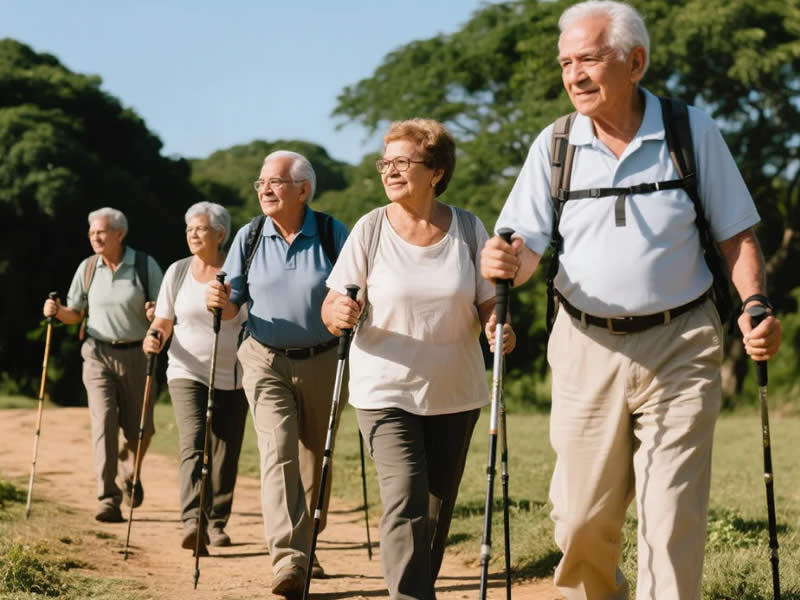
Yes – trekking poles are excellent for balance problems in older Brazilian adults. They provide two extra points of contact, creating a stable four-point base that significantly reduces fall risk on uneven trails. For best results, always use a pair of lightweight aluminium poles with comfortable cork grips, secure lever locks, and replaceable carbide tips. A great value option in Brazil is the Decathlon Forclaz MT900 – it is affordable, durable, and has cork grips that stay comfortable in humid conditions. Start on flat, firm ground and practice the alternating rhythm (left pole with right foot). Use rubber tips on pavement to protect the carbide and reduce noise. A physiotherapist can help you choose the right length and technique. With regular use, poles improve confidence and stability, helping older adults stay active and independent.
1. Why balance problems affect older adults
As we age, balance can decline due to:
- Muscle weakness – Loss of muscle mass in the legs and core.
- Neurological changes – Slower reflexes and reduced proprioception.
- Joint issues – Arthritis in hips, knees, or ankles can affect stability.
- Medications – Some drugs can cause dizziness or affect balance.
- Inner ear problems – Vertigo or other vestibular issues.
Falls are a leading cause of injury in older adults. In Brazil, where many older adults enjoy walking in parks, coastal paths, or the cerrado, a fall can be a serious setback. Trekking poles are an effective, low‑cost tool to reduce fall risk.
2. How trekking poles improve balance
a. Four points of contact – With two poles, you have four points of contact with the ground (two feet + two poles). This wider base of support dramatically improves stability, especially on uneven surfaces.
b. Testing the ground – Poles allow you to probe the ground ahead before stepping. On a park path with a cracked tile or a trail with a hidden root, you can test the surface before committing your weight.
c. Weight transfer – By transferring some of your body weight to the poles, you reduce the load on your legs. This makes it easier to maintain balance, especially on slopes or uneven ground.
d. Reaction time – A planted pole gives you a third point of support, allowing you to react more quickly if you stumble.
3. Benefits for older Brazilian adults
Brazil's climate and terrain present specific challenges:
- Humidity – Sweaty hands can make standard grips slippery. Cork grips are ideal – they become tacky when damp.
- Heat – Lightweight aluminium poles reduce arm fatigue. Heavy poles are tiring in the heat.
- Uneven pavements – Many Brazilian cities have uneven pavements; poles help navigate them.
- Parks and trails – From Ibirapuera to Chapada dos Veadeiros, poles improve stability on varied surfaces.
4. Choosing the right poles
For older adults, the right poles make all the difference:
- Two poles – Always use a pair. A single cane is not enough.
- Cork grips – Comfortable, non‑slip, and absorb sweat.
- Lightweight aluminium – 7075 or 6061 aluminium. Avoid heavy steel.
- Lever locks – Easier to operate than twist locks, especially with reduced hand strength.
- Adjustable length – Allows you to fine‑tune the height.
- Replaceable carbide tips – Essential for traction on varied surfaces.
- Rubber tips – For pavement walking to protect the carbide tips and reduce noise.
Top recommendation in Brazil: The Decathlon Forclaz MT900 (~R$400). It offers 7075 aluminium, lever locks, cork grips, and replaceable tips – all at an affordable price. Available at Decathlon stores nationwide.
5. How to use poles safely
- Start on flat, firm ground – A smooth path or a gym floor.
- Practice the alternating rhythm – Left pole with right foot, right pole with left foot.
- Use the wrist straps – The strap should sit across the base of your palm, not your wrist. The strap should take your weight, not your grip.
- Keep your back straight – The poles should support you, not pull you forward.
- Take short steps – On slopes or uneven ground, shorten your stride.
- Adjust the length – On flat ground, your elbows should be at 90° when the tip is on the ground. Shorten for ascents, lengthen for descents.
6. When to consult a professional
Before using trekking poles, it is advisable to consult a physiotherapist or occupational therapist. They can:
- Advise on the correct length.
- Recommend the right grip type (cork, foam, or rubber).
- Teach you the correct technique.
- Assess whether poles are appropriate for your specific condition.
7. Research and evidence
Studies have shown that using two walking poles reduces the risk of falls on uneven ground by up to 25% in older adults. A 2018 study in the Journal of Applied Gerontology found that pole walking improved balance and reduced the fear of falling in older adults. The confidence boost is as important as the physical support – when you feel more stable, you walk more, and that improves overall health.
8. What not to do
- Use only one pole – A single pole does not provide the same stability as a pair.
- Over‑rely on poles – Poles are a support aid, not a substitute for good footwear or regular exercise.
- Use poles that are too long or too short – Incorrect length reduces stability and can cause discomfort.
- Ignore the straps – The straps are essential for load transfer.
- Use worn tips – Worn carbide tips reduce grip on uneven surfaces.
9. Final verdict
Trekking poles are a valuable tool for older Brazilian adults with balance problems. They provide stability, confidence, and independence. With the right poles—lightweight, cork‑gripped, lever‑locked—and the right technique, you can walk safely and confidently on Brazil's varied terrain. Start on flat ground, practice the alternating rhythm, and enjoy the freedom of walking with confidence. Happy (and safe) walking!




