




Are trekking poles recommended for people with osteoporosis hiking in Brazil?
Yes – but with important precautions. For people with osteoporosis hiking in Brazil, trekking poles are strongly recommended because they reduce fall risk (two extra points of contact) and offload weight from vulnerable joints. However, avoid using poles on hard, icy, or very slippery surfaces where a slip could cause a fracture. Always use two poles, keep your back straight, and use rubber tips on pavement. Consult your doctor before starting – especially if you have existing fractures. Start on flat, firm ground and build up gradually. Use lightweight aluminium poles with lever locks and cork grips. For Brazilian trails, the Decathlon Forclaz MT900 is a great value option. Never lean heavily on the poles – keep your back straight.
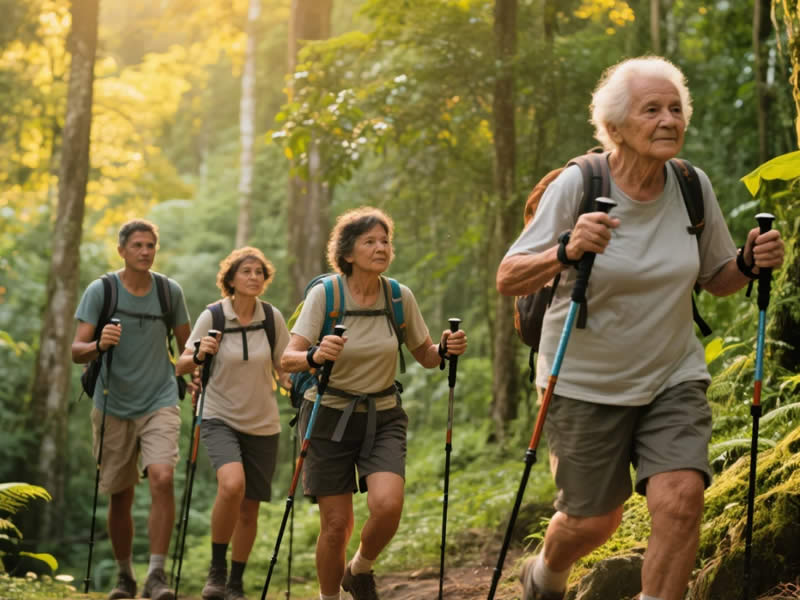
1. Why osteoporosis requires extra care
Osteoporosis is a condition where bones become weak and more likely to fracture. The most common fracture sites are the spine, hip, and wrist. A fall is a major risk, as even a minor fall can cause a fracture. Therefore, the primary goal when walking is to prevent falls and protect vulnerable bones. Trekking poles can be a valuable tool in achieving this, but they must be used with caution.
2. The benefits of trekking poles for osteoporosis
a. Fall prevention – Two poles provide four points of contact with the ground, significantly improving stability. On uneven ground, this wider base of support helps prevent trips and slips.
b. Offloading weight – By transferring some of your body weight to the poles, you reduce the load on your hips, knees, and spine. This is particularly beneficial if you have arthritis or joint pain alongside osteoporosis.
c. Confidence – Using poles gives many people the confidence to walk more, which is important for maintaining bone density and overall health.
d. Posture – Two poles encourage a symmetrical, upright posture, which can help protect the spine.
3. Precautions – what to avoid
a. Hard, icy, or slippery surfaces – A sudden slip on ice or a wet tile could cause a fall. Avoid using poles on such surfaces unless you are very confident, and always use microspikes on ice.
b. Leaning heavily on the poles – If you have spinal osteoporosis, leaning heavily on the poles can put pressure on the spine. Keep your back straight and use the poles for balance, not as a crutch.
c. Over‑reaching – Planting the pole too far ahead can cause you to lose your balance. Plant the pole close to your feet.
d. Using only one pole – A single pole is less stable than two. Always use two poles for maximum balance.
4. Choosing the right poles for osteoporosis
- Lightweight – Carbon or 7075 aluminium reduces arm fatigue.
- Cork or foam grips – Comfortable, non‑slip, and reduce hand strain.
- Lever locks – Easier to operate than twist locks, especially with reduced hand strength.
- Rubber tips – Essential for walking on hard surfaces to reduce impact and protect carbide tips.
- Shock absorption – Internal springs can reduce impact on wrists and hands.
5. Technique for safe walking with osteoporosis
- Start on flat, firm ground – Practice on a smooth surface before tackling uneven terrain.
- Use an alternating rhythm – Left pole with right foot, right pole with left foot.
- Keep your back straight – Avoid leaning forward. The poles should support you, not pull you forward.
- Take short steps – On slopes, shorten your stride.
- Use rubber tips on pavements – Protect your carbide tips and reduce impact.
6. When to consult a professional
If you have osteoporosis, it is essential to consult your doctor or physiotherapist before starting to use trekking poles. They can advise on the correct technique, length, and whether poles are appropriate for your specific condition. They may also recommend specific exercises to improve balance and strength.
7. Pro tips for Brazilian trails
- Start on flat ground – Practice on a flat, firm surface before tackling uneven trails.
- Use rubber tips on pavement – In Brazilian cities, use rubber tips on cobblestone and pavement.
- Avoid steep descents – If you are new to poles, avoid steep descents until you are confident.
- Wear appropriate footwear – Poles are not a substitute for good shoes with good grip.
- Avoid carrying heavy loads – Extra weight increases the load on your spine and joints.
- Use a walking pole for support when standing up – A pole can help you rise from a chair or bench without straining your back.
8. Where to buy in Brazil
- Decathlon – Forclaz MT900 (7075 aluminium, lever locks, cork grips). Best value (~R$400).
- Adventure Sport – Leki Makalu (premium, durable, steel lower section). Price: ~R$700–900.
- Mercado Livre – Generic and imported poles. Check compatibility and seller ratings.
9. Final verdict
Trekking poles are recommended for people with osteoporosis hiking in Brazil, but they must be used with caution. They reduce fall risk, offload weight from vulnerable joints, and encourage walking. However, avoid hard, icy surfaces, do not lean heavily on the poles, and always use two poles. Consult your doctor or physiotherapist before starting. With the right poles and technique, you can walk safely and maintain your bone health. The goal is to stay active and independent – and poles can help you achieve that. Happy (and safe) hiking!




