




How to train a senior Brazilian hiker to use trekking poles safely?
Train a senior Brazilian hiker safely in 5 steps:
- Fit correctly – set poles so elbows are at 90° on flat ground. Fit rubber tips for pavement.
- Start on flat ground – a smooth, firm surface (park path). Practice standing with two poles.
- Learn the rhythm – walk slowly: left pole with right foot, right pole with left foot. Use a relaxed grip – the strap should take the weight, not the fingers.
- Add slopes gradually – once confident, try a gentle incline.
- Always use two poles – one is not enough for stability.
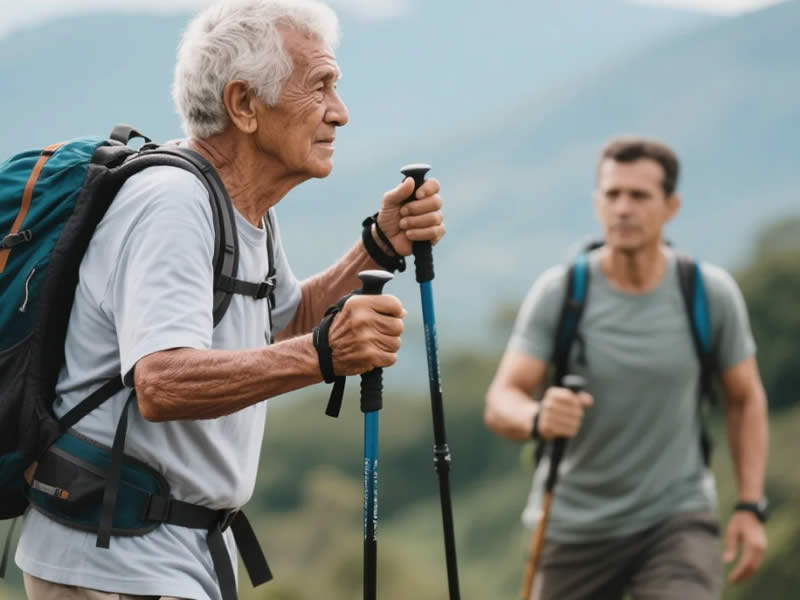
Key safety tips:
- Supervise initially – walk alongside.
- Stop if pain or dizziness occurs – rest and try again later.
- Keep sessions short – 10–15 minutes is enough for the first session.
- Use lightweight poles – heavy poles cause arm fatigue.
- Rubber tips – essential for pavement to protect carbide and reduce noise.
For Brazilian seniors, a good value option is the Decathlon Forclaz MT900 (cork grips, lever locks, lightweight). Start on flat ground, practice the alternating rhythm, and always use two poles. With practice, poles improve balance, confidence, and independence.
1. Why a structured approach matters for seniors
Training a senior to use trekking poles is different from teaching a younger hiker. Seniors may have reduced strength, balance issues, or fear of falling. They need a patient, structured approach that builds confidence gradually. Rushing the process can lead to frustration, discomfort, or injury. The goal is to make the poles feel natural and supportive, not intimidating.
2. Step 1 – setting up the poles correctly
Before any walking, ensure the poles are correctly adjusted:
- Length – With the tip on the ground and the senior standing upright, the elbow should be at a 90° angle. This is the correct flat-ground length.
- Rubber tips – For indoor or pavement practice, fit rubber ferrules to protect floors, reduce noise, and prevent the carbide tips from slipping on hard surfaces.
- Straps – The strap should sit across the base of the palm (not the wrist). It should be snug but not tight – you should be able to slide one finger between the strap and the skin.
3. Step 2 – starting on flat ground
Choose the right environment:
- A smooth, flat, firm surface – a park path, a gym floor, or a quiet street with even paving.
- Avoid grass, gravel, or uneven ground for the first session.
Start without walking:
- Have the senior stand with the poles in their hands, arms relaxed.
- Get used to the weight and feel of the poles.
- Practice holding them with a relaxed grip – the strap should bear the weight.
Practice the rhythm without poles (optional):
- Walk a few steps without poles, paying attention to the natural arm swing: right arm with left leg, left arm with right leg.
- This helps the senior understand the alternating rhythm before adding poles.
4. Step 3 – learning the alternating rhythm
The most efficient way to walk with poles is the alternating rhythm: left pole with right foot, right pole with left foot.
- Start slow – Walk at a very slow pace, counting "left, right, left, right" to keep the rhythm.
- Relax the grip – The strap should take the weight, not the fingers. The hand should be relaxed.
- Keep the back straight – The poles should support, not pull.
- Keep the poles close – Plant the pole near your body, not far ahead.
5. Step 4 – building confidence
- Short sessions – 10–15 minutes is enough for the first session. Stop if the senior gets tired or frustrated.
- Repeat – Practice the rhythm on flat ground over several sessions until it feels natural.
- Add gentle slopes – Once confident on the flat, try a gentle incline. Shorten the poles slightly for ascents and lengthen them for descents.
- Use a spotter – For the first few sessions, have a spotter walk alongside to offer encouragement and catch any stumbles.
6. Step 5 – progressing to uneven ground
Once the senior is comfortable on flat ground and gentle slopes, introduce uneven ground:
- Grass – A firm, grassy surface.
- Packed dirt – A well‑trodden path.
- Cobblestone – Use rubber tips on cobblestone to reduce noise and protect carbide.
7. Key safety tips for Brazilian conditions
- Heat and humidity – In Brazil's heat, lightweight poles reduce arm fatigue. Cork grips are ideal – they become tacky when damp.
- Cobblestone – Use rubber tips on cobblestone to protect carbide and reduce noise.
- Pavement – Rubber tips are essential on pavement.
- Rest breaks – Take breaks in the shade, use the poles for support, and stay hydrated.
- Stop if pain or dizziness occurs – Rest and try again later.
8. Equipment recommendations for Brazilian seniors
- Decathlon Forclaz MT900 – Best value. 7075 aluminium, lever locks, cork grips, lightweight. Available in Brazil (~R$400).
- Black Diamond Trail Cork – Premium choice. Cork grips, FlickLock, 7075 aluminium (~R$600–800).
- Leki Cressida – Women‑specific, narrower cork grip (~R$700–900).
9. Common mistakes to avoid
- Gripping too tightly – The strap should take the weight, not the fingers. A tight grip fatigues the forearms.
- Using only one pole – One pole is not enough for stability. Always use two.
- Poles too long or too short – Incorrect length reduces the benefit and can cause discomfort.
- Not using rubber tips – Carbide tips on pavement are noisy, wear down quickly, and can scratch floors.
- Rushing – Start slow and build up gradually.
10. When to consult a professional
If the senior has balance issues, arthritis, or osteoporosis, it is advisable to consult a physiotherapist or occupational therapist before starting. They can advise on the correct length, technique, and whether poles are appropriate for their specific condition.
11. Final verdict
Training a senior Brazilian hiker to use trekking poles safely is a gradual process. Start on flat ground, practice the alternating rhythm, and build confidence slowly. Always use two poles, fit rubber tips on pavement, and choose lightweight poles with cork grips. With patience and practice, poles will improve balance, confidence, and independence, allowing seniors to enjoy Brazil's beautiful trails safely. Happy (and safe) hiking!




