




Do shock‑absorbing trekking poles help with chronic back pain?
Yes – shock-absorbing trekking poles can help with chronic back pain, but they are not a cure. They work primarily by offloading weight from your spine to your arms, reducing lower back strain, and absorbing impact on descents, which eases jarring forces on the spine. They also encourage a more upright posture, relieving tension in the lower back. However, the spring mechanism mainly reduces hand/wrist fatigue – the real benefit comes from load transfer through wrist straps and correct technique. For best results, use two poles, set the correct length, push through the straps, and keep your back straight. For uphill sections, lock the shock absorber to save energy. Studies show poles can reduce perceived back strain, but they are not a substitute for physiotherapy or medical treatment. Consult a physiotherapist for a tailored exercise plan, and use poles as a supportive tool.
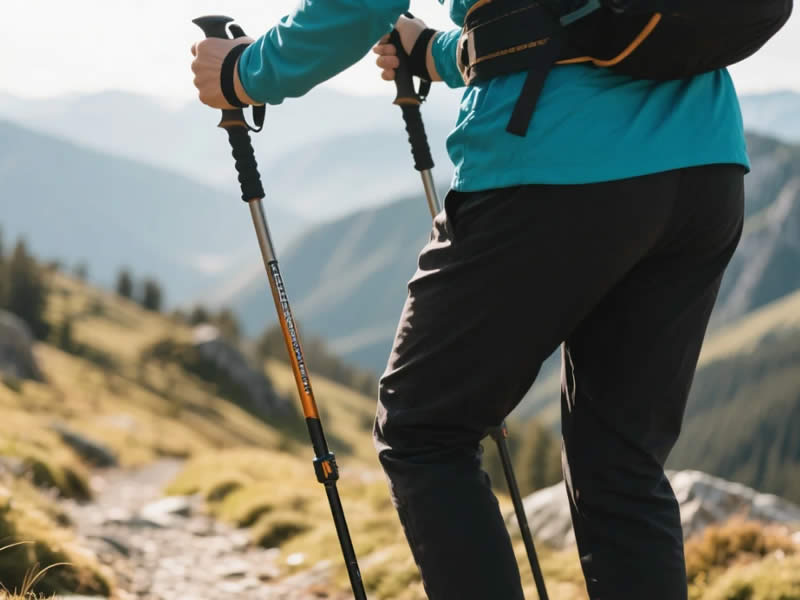
1. The link between walking and back pain
Chronic back pain – especially lower back pain – is often aggravated by walking. The impact of each step, the forward lean, and the strain on the spinal muscles can all contribute to discomfort. For someone with chronic back pain, walking can become a vicious cycle: you need to walk for health, but walking hurts. Trekking poles offer a way to break this cycle.
2. How trekking poles help with back pain
a. Load transfer – The primary benefit. When you plant a pole and push down through the wrist strap, a portion of your body weight is transferred from your spine and legs to your arms and shoulders. Studies show that using trekking poles can reduce knee joint forces by 20–25% on descents. This reduction in load is just as beneficial for your lower back.
b. Improved posture – Trekking poles encourage an upright stance. When you walk without poles, you tend to lean forward, which places strain on your lower back. With poles, you stand straighter, reducing the load on your spinal muscles.
c. Reduced impact – On descents, the impact force can travel up through your legs and spine. Shock-absorbing poles (with internal springs) absorb a fraction of this impact, reducing the jarring effect on your back.
d. Core engagement – The alternating rhythm of pole walking engages your core muscles, which support your spine. Stronger core muscles provide better spinal stability.
e. Confidence and stability – Pain can make you walk stiffly, which worsens the problem. Poles give you confidence, allowing you to walk more naturally and relaxed.
3. How shock absorption fits in
Shock-absorbing poles contain a spring or elastomer inside the shaft. When you plant the pole, the spring compresses, absorbing a small amount of impact energy. This reduces the vibration that travels up the shaft to your hands, wrists, and arms.
- On descents – The shock absorber can reduce the jarring force on your hands and arms. This can be beneficial if your back pain is related to the cumulative impact of walking.
- On flat ground – The effect is less noticeable. The ground itself absorbs most of the impact.
- On soft ground (mud, grass) – The spring adds little benefit.
Important: The shock absorber does not directly reduce the load on your back – it reduces the vibration transmitted to your arms. The real back‑saving benefit comes from load transfer through the wrist straps. A well‑adjusted strap is more important than the spring.
4. What the research says
Studies on trekking poles and back pain are limited, but the evidence is encouraging. A 2018 study in the Journal of Sports Sciences found that using trekking poles reduced lower back muscle activity by 10–15% on descents. A separate study on backpackers found that pole users had significantly less lower back pain at the end of a multi‑day trek compared to non‑users. The benefits are most pronounced in walkers who use the poles with correct technique.
5. The technique factor – why it matters
Poles are not a magic solution. If used incorrectly, they can actually worsen back pain:
- Poles too long – Forces you to reach forward, rounding your shoulders and arching your back.
- Poles too short – Causes you to hunch forward.
- Ignoring the straps – If you are not using the wrist straps, you are missing the load‑transfer benefit.
- Rushing – A steady, rhythmic pace is more efficient than stop‑start.
Correct technique:
- Set the correct length – On flat ground, elbows at 90°.
- Use the wrist straps – Push down through the strap, not your grip.
- Maintain an upright posture – Keep your chest lifted and shoulders back.
- Use a steady rhythm – Left pole with right foot, right pole with left foot.
- Engage your core – Gently tighten your abdominal muscles.
6. Shock absorbers – lock them uphill
If you have anti‑shock poles, use the lock‑out feature on ascents. Locking the spring makes the pole more efficient for pushing uphill. Unlock it on descents for the cushioning effect.
7. When to choose shock‑absorbing poles
- If you have arthritis in your hands or wrists – The spring reduces vibration.
- If you walk on hard, rocky terrain – The spring can reduce hand fatigue.
- If you have chronic back pain and want extra comfort – The spring can make descents feel less jarring.
- If you are a frequent hiker on mixed terrain – The lock‑out feature gives you the best of both worlds.
8. Who should choose solid poles?
- If you walk on soft ground (mud, grass) – The spring adds little benefit.
- If you are a fast walker – The spring can feel "spongy" and reduce efficiency.
- If you want a lighter, simpler pole – Solid poles are lighter and have fewer moving parts.
- If you are on a budget – Solid poles are cheaper.
9. Additional tips for back pain sufferers
- Strengthen your core – Core exercises (planks, bird‑dogs) support your spine.
- Stretch – Gentle hamstring and hip flexor stretches can reduce back pain.
- Lighten your pack – Every kilogram you carry increases the load on your spine.
- Take breaks – Rest your back and use your poles for support.
- Stay hydrated – Dehydration can worsen muscle pain.
10. Pro tips for Brazilian conditions
- Cork grips – In Brazil's heat and humidity, cork grips are ideal – they become tacky when damp.
- Lever locks – More reliable than twist locks in mud and dust.
- Lightweight – A lighter pole reduces arm fatigue.
- Rubber tips – On pavement, use rubber tips to protect your carbide tips and reduce noise.
11. When to consult a professional
If you have chronic back pain, it is essential to consult a doctor or physiotherapist before starting to use trekking poles. They can advise on the correct technique, length, and whether poles are appropriate for your specific condition. They may also recommend specific exercises to improve balance and strength.
12. Final verdict
Shock‑absorbing trekking poles can help with chronic back pain by offloading weight from your spine, improving posture, and reducing impact on descents. However, they are not a cure. The real back‑saving benefit comes from load transfer through the wrist straps and correct technique. Use two poles, set the correct length, and push through the straps. For uphill sections, lock the shock absorber. Consult a physiotherapist for a tailored exercise plan, and use poles as a supportive tool. With the right approach, you can walk longer and more comfortably with less back pain. Happy (and pain‑free) hiking!




