




Can trekking poles be used indoors for physical therapy exercises?
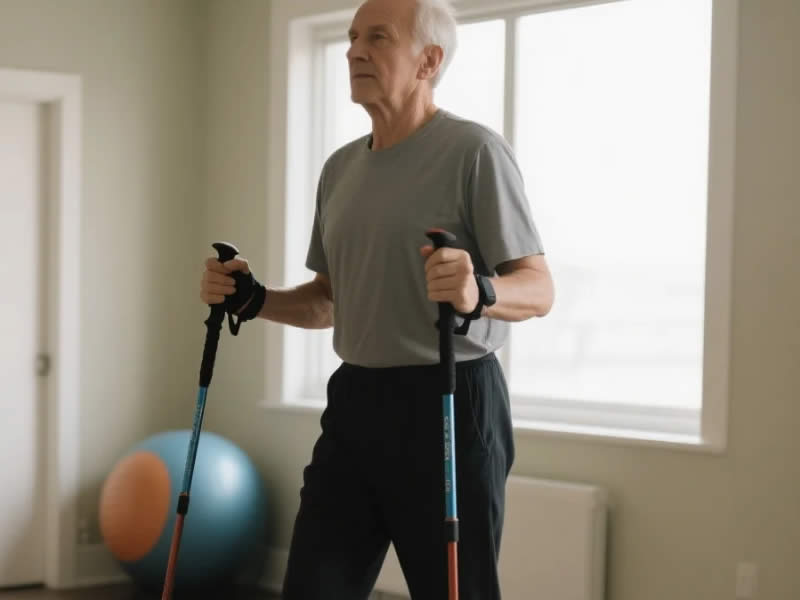
Yes – trekking poles can be used indoors for physical therapy exercises, but only with rubber ferrules fitted to protect floors and provide grip. They are excellent for balance drills (standing on one leg while holding poles), squat assists (lowering with pole support), upper body resistance (pushing down to engage arms and shoulders), and Nordic walking on the spot (simulating the walking motion). Always start on a non‑slip surface (e.g., a gym mat or rubber floor) – avoid carpets, as tips can catch. Use lightweight poles and start with short sessions. Consult your physiotherapist before starting any rehabilitation programme.
1. Why trekking poles are useful for indoor therapy
Trekking poles are not just for the hills. They can be a versatile and effective tool for indoor rehabilitation exercises. Their adjustable length, comfortable grips, and stable base make them ideal for a range of exercises that improve balance, strength, and coordination. They are particularly useful for people recovering from injury, surgery, or managing conditions like arthritis or balance disorders. Using them indoors also allows you to practice in a safe, controlled environment without the distractions of an outdoor trail.
2. Safety first – preparing your poles for indoor use
- Fit rubber ferrules – This is essential. Rubber tips protect your floors from scratches and provide grip on smooth surfaces like tiles or wood. They also reduce noise. Remove them when you go outdoors.
- Check the surface – Use poles on a non‑slip surface (e.g., a gym mat, a rubber floor, or a non‑slip tile). Avoid using poles on loose carpets or rugs – the tip can catch, causing you to trip.
- Adjust the length – Set your poles to your flat‑ground walking length (elbows at 90° when the tip is on the ground). This gives you the correct support for most exercises.
- Clear the area – Ensure you have enough space to move freely without hitting furniture.
3. Exercises using trekking poles indoors
a. Balance drills – Stand on one leg while holding the poles for support. You can vary the difficulty by standing on a soft surface (e.g., a cushion) or closing your eyes. This is excellent for improving proprioception.
b. Squat assists – Hold the poles in front of you, plant them on the ground, and use them to help you lower into a squat. This is useful if you have weak legs or knee pain.
c. Upper body resistance – Push down on the poles with your arms, engaging your triceps, shoulders, and chest. You can also push the poles forward and backward to simulate a rowing motion.
d. Nordic walking on the spot – Simulate the Nordic walking motion with an alternating rhythm (left pole with right foot, right pole with left foot). This is a great low‑impact cardiovascular exercise.
e. Shoulder and arm stretches – Use the pole to support your arm during stretches. For example, hold the pole behind your back with one hand and pull it upwards to stretch your shoulders.
4. Technique for indoor exercises
- Keep your back straight – Maintain good posture. The poles should support you, not pull you forward.
- Use the wrist straps – The straps should take your weight, not your grip. Your hands should be relaxed.
- Start slowly – Begin with simple exercises and build up gradually.
- Listen to your body – If you feel pain, stop and rest.
5. Who benefits from indoor pole exercises?
- Older adults – To improve balance and prevent falls.
- People with arthritis – To maintain joint mobility and strength.
- Post‑surgery patients – To rebuild strength and confidence after hip or knee surgery.
- Anyone with balance disorders – To improve stability and proprioception.
6. When to consult a professional
Always consult your physiotherapist or doctor before starting any rehabilitation programme. They can advise on which exercises are safe for your condition and may recommend a specific programme. They may also suggest using poles alongside other aids (e.g., ankle weights, resistance bands) for a more comprehensive routine.
7. What to avoid
- Carpets – Avoid using poles on carpet – the tip can catch and cause you to trip.
- Wet floors – A wet tile floor is slippery; ensure the surface is dry.
- Over‑reaching – Planting the pole too far ahead can unbalance you.
- Rushing – Take your time; controlled movements are more effective and safer.
8. Equipment for indoor therapy
- Lightweight aluminium poles – 7075 aluminium is a good balance of weight and durability. Heavy poles cause arm fatigue.
- Rubber tips – Essential for indoor use to protect floors and provide grip.
- Cork grips – Comfortable and non‑slip, especially if your hands sweat.
- Lever locks – Easier to operate than twist locks, especially for those with reduced hand strength.
9. A sample routine
- Warm‑up – Nordic walking on the spot (2 minutes).
- Balance drill – Stand on one leg, holding poles (30 seconds each side, repeat 3 times).
- Squat assists – 10–15 repetitions, using poles for support.
- Upper body resistance – Push down on poles (10–15 repetitions).
- Stretches – Shoulder and arm stretches using the pole.
- Cool‑down – Walk a few steps with the poles in an alternating rhythm.
10. Final verdict
Trekking poles are a valuable tool for indoor physical therapy exercises, offering a safe way to build balance, strength, and confidence. Always fit rubber ferrules to protect floors and prevent slipping. Start on a non‑slip surface and consult your physiotherapist before beginning. With the right exercises and technique, you can use your poles to support your recovery and stay active, even on days when you cannot go outside. Whether you are recovering from surgery, managing a chronic condition, or just wanting to improve your balance, indoor pole exercises are a simple and effective solution. Happy (and healthy) exercising!




