




Do trekking poles help with balance for visually impaired Brazilian walkers?
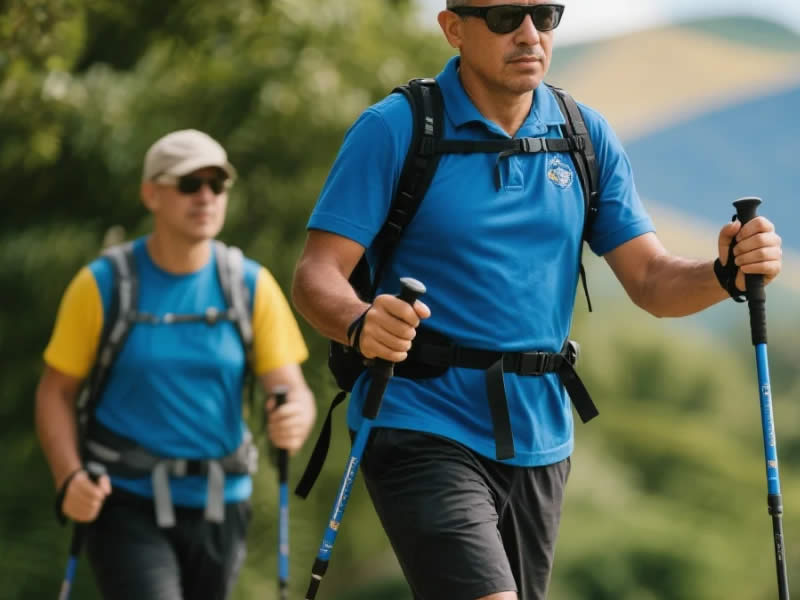
Yes – trekking poles can be very helpful for balance for visually impaired Brazilian walkers. They provide two extra points of contact, giving tactile feedback about the ground ahead—uneven surfaces, cracks, changes in elevation, obstacles like roots or stones—acting as an extended sense of touch. This allows the walker to "see" the path through their poles, reducing reliance on vision and increasing confidence. For best results, use two lightweight poles with carbide tips for outdoor trails, rubber ferrules for pavement, and lightweight cork grips. Start on flat, familiar ground and work with an orientation and mobility specialist (instrutor de orientação e mobilidade) to integrate poles into your walking technique. In Brazil, the Decathlon Forclaz MT900 is a durable and affordable option.
1. How vision loss affects balance
Vision plays a crucial role in maintaining balance. It provides information about the environment—where the ground is, how uneven it is, and where obstacles are. When vision is impaired, the brain has less information to process, making balance more difficult. This can lead to a slower, more cautious gait, a fear of falling, and reduced mobility. For visually impaired walkers, the risk of tripping or falling on uneven ground is significantly higher.
2. How trekking poles help
a. Tactile feedback – Trekking poles provide tactile information about the ground ahead. When you plant a pole, you feel the surface through the shaft. Is it hard? Soft? Uneven? Is there a crack? A root? A stone? This feedback allows you to anticipate changes in the terrain before you step on them, reducing the risk of a stumble.
b. Extended sense of touch – The pole acts as an extension of your arm, allowing you to "feel" the ground up to 1.5 metres ahead. This is particularly useful on uneven or unfamiliar terrain, where visual information is limited.
c. Two points of contact – With two poles, you have four points of contact with the ground (two feet + two poles). This wider base of support dramatically improves stability, especially on uneven surfaces.
d. Confidence – The extra support gives many walkers the confidence to walk more, which is important for maintaining overall health and independence. When you feel more stable, you walk more naturally, reducing the fear of falling.
3. Choosing the right poles for visually impaired walkers
- Two poles – Always use two poles. A single pole is not enough for stability.
- Lightweight – 7075 aluminium or carbon reduces arm fatigue. Heavy poles are tiring.
- Carbide tips – For grip on mud, grass, and rock. Essential for outdoor trails.
- Rubber tips – For pavement and indoor use. Protects carbide tips and reduces noise.
- Cork grips – Comfortable, non‑slip, and absorb sweat.
- Lever locks – Easier to operate than twist locks, especially with reduced hand strength.
Recommended in Brazil: The Decathlon Forclaz MT900 (7075 aluminium, lever locks, cork grips, replaceable tips) is a great value option (~R$400). Available at Decathlon stores nationwide.
4. Working with an orientation and mobility specialist
In Brazil, orientation and mobility specialists (instrutores de orientação e mobilidade) are trained to teach visually impaired people how to move safely and independently. They can help you:
- Choose the right poles – They can advise on the correct length and type.
- Learn the technique – They can teach you the alternating rhythm and how to use the poles to probe the ground.
- Integrate poles into your walking – They can help you transition from a traditional white cane to trekking poles, or use poles alongside other mobility aids.
5. Practical tips for Brazilian walkers
- Start on flat, familiar ground – A park path or a quiet street with even paving.
- Use rubber tips – On pavement and cobblestone, use rubber tips to protect the carbide tips and reduce noise.
- Keep your back straight – The poles should support you, not pull you forward.
- Practice the alternating rhythm – Left pole with right foot, right pole with left foot.
- Test the ground – Before each step, plant the pole firmly and feel the ground.
- Use two poles – A single pole is not enough for stability.
6. Research and evidence
Studies have shown that walking poles can improve balance and reduce the risk of falls in visually impaired walkers. A 2018 study in the Journal of Visual Impairment & Blindness found that pole walking improved balance and reduced the fear of falling in visually impaired adults. The tactile feedback provided by the poles was identified as a key factor in improving confidence and mobility.
7. Pro tips for Brazilian conditions
- Cobblestone – Use rubber tips on cobblestone to protect carbide and reduce noise.
- Heat and humidity – Cork grips are ideal – they become tacky when damp.
- Lightweight – A lighter pole reduces arm fatigue, especially in the heat.
- Carry spare tips – The abrasive terrain of Brazilian trails wears down tips quickly. Carry spares.
8. What to avoid
- Using only one pole – A single pole does not provide the same stability as a pair.
- Not using rubber tips on pavement – Carbide tips on pavement are noisy and wear down quickly.
- Rushing – Take your time. Poles are a tool for safety, not for speed.
- Ignoring the straps – The straps transfer your weight to the poles. If you are not using them, you are missing the main benefit.
9. Final verdict
Trekking poles can be a valuable tool for visually impaired Brazilian walkers. They provide tactile feedback, improve stability, and increase confidence. With the right poles – lightweight, cork‑gripped, lever‑locked – and the right technique, you can walk safely and confidently on Brazil's varied terrain. Start on flat ground, practice the alternating rhythm, and work with an orientation and mobility specialist to integrate poles into your walking technique. Happy (and safe) walking!




