




Do I really need trekking poles for hiking in Brazil?
Do I really need trekking poles for hiking in Brazil?
Not strictly – but highly recommended for most hikers. Brazil's trails are rocky, muddy, and steep. Poles protect knees, improve balance, and reduce fatigue on long descents.
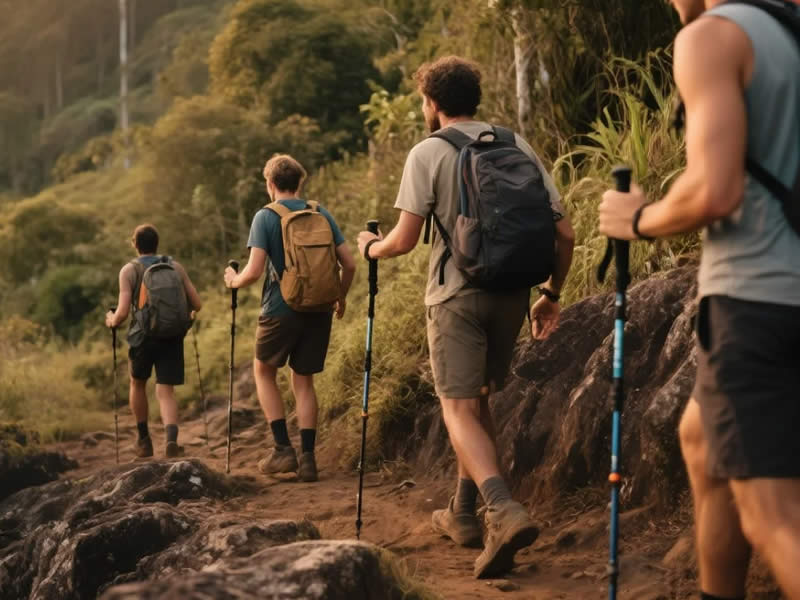
When they are essential:
- Rocky or steep descents (Chapada, Serra do Mar).
- Heavy pack – multi‑day treks.
- Knee issues – poles reduce impact by 20–25%.
- Muddy or slippery sections – four points of contact.
- Long trails – reduce leg fatigue.
When you can skip them:
- Short, flat walks (urban parks, beach paths).
- Light pack and strong knees.
Pro tip: If you're new to poles, try a pair on a short walk – you'll quickly feel the difference. In Brazil, the Decathlon Forclaz MT900 is a great affordable option. For serious hiking, poles are a game‑changer.
1. The short answer: no, but yes
Do you need trekking poles for hiking in Brazil? No – you can hike without them. But for the vast majority of hikers on Brazilian trails, they are highly recommended. The difference in comfort, safety, and knee protection is significant. The question is not whether you need them, but whether you want to hike more comfortably, safely, and for longer.
2. When poles are essential
a. Rocky and steep descents – Brazil's mountain trails (Chapada Diamantina, Serra do Mar, Serra da Mantiqueira) are rocky and steep. On descents, each step can generate impact forces of 3–5 times your body weight. Trekking poles can reduce knee joint forces by 20–25% . This is the single most important reason to use poles.
b. Heavy packs – If you are carrying a multi‑day pack (tent, food, water), the extra weight puts more strain on your knees. Poles help distribute this weight to your arms, reducing the load on your knees and back.
c. Knee issues – If you have any history of knee pain, poles are a game‑changer. They offload weight and reduce impact, allowing you to hike further without pain.
d. Muddy or slippery sections – Brazilian trails are often muddy and slippery. Two poles provide four points of contact, improving balance and reducing the risk of falls.
e. Long trails – On multi‑day treks, poles reduce leg fatigue by engaging your upper body. Studies show that using poles can reduce perceived exertion by 10–15% on long ascents.
3. When you can skip poles
a. Short, flat walks – If you are walking on flat, well‑maintained paths (e.g., urban parks, beach paths), poles are not necessary. They are a comfort aid, not a necessity.
b. Light pack and strong knees – If you are walking with a daypack and have strong knees, you may not need poles. Many fit walkers complete Brazilian trails without them.
c. Preference – Some walkers simply dislike the feel of poles. The choice is personal.
4. The Brazilian reality – why poles matter
Brazil's trails are not gentle. Quartzite and granite are hard and abrasive. Trails are often steep, with long descents. The combination of heavy rain and heat creates muddy, slippery conditions. Poles are not a luxury – they are a practical tool for safety and comfort.
5. What Brazilian hikers say
In Brazilian hiking forums and Facebook groups, the consensus is clear: most experienced hikers use poles, especially on multi‑day treks. Quotes from Brazilian hikers:
- "I never hike without poles – my knees are thankful."
- "On the Serra Fina descent, I could barely walk without them."
- "For Chapada Diamantina, poles are essential for the descents."
6. The technique factor
Poles are only useful if you use them correctly. Common mistakes include gripping too tightly, planting too far ahead, and incorrect length. If you are new to poles, take a few minutes to learn the correct technique: the alternating rhythm (left pole with right foot), pushing through the wrist straps, and adjusting the length for ascents and descents.
7. How to decide – the trial approach
If you are unsure, try a pair on a short, hilly walk. Borrow a pair or buy a budget set (e.g., Decathlon Forclaz MT900 at ~R$400). Use them with correct technique. You will quickly see if they improve your comfort and confidence.
8. What to buy in Brazil
- Decathlon Forclaz MT900 – Best value (~R$400). 7075 aluminium, lever locks, cork grips, replaceable tips.
- Leki Makalu – Premium choice (~R$700–900). Steel lower section, SpeedLock Plus.
- Black Diamond Trail Back – Reliable alternative (~R$600–900).
9. Pro tips for Brazilian trails
- Use two poles – A single pole does not provide the same stability.
- Use rubber tips on pavement – To protect carbide tips and reduce noise.
- Carry spare tips – The abrasive rock wears them down.
- Adjust length for terrain – Shorten for ascents, lengthen for descents.
- Practice the rhythm – Left pole with right foot, right pole with left foot.
10. Final verdict
Do you need trekking poles for hiking in Brazil? No – but they are highly recommended for most hikers. On rocky, steep, and muddy trails, they protect your knees, improve balance, and reduce fatigue. For multi‑day treks, they are a game‑changer. If you are new to poles, try a pair on a short walk – you'll quickly feel the difference. For serious hiking in Brazil, poles are a wise investment. Happy (and knee‑friendly) hiking!




