




Can trekking poles damage fragile Brazilian trail ecosystems?
Yes – trekking poles can damage fragile Brazilian trail ecosystems, but the impact is much smaller than that of boots, mountain bikes, or horses. The sharp carbide tip creates small puncture holes in soft ground, which can accelerate soil erosion, especially on peat, boggy moorland, and alpine meadows. On rocky paths, repeated scraping can leave white marks on limestone and sandstone. To minimise your impact, use rubber tips on soft ground, stay on the trail, avoid piercing fragile plants, use a single pole in sensitive areas, and carry your poles in very sensitive sections. The key is to use your poles responsibly – on soft ground, rubber tips protect the path; on rock, carbide gives you the grip you need.
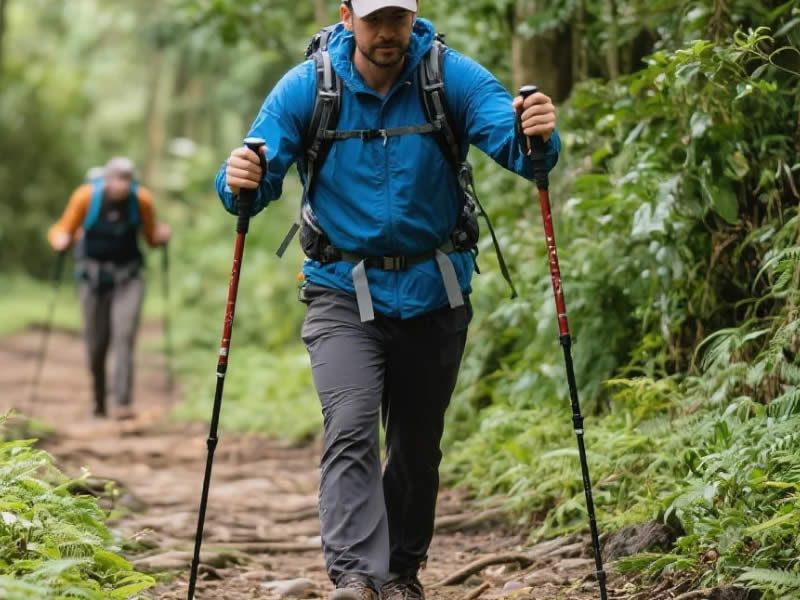
1. How trekking poles can damage fragile ecosystems
a. Puncture holes in soft ground – In soft ground (peat, mud, grass, or alpine meadows), the sharp carbide tip creates a small puncture. Each plant leaves a tiny hole. Over thousands of plants on a popular trail, these punctures can damage the soil structure, increasing erosion and water infiltration. On peat bogs, punctures can accelerate drying and degradation. In alpine meadows, a single puncture can damage slow‑growing vegetation.
b. Damage to vegetation – In areas with rare mosses, lichens, or alpine plants, a single plant can damage slow‑growing vegetation. This is a particular concern in fragile habitats like the high fells of the Serra do Mar or the campos rupestres of Chapada Diamantina.
c. Scratches on rock – On limestone, sandstone, and other soft rocks, the carbide tip can leave white scratches. These are largely cosmetic, but on popular routes, they can become visible and detract from the natural appearance.
d. Soil compaction – In areas with fragile soil structure (e.g., sand dunes, peat bogs), repeated planting can compact the soil, affecting plant growth and water infiltration.
2. How significant is the impact?
Compared to other factors, the impact of trekking poles is relatively small:
- Foot traffic – Boots are the main cause of trail erosion, especially on steep slopes and wet ground.
- Mountain bikes – Tyres can gouge deep ruts in soft ground.
- Horses – Hooves can damage fragile vegetation and cause erosion.
- Trekking poles – A secondary factor, but one that can be easily mitigated.
In heavily used areas, the cumulative effect of poles can be noticeable. However, in most cases, the damage is minor and can be prevented with simple measures.
3. How to minimise your impact
a. Fit rubber tips on soft ground – Rubber ferrules spread the load and prevent the carbide tip from puncturing the ground. Switch to carbide on rock or ice where you need grip. This is the single most effective way to reduce damage.
b. Stay on the path – Avoid planting poles on fragile vegetation outside the trail corridor. Keep your poles within the path's boundaries. This reduces the spread of trail erosion.
c. Lift poles over fragile plants – In areas with rare mosses or lichens, carry the poles rather than planting them. Use your balance to cross the area.
d. Remove baskets in dense vegetation – Small baskets can snag and break fragile plants. Consider removing them on vegetated sections.
e. Use a single pole in sensitive areas – On very fragile ground, consider using just one pole to reduce the number of punctures.
f. Avoid planting in the same spot repeatedly – Alternate your planting position to avoid concentrating the damage in one place.
4. Brazilian ecosystems at risk
- Campos rupestres – The rocky fields of Chapada Diamantina and Serra do Cipó. These are fragile, slow‑growing ecosystems.
- Peat bogs – In the Serra do Mar and the highlands of the South, peat bogs are fragile and slow to recover.
- Alpine meadows – On the highest peaks (Pico da Bandeira, Agulhas Negras), the vegetation is slow‑growing and easily damaged.
- Sand dunes – In coastal areas and Lençóis Maranhenses, the vegetation is fragile and easily damaged by punctures.
5. The ethical walker – a broader perspective
The impact of any single walker is small, but the cumulative effect of many walkers can be significant. By using poles responsibly, you are contributing to the long‑term health of the trails you love. It is a small gesture that makes a big difference when multiplied by thousands of walkers.
6. Practical examples
- In a peat bog – Fit rubber tips to spread the load. Avoid planting in the same spot repeatedly.
- In an alpine meadow – Use a single pole or lift your poles over the fragile vegetation.
- On a rocky trail – Use carbide tips for grip. The damage to rock is cosmetic but avoidable by planting carefully.
- On a sand dune – Use sand baskets to spread the load and avoid puncturing the dune.
7. Final verdict
Trekking poles can damage footpaths and fragile ecosystems, but the impact is much smaller than that of boots, bikes, or horses. The damage is most significant on soft peat, alpine meadows, and fragile rock. However, it is easily mitigated: use rubber tips on soft ground, stay on the path, lift poles over fragile plants, and remove baskets in dense vegetation. The goal is not to stop using poles – they are a valuable walking aid – but to use them responsibly. With a little care, you can enjoy the benefits of poles without causing lasting harm to the trails. Happy (and responsible) hiking!




