




Are trekking poles necessary for the Gold Trail between São Paulo and Rio?
Not strictly – but highly recommended for most hikers. The Gold Trail (Caminho do Ouro) is a multi‑day trek with rocky sections, steep descents, river crossings, and muddy patches. Poles protect knees on descents, improve balance on slippery sections, and test river depth before crossing. If you have knee issues or carry a heavy pack, they are essential. For fit walkers with a light pack, you can manage without. If using, choose aluminium poles with lever locks. The Decathlon Forclaz MT900 is a great value option.
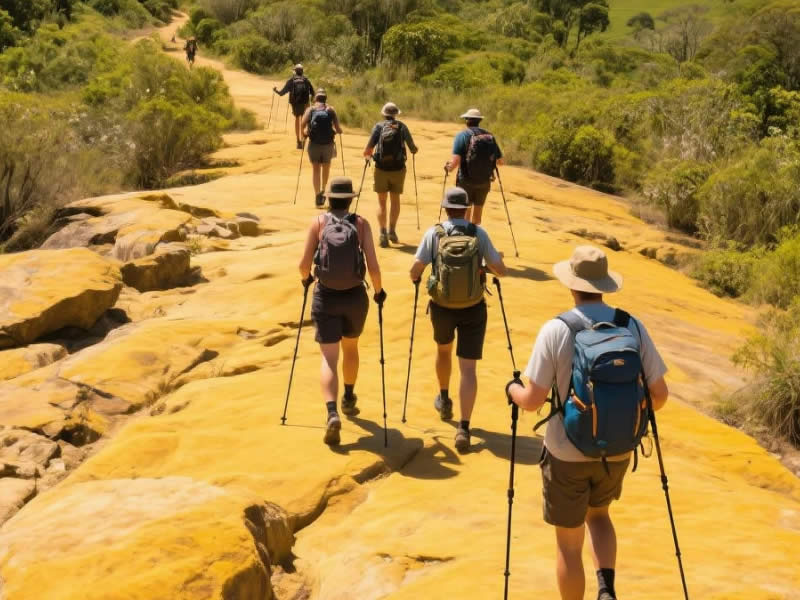
1. Understanding the Gold Trail (Caminho do Ouro)
The Gold Trail (Caminho do Ouro) is a historic route connecting São Paulo to Rio de Janeiro. It is approximately 80–90 km long and can be done over 3–5 days. The trail is characterised by:
- Steep ascents and descents – The Serra do Mar has long, punishing climbs and descents.
- Rocky terrain – The trail is often on stone, with loose sections and river crossings.
- River crossings – You will need to cross several rivers, often on slippery stones.
- Muddy sections – After rain, the trail becomes muddy and slippery.
- Heat and humidity – The Atlantic Forest is hot and humid.
2. When poles are essential
a. Knee protection on descents – The Gold Trail has long, steep descents. Without poles, each step generates impact forces of 3–5 times your body weight. Trekking poles can reduce knee joint forces by 20–25%, protecting your knees over the multi‑day trek.
b. Stability on rocky and muddy terrain – The trail is often slippery, with loose rocks and mud. Two poles provide four points of contact, improving balance and reducing the risk of falls.
c. River crossings – The trail has several river crossings. Poles help you test the depth and stability of the streambed before stepping, and provide stability on slippery stones.
d. Fatigue reduction – By engaging your upper body, poles reduce leg fatigue over the multi‑day trek. Studies show that using poles can reduce perceived exertion by 10–15% on long ascents.
e. Heavy pack – If you are carrying a multi‑day pack (tent, food, water), the extra weight puts more strain on your knees. Poles help distribute this weight to your arms, reducing the load on your knees and back.
3. When you can skip poles
a. Fit walkers with a light pack – If you are walking with a daypack and have strong knees, you may not need poles. Many fit walkers complete the Gold Trail without them.
b. Short, flat sections – If you are only walking a section of the trail, you may not need poles.
c. Preference – Some walkers simply dislike the feel of poles. The choice is personal.
4. What to look for in poles for the Gold Trail
- 7075 aluminium – Durable on rocky terrain; carbon shatters on rocks.
- Lever locks – Reliable in mud and dust; twist locks slip.
- Cork grips – Comfortable in the heat; become tacky when damp.
- Replaceable tips – Abrasive rock wears tips fast – carry spares.
- Mud baskets – Useful on wet sections.
- Spare tips – Essential for multi‑day treks.
5. Recommended poles for the Gold Trail
- Decathlon Forclaz MT900 – Best value (~R$400). 7075 aluminium, lever locks, cork grips, replaceable tips.
- Leki Makalu – Premium choice (~R$700–900). Steel lower section resists abrasion; SpeedLock Plus; cork grips.
- Black Diamond Trail Back – Reliable FlickLock, 7075 aluminium (~R$600+).
6. Pro tips for the Gold Trail
- Use rubber tips on road sections – The trail has some road walking; rubber tips save your carbide tips.
- Carry spare tips – The abrasive rock wears them down quickly.
- Adjust length for terrain – Shorten for ascents (better leverage), lengthen for descents (braking).
- Use mud baskets – On wet sections, mud baskets prevent sinking.
- Test your poles before the walk – Check locks, tips, and baskets.
7. Final verdict
Are trekking poles necessary for the Gold Trail? No – but highly recommended for most hikers. The trail's rocky, steep, and muddy sections make poles a valuable tool for safety and comfort. If you have knee issues or carry a heavy pack, they are essential. For fit walkers with a light pack, you can manage without. If you choose to use poles, aluminium poles with lever locks and cork grips are the best choice. The Decathlon Forclaz MT900 is a great value option for the Gold Trail. Happy (and safe) hiking!




