




Do trekking poles help with walking on wet and slippery tree roots?
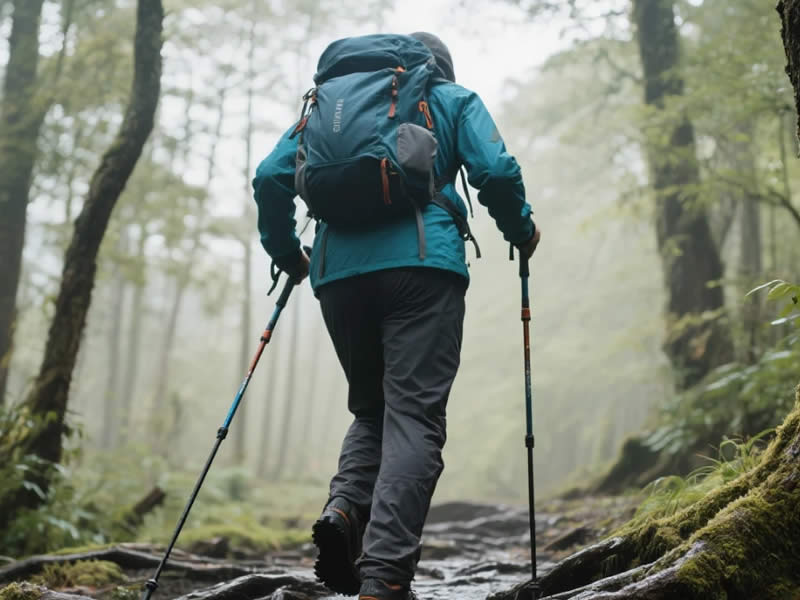
Yes – trekking poles are very helpful on wet and slippery tree roots. They provide two extra points of contact, improving balance and stability on the uneven, slippery surface. They also let you test each root before stepping, reducing the risk of a slip. The key is to use carbide tips (rubber tips slide on wet roots), plant vertically for maximum bite, use two poles, and take short, deliberate steps. In the Atlantic Forest or Amazon, roots are often slick and muddy – sharp carbide tips and careful footing are essential.
1. Why wet tree roots are a challenge
Wet tree roots are one of the most treacherous surfaces you can encounter on a trail. When wet, roots become extremely slippery – often more so than rock or mud. The surface is uneven, with gaps between roots, and the combination of moisture and the natural fibrous surface creates a low‑friction environment. A misstep can cause a sudden slip, leading to a fall or an ankle twist. This is particularly common in tropical forests like the Atlantic Forest and the Amazon, where rain is frequent and roots are exposed.
2. How trekking poles help
a. Two extra points of contact – With two poles, you have four points of contact with the ground. This wider base of support dramatically improves stability on the uneven, slippery surface.
b. Testing the ground – Poles allow you to probe the ground ahead before stepping. On a root‑covered trail, you can test the stability and slipperiness of each root before committing your weight.
c. Reduced slip risk – When you plant a pole on a root, the carbide tip bites into the surface. If your foot slips, the pole can help you recover your balance.
d. Confidence – The extra support gives many walkers the confidence to move more deliberately on slippery surfaces, reducing the risk of a panic‑induced fall.
3. The right technique for wet roots
a. Plant vertically – On a root, plant the pole vertically (straight down) rather than at an angle. A vertical plant drives the carbide tip directly into the root, maximising its bite and preventing skidding.
b. Use carbide tips – Remove rubber ferrules. Rubber tips slide on wet roots. The carbide tip grips on the root surface, even when wet. Keep your tips sharp – a blunt tip will skid.
c. Test each plant – Before committing your weight, tap the root with your pole. If the tip skids, the surface is very slippery – find a more stable planting spot.
d. Use two poles – A single pole is not enough for stability on wet roots. Two poles provide a balanced, four‑point support.
e. Shorten poles slightly – On very uneven ground, a slightly shorter pole (2–3 cm less than your flat‑ground length) gives you better control.
f. Take short steps – Short, deliberate steps keep your centre of gravity stable and reduce the chance of a slip.
4. What to avoid
- Rubber tips – They slide on wet roots. Remove them.
- Planting in crevices – The tip can get wedged between roots, bending or snapping the pole.
- Rushing – On wet roots, speed is your enemy. Take your time.
- Ignoring the warning signs – If you feel your foot starting to slide, stop, plant your poles firmly, and reassess.
5. Pro tips for tropical forests
- Keep your tips sharp – A blunt tip will skid on wet roots. Replace worn tips.
- Use mud baskets – On muddy sections between roots, mud baskets prevent the pole from sinking.
- Watch your footing – Roots are irregular; place your foot carefully on the flattest part.
- Use gloves – Wet roots can be hard on your hands; gloves improve grip.
- Carry spare tips – The abrasive mud and roots wear down tips quickly.
6. What the research says
Studies on trekking poles and slippery surfaces are limited, but the evidence is clear: poles improve balance and reduce the risk of falls on uneven, slippery terrain. A study in the Journal of Applied Gerontology found that using two walking poles on uneven ground reduced fall risk by up to 25%. The same principle applies to wet tree roots.
7. Safety first – when poles are not enough
On very slippery, steep root sections, poles are a support aid – not a substitute for good footwear and careful footing. If the roots are extremely slick, consider:
- Better footwear – Boots with a good tread are essential.
- Slow down – Speed is your enemy.
- Use a different line – Sometimes stepping on the soil between roots is safer than stepping on the root itself.
8. Final verdict
Trekking poles are very helpful on wet and slippery tree roots. They provide extra points of contact, allow you to test the ground ahead, and improve stability. For best results, use carbide tips (not rubber), plant vertically, use two poles, and take short, deliberate steps. In tropical forests (Atlantic Forest, Amazon), sharp carbide tips are essential. With the right technique and equipment, you can tackle root‑covered trails with confidence and safety. Happy (and safe) hiking!




