




Should I buy trekking poles online or from a physical store in Brazil?
You’ve decided to invest in a pair of trekking poles—perhaps to protect your knees on the steep descents of Serra do Mar, or to add stability on the muddy trails of the Amazon. But now comes the inevitable Brazilian shopper’s dilemma: should you click “comprar” on Mercado Livre, or head to the nearest Decathlon to hold the poles in your hands? This isn’t a trivial choice. The wrong decision could leave you with counterfeit gear, uncomfortable grips, or a frustrating returns process. In this guide, I’ll break down the pros, cons, and hidden costs of each option, and give you a clear decision framework tailored to Brazil’s unique retail landscape.
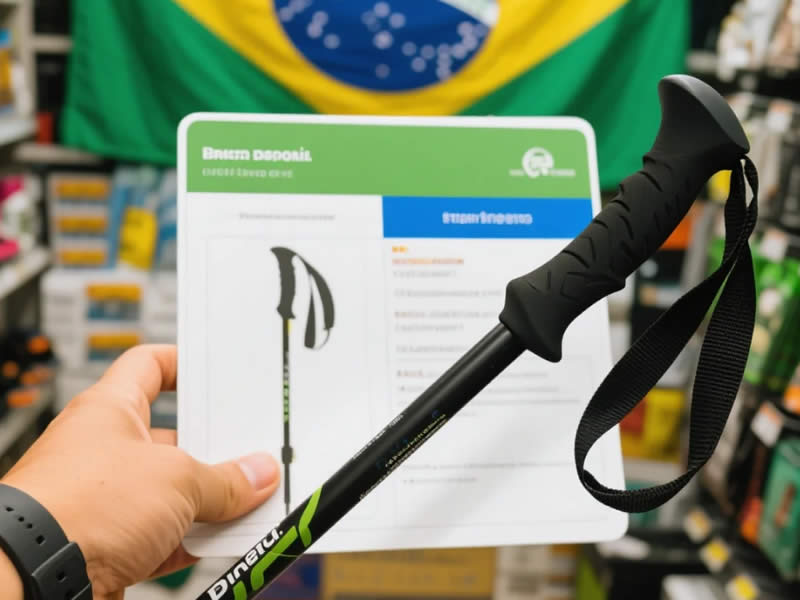
Why the question matters more in Brazil
Brazil is a country of contrasts when it comes to outdoor gear. On one hand, you have world‑class physical retailers like Decathlon with dozens of stores across major cities, and specialty shops like Adventure Sport in São Paulo that stock premium brands. On the other, you have a vibrant e‑commerce ecosystem—Mercado Livre, Amazon Brasil, Shopee, and even Instagram‑based sellers—offering dizzying price variations. Add to that the high import taxes, frequent postal strikes, and the prevalence of counterfeit products, and the decision becomes far more nuanced than in Europe or North America.
Buying from a physical store: the tangible advantage
Pros
1. Try before you buy – This is the single biggest reason to visit a store. You can test the grip shape, the foam or cork texture, and the weight distribution. You can extend and collapse the poles to see if the locking mechanism feels smooth and secure. For someone with arthritis or small hands, this tactile feedback is invaluable.
2. Immediate gratification – No waiting 5–15 days for delivery. You walk out with poles in hand, ready for your weekend hike. If you need them urgently, this is non‑negotiable.
3. Authenticity guaranteed – Buying from an authorised retailer (like the Leki or Black Diamond official distributor) ensures you’re getting genuine parts and valid warranties. Counterfeit poles are a real problem in Brazil—they look similar but often use inferior aluminium that bends or snaps under load.
4. Professional advice – Staff at specialty stores are usually hikers themselves. They can recommend the right length, the best baskets for your terrain, and even show you how to adjust the tension correctly. This education is priceless for first‑time buyers.
5. Easier returns and warranty claims – If something breaks within the warranty period, you can walk back to the same store. No shipping fees, no bureaucratic online forms.
Cons
1. Higher prices – Physical stores have overheads: rent, staff, taxes. Expect to pay 20–30% more than online, sometimes even 50% for premium brands. For example, a pair of Leki Micro Vario might cost R$900 in a shop but R$650 on Mercado Livre.
2. Limited selection – A store can only stock a fraction of the models available globally. If you want an unusual size, colour, or a specific carbon fibre model, they may not have it.
3. Pressure to buy – Sales assistants may push you toward higher‑margin products, and you might feel rushed if the store is busy.
Buying online: the price and variety champion
Pros
1. Lower prices – Online sellers often have lower margins, plus they can source from distributors without the brick‑and‑mortar cost. You can frequently save 15–40%, especially during promotions like Black Friday, Dia do Consumidor, or Amazon Prime Day.
2. Massive selection – You can browse hundreds of models, compare specifications side‑by‑side, and read reviews from other Brazilian hikers who have tested them on local trails. This is particularly useful if you want an obscure brand or a specific length.
3. Price comparison made easy – With a few clicks, you can compare the same model across Mercado Livre, Amazon, and Decathlon’s website. Chrome extensions and apps can alert you to price drops.
4. Convenience – Buy from your couch, have it delivered to your door. No traffic, no parking, no crowds.
Cons
1. No physical testing – You might love the look of a pole online, but hate the grip shape when it arrives. You can’t feel the wrist strap or check the lock’s smoothness until it’s in your hands.
2. Counterfeit risk – This is the biggest hidden danger. Many “too‑good‑to‑be‑true” deals on Mercado Livre or Shopee are fakes. They often copy the branding but use substandard materials. A snapped pole can cause a serious fall.
3. Complex returns – While Mercado Livre and Amazon have return policies, you often have to print labels, package the item, and drop it off at a shipping point. The refund can take up to 30 days. For heavy or bulky poles, return shipping may not be free.
4. Shipping delays and costs – Brazil’s postal service (Correios) can be unpredictable. Express shipping adds R$30–50. If you live in a remote area, delivery might take 2–3 weeks. Some sellers also charge high shipping fees that eat into your savings.
5. Warranty hassles – If you buy from an unofficial seller, the brand may not honour the warranty. You’d have to deal directly with the seller, who might disappear after the sale.
The hybrid approach: best of both worlds
For most Brazilian hikers, the optimal strategy is a three‑step hybrid:
- Visit a physical store – Go to Decathlon or a specialty shop to handle different models. Note down the exact model names, sizes, and your preferred length. Take photos of the packaging and ask about the retail price.
- Compare online – Use your smartphone to search the same model on Mercado Livre, Amazon Brasil, and Decathlon’s website. Factor in shipping costs and estimated delivery time.
- Decide based on the price gap – If the online price is **more than R$50 cheaper** (about 15% of a typical R$300–400 pole), and the seller has excellent ratings and a clear return policy, buy online. If the difference is smaller, buy in‑store for the peace of mind and instant ownership.
Many buyers also use this tactic during Decathlon’s in‑store promotions: they check the website price, then show it to the cashier—Decathlon often matches its own online prices.
Which Brazilian retailers to trust
Physical stores
- Decathlon – Nationwide, best for budget and mid‑range (Quechua, Forclaz, and some branded options). Great return policy (90 days) and knowledgeable staff.
- Adventure Sport (São Paulo) – Carries premium brands like Leki, Black Diamond, and Komperdell. Excellent for high‑end buyers.
- Mundo Outdoor – Stores in Rio and SP, good selection of imported brands.
- Local specialty trekking shops – Often found in hiking hubs like Campos do Jordão or Gramado; they know local terrain.
Online marketplaces
- Mercado Livre – The largest Brazilian platform. Use the “Full” filter to ensure quicker shipping and easier returns. Check the seller’s rating (above 4.8 stars) and number of transactions.
- Amazon Brasil – Increasingly good selection, reliable delivery, and straightforward returns. Look for “Amazon” as the seller.
- Decathlon Online – Same price as in‑store often, but they have exclusive online deals. Shipping is usually fast.
- Shopee – Cheap but high counterfeit risk; only buy from official brand stores (e.g., Leki Oficial).
- Specialty brand websites – Some brands like K2 (Brazilian brand) sell directly with good customer service.
Critical tips before you click or swipe
- Measure your height and arm length – Pole height is roughly 0.68 × your height in cm for Nordic walking, and 0.70 × height for general hiking. Always check the adjustable range—some poles only suit people under 185 cm.
- Know your locking preference – Twist‑locks are lighter but harder to adjust; lever‑locks are more reliable and easier to use with gloves. Test both in a store.
- Check the tip and basket compatibility – If you already have spare baskets, ensure the new poles accept them.
- Read user reviews for Brazilian trails – A pole praised in Europe might not withstand the high humidity and abrasive grit of the Atlantic Forest.
- Beware of “international” sellers – They often don’t carry stock in Brazil, meaning long customs delays and potential import taxes. Always check that the product ships from Brazil.
Conclusion: the final verdict
There is no universal answer—it depends on your priorities. If fit, feel, and immediate use are paramount, buy from a physical store. If you’re price‑conscious, have a clear idea of what you want, and can afford to wait, online is the winner. For the vast majority of Brazilian hikers, I recommend the hybrid approach: try in‑store, then buy online if you save more than R$50. And always, always verify the seller’s authenticity—a cheap counterfeit can cost you far more than money.
Your trekking poles are an investment in your safety and enjoyment. Take the time to choose wisely, and you’ll have a faithful companion on every trail from the Pantanal to the Pico da Neblina. Happy shopping—and happy hiking!




