




What is the best way to learn correct trekking pole technique in Brazil?
You’ve bought a shiny new pair of trekking poles. You’ve adjusted the height, locked the joints, and headed for the trail. But after an hour, your arms ache, your rhythm feels off, and you’re not sure you’re getting any benefit. The truth is, poles are not intuitive—using them correctly requires a specific technique that coordinates your arms, legs, and torso. In Brazil, with its diverse terrains from beachside paths to steep mountain ridges, learning the right form is even more critical. So, what’s the best way to master this skill? This guide maps out the most effective, accessible, and Brazil‑specific resources to turn you from a pole‑carrier into a pole‑propelled hiker.
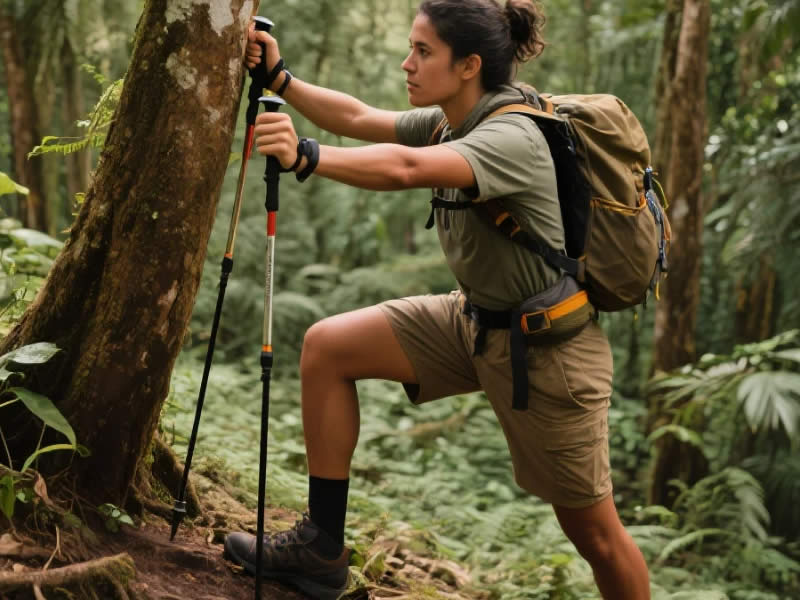
Why technique matters more than you think
Many beginners use poles like crutches—planting them passively and leaning heavily. That’s not only inefficient but can also cause shoulder strain and reduce the knee‑saving benefits. Correct technique involves a dynamic push: you plant the pole slightly ahead, push down and back with your arm, and use that force to propel yourself forward, almost like cross‑country skiing. This unloads your knees, engages your core, and increases your walking speed by up to 20%. On Brazil’s muddy or rocky trails, it also improves traction and stability, preventing slips that could lead to injury.
Step 1: Start with a free in‑store demo at Decathlon
The most accessible first step for any Brazilian hiker is visiting a Decathlon store. Many locations offer free introductory workshops or at least have trained staff who can demonstrate the basics. They’ll help you set the correct pole height (elbow at 90° when the tip is on the ground), show you how to use the wrist straps properly (hand up through the strap, then grip), and teach the basic “opposite arm‑opposite leg” rhythm. This 15‑minute session costs nothing and gives you an immediate foundation.
Even if your local Decathlon doesn’t host formal classes, the staff are often hikers themselves—don’t hesitate to ask for a quick demo. For premium brands like Leki or Black Diamond, specialty stores like Adventure Sport in São Paulo also offer personalised fitting sessions, though these may be more expensive.
Step 2: Watch Portuguese‑language video tutorials
Brazil has a growing community of Nordic walking and trekking enthusiasts, and several YouTube channels offer high‑quality instruction in Portuguese. Search for:
- “Caminhada Nórdica Brasil” – They produce detailed videos on pole technique, from flat ground to hills, with clear visual demonstrations.
- “Trilhas e Caminhadas” – This channel often includes pole technique tips within broader hiking tutorials.
- “Mundo Outdoor” – Their gear reviews frequently include usage advice.
Watch videos with a notebook. Pause and mimic the movements. Pay special attention to the “push phase”: the arm should extend backward past your hip, not just downward. Many Brazilians make the mistake of planting the pole too close to their feet—the correct plant is about a foot ahead, at the same time you step forward with the opposite leg.
For international resources with Portuguese subtitles, check the Nordic Walking UK or American Nordic Walking Association channels. They offer systematic drills that are easy to follow.
Step 3: Join a local hiking group for peer coaching
Brazil has a vibrant network of hiking clubs and Facebook groups, such as “Trilheiros do Brasil” and “Montanhismo BR”. These communities are goldmines for practical learning. Why? Because you can join group hikes and watch experienced members in action. Ask them to critique your form—most are happy to help. You’ll also learn trail‑specific adaptations, like how to shorten your poles for steep ascents and lengthen them for descents, which is crucial for the Serra do Mar’s gradients.
If you’re in Rio de Janeiro, the Clube de Montanhismo do Rio often hosts technique workshops. In São Paulo, Associação de Caminhadas organises weekend outings with instruction. These in‑person experiences are invaluable because they give you immediate, real‑time feedback.
Step 4: Book a session with a certified instructor or physiotherapist
For the most precise correction, invest in a one‑on‑one session with a professional. In Brazil, you can find:
- Certified Nordic walking instructors – The Brazilian Nordic Walking Association (Associação Brasileira de Caminhada Nórdica) maintains a list of accredited coaches. They offer private or group lessons, usually in parks or flat terrain, costing around R$100–200 per hour.
- Physiotherapists specialising in sports rehabilitation – Many clinics now incorporate pole walking into their programmes, especially for patients with knee or back issues. They can analyse your gait and tailor the pole technique to your unique biomechanics. This is particularly helpful if you have pre‑existing conditions like arthritis or previous injuries.
While this is the most expensive option (R$200–400 per session), it’s also the most effective—you get video analysis, personalised adjustments, and a set of exercises to practice.
Step 5: Practice on flat, forgiving terrain first
Do not start on steep, technical trails. Begin on a flat park path or a beachside promenade (like Rio’s Leblon or São Paulo’s Parque do Ibirapuera). Practice the alternating rhythm without thinking about obstacles. Once you feel natural—your arms swing in sync with your legs, and you push backward with each plant—gradually introduce gentle uphills and downhills. Brazil’s coastal cities offer excellent flat options for initial drills.
Set a goal: practice 30 minutes a day for a week. You’ll be amazed at how quickly the movement becomes automatic.
Step 6: Use online courses and apps
If in‑person options are limited in your region, consider structured online courses. Websites like Udemy or Skillshare have Nordic walking courses (in English, but you can enable subtitles). The International Nordic Walking Federation offers a free e‑learning module with animated diagrams. For Portuguese speakers, the Academia Brasileira de Caminhada has a paid online course with video modules and quizzes, costing about R$150.
Additionally, apps like “Pole Pro” (iOS/Android) provide step‑by‑step drills and a metronome to help you maintain rhythm. While these lack personal feedback, they are excellent supplements to your physical practice.
Common mistakes and how to fix them
- Gripping too tightly – Your hand should hold the handle gently; the strap does the weight‑bearing work. Relax your fingers.
- Planting poles vertically – The pole should angle backward slightly (about 20°) at the moment of push—this gives you forward propulsion, not just downward pressure.
- Shortening poles incorrectly – For uphills, shorten by 5‑10 cm; for downhills, lengthen by the same. Many Brazilians leave them at the same length and wonder why they feel awkward.
- Forgetting the core – Engage your abdominal muscles to keep your torso upright. Poles are not just for arms—they are a whole‑body tool.
Where to find advanced workshops and events
Keep an eye on events like “Expedição Outdoor” or “Adventure Sports Fair” held annually in São Paulo. They often feature technique clinics led by professional athletes. Also, many eco‑lodges in the Serra da Mantiqueira and Chapada Diamantina offer weekend retreats that include pole instruction as part of the package—combining learning with a spectacular hiking holiday.
Conclusion: The best way is a blended approach
There is no single “best” way—the ideal path combines free resources, peer learning, and professional guidance. Start at Decathlon for the basics, refine with YouTube videos, practice in your local park, and then join a group hike. If budget allows, book an instructor for one session to correct ingrained errors. In Brazil, you have an abundance of options, from bustling urban centres to remote trail communities. The key is consistency: practice regularly, record yourself (phone videos are great for self‑critique), and never stop tweaking your form.
Correct technique transforms trekking poles from simple walking aids into powerful performance tools—they’ll spare your knees, boost your speed, and make every Brazilian trail more enjoyable. So, step out, swing those poles, and feel the difference. Bom caminho!




