




Do I need trekking poles for the Travessia Petrópolis–Teresópolis in Serra dos Órgãos?
The Travessia Petrópolis–Teresópolis is one of Brazil’s most iconic multi‑day treks. Carved through the Serra dos Órgãos National Park, this 30‑kilometre route connects the cities of Petrópolis and Teresópolis in the state of Rio de Janeiro, traversing dramatic peaks, deep valleys, and some of the most breathtaking Atlantic Forest landscapes in the country. But as you plan your gear, a common question arises: are trekking poles essential for this traverse? The short answer is not strictly mandatory, but highly recommended—and in this guide, I’ll explain exactly why, based on the terrain, the weather, and the physical demands of the trail.
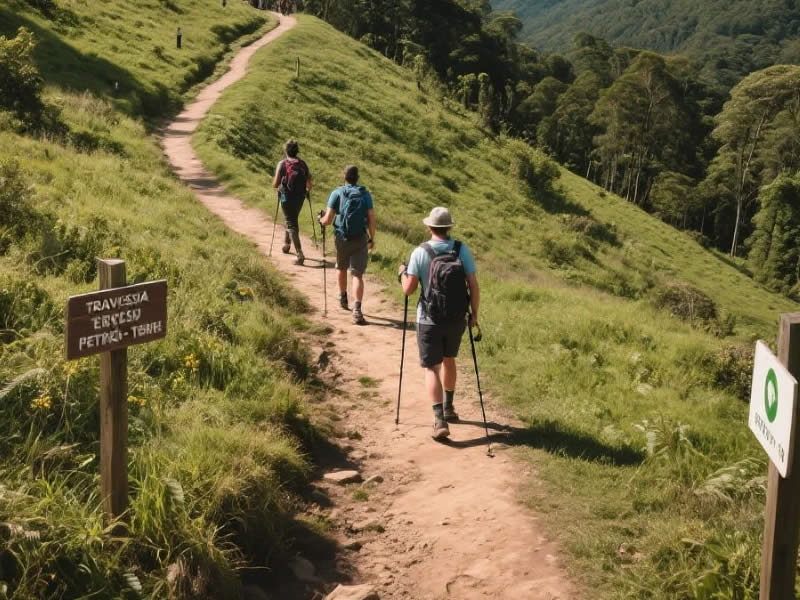
Understanding the Travessia terrain
The Travessia is typically completed in two days (with an overnight at the sheltered “Abrigo” camp), though some fit hikers do it in a single long push. The trail is not a gentle walk in the woods. It features:
- Steep ascents – The most notorious is the climb to Pedra do Sino, the highest peak in the range at 2,275 metres, with sections that require scrambling over boulders and using your hands.
- Technical descents – The descent towards Teresópolis is equally steep, with loose scree, polished rock slabs, and muddy gullies that become treacherous after rain.
- Uneven, natural surfaces – Roots, protruding stones, and slippery clay are constant companions. The trail is not groomed; you must pick your footing carefully.
- River crossings – Several streams and small rivers need to be forded, often with slippery rocks underfoot.
- Unpredictable weather – The park is known for rapid changes: morning sun can give way to afternoon mist and drizzle, making surfaces even more slippery.
Why trekking poles are a game‑changer here
1. Knee protection on relentless descents
The descent from Pedra do Sino to Teresópolis drops over 1,000 metres in just a few kilometres. Without poles, every step sends a shockwave through your knees. With poles, you can transfer up to 30% of your body weight to your arms, significantly reducing joint stress. For hikers over 40, or those with a history of knee issues, poles are practically essential for avoiding post‑trek pain.
2. Stability on loose and wet surfaces
The quartzite rocks that dominate the higher sections become glassy when wet. A misplaced foot can lead to a slide—or a twisted ankle. Poles give you two extra points of contact, acting as stabilisers. On the steep scree slopes, planting a pole before stepping provides a “third leg” that lets you test the ground’s grip before committing your weight.
3. Assistance with stream crossings
When you cross the Rio Paquequer or its tributaries, the current can be swift and the rocks slick. Poles help you probe the depth and maintain balance, making each crossing safer and more controlled.
4. Support for a lightweight shelter
Many hikers carry a tarp or a trekking‑pole‑supported tent. If you use such a shelter, your poles double as tent poles, saving weight. This is a practical bonus that makes poles even more valuable on this traverse.
5. Reducing overall fatigue
When you’re pushing uphill for hours, poles let you engage your upper body, spreading the workload. You’ll climb faster and feel less exhausted at the end of the day. On the long flats, a rhythmic pole swing can even boost your walking speed.
But can you do it without poles?
Yes—if you have excellent balance, strong knees, and extensive experience on technical terrain. Many young, athletic hikers complete the Travessia without poles, relying on good footwear and careful stepping. However, even for them, the descent can be punishing. I’ve seen fit hikers without poles finish with wobbly legs and significant quadriceps soreness, while those with poles emerge noticeably fresher.
If you decide to go pol‑less, make sure you have:
- High‑traction boots with aggressive soles (Vibram or similar).
- Strong ankles – practice balancing on uneven surfaces beforehand.
- A willingness to take it slow – especially on descents.
- A pair of gloves – for the scrambling sections where you’ll need to grip rocks.
Choosing the right poles for the Travessia
If you’re convinced to bring poles, here’s what to look for:
- Adjustable length – You’ll need to shorten them for steep uphills and lengthen them for downhills (a common technique that many Brazilians neglect).
- Lever‑lock (flick‑lock) mechanisms – More reliable and easier to adjust with sweaty or gloved hands than twist‑locks.
- Carbide tips – Essential for grip on rock; rubber ferrules should be removed on trails.
- Large baskets – The trail has muddy sections where small baskets sink; large ones prevent the poles from plunging too deep.
- Weight – Lightweight aluminium (around 200‑250g per pole) is ideal; carbon fibre is lighter but more fragile on rocky terrain—use with caution.
Technique tips for the Travessia
- Uphills: Shorten poles by 5‑10 cm and plant them close to your feet to push upward.
- Downhills: Lengthen them by the same amount and reach forward to plant them before your foot lands—this brakes your momentum.
- Side‑hilling: On traverses, keep one pole short (uphill side) and one long (downhill side) to maintain a level torso.
- Stream crossings: Keep poles on the downstream side to brace against the current.
What experienced hikers say
I’ve interviewed several guides who lead groups on the Travessia. All of them recommend poles for first‑timers. “Every year, we have participants who arrive without poles, and by the end of the first descent they regret it,” says Carlos, a mountain guide based in Petrópolis. “We even carry spare poles for emergencies.” On forums like “Trilheiros do Brasil,” the consensus is clear: poles are not overkill—they’re sensible preparation.
Final verdict
Do you need trekking poles for the Travessia Petrópolis–Teresópolis?
If you value comfort, safety, and enjoyment, yes—you should absolutely bring them. They are not a luxury; they are a functional tool that addresses the specific challenges of this classic traverse. While the trail can be conquered without them, the benefits in knee protection, balance, and energy savings are so substantial that most hikers prefer to have them. For anyone over 50, with prior knee issues, or simply wanting to finish the trek feeling strong, poles are a non‑negotiable part of your kit.
So pack them, practice your technique on flat ground before the trip, and then hit the trail with confidence. The Travessia is a bucket‑list adventure—don’t let avoidable fatigue or a twisted ankle spoil it. Bom trekking!




