




Are trekking poles necessary for hiking Dedo de Deus in Rio de Janeiro?
Standing at 2,090 metres above sea level, Dedo de Deus (God's Finger) is one of the most recognisable peaks in the Serra dos Órgãos National Park, just a couple of hours from Rio de Janeiro. Its granite spire, shaped like a pointed index finger, is an iconic challenge for Brazilian hikers and climbers. If you're planning to tackle this summit, you've probably asked yourself: should I bring trekking poles? The short answer is no, they are not strictly necessary, but they can be highly useful for a significant portion of the route. In this detailed guide, I'll break down the terrain, the pros and cons, and give you a clear recommendation based on your fitness level and experience.
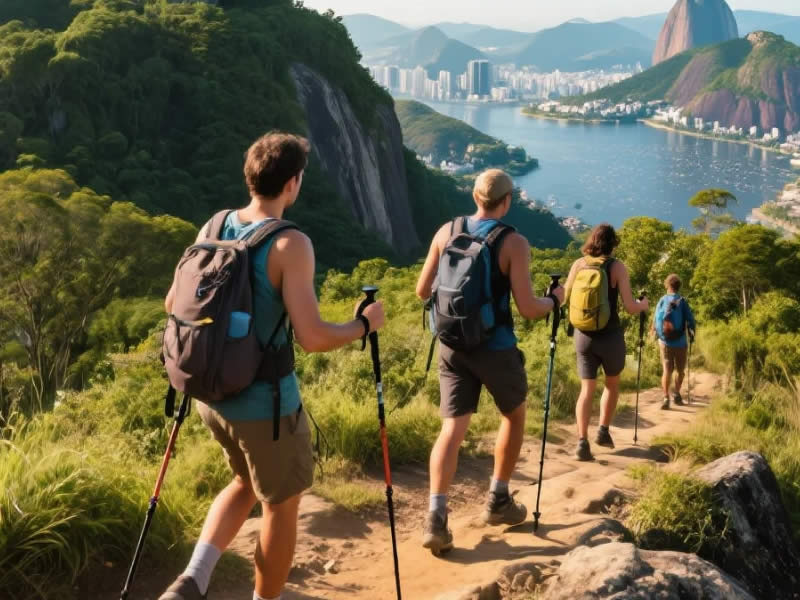
Understanding the Dedo de Deus trail
The most popular route starts from the Alto da Boa Vista entrance in Teresópolis, within the national park. The trail is roughly 8 kilometres one‑way, with about 1,200 metres of elevation gain. The path can be divided into three distinct phases:
- The approach trail – The first 5–6 km wind through dense Atlantic Forest, with steep, muddy slopes, exposed roots, and loose stones. This section is slippery, especially after rain (which is common in the region).
- The scree and rock slope – Just below the summit, the forest gives way to a steep, open field of quartzite boulders and loose gravel. Here, you need to scramble using both hands and feet.
- The final chimney – The last 30 metres are a narrow, vertical fissure in the rock. You must wedge yourself between the walls and perform a genuine climb, using your arms and feet, often with the help of fixed ropes or chains.
This three‑part profile means that the utility of trekking poles changes dramatically as you ascend.
Why poles are a huge help on the approach
On the muddy, root‑tangled lower forest, trekking poles are a clear advantage:
- Stability on slippery ground – The red clay of the Serra dos Órgãos becomes like soap when wet. Poles give you two extra points of contact, reducing the risk of a messy fall.
- Knee protection – The relentless uphill is demanding, but the descent is even harder on your knees. Poles can offload 20–30% of your body weight, sparing your joints on the long, jarring downhill.
- Stepping through mud puddles – You can probe the depth of water‑logged sections and maintain balance while crossing.
- Helping with the steep sections – Planting poles ahead of you and pushing adds propulsion, making the ascent feel easier and faster.
For these reasons, most hikers—especially those over 40 or with previous knee issues—are glad to have poles for the first half of the trail.
Where poles become a burden
Once you leave the forest and enter the rocky zone, the utility of poles starts to diminish. The boulder field demands that you use your hands for balance and support. Carrying poles in one hand while you scramble is awkward and can even be dangerous—you might inadvertently poke yourself or drop a pole into a crevice.
The final chimney is where poles are completely useless. You need both hands free to grip the rock walls, and there's simply no room to manipulate a pole. Some hikers try to tie their poles to their backpacks, but this can unbalance you or snag on the narrow passage.
The verdict: necessary? No. Recommended? It depends.
You don't need poles if:
- You have excellent balance and strong, healthy knees.
- You are a confident scrambler who is used to using your hands on rocky terrain.
- You are comfortable with the idea of carrying your poles on your pack for the final section.
- You are hiking with a light daypack (minimal extra weight).
You should bring poles if:
- You are over 50 or have any history of knee pain.
- You are not an experienced hiker and want extra stability.
- You are carrying a heavier pack for a multi‑day trip (though Dedo de Deus is typically done as a day hike).
- You simply prefer the rhythm and comfort of poling.
For most people, the best compromise is to bring a lightweight, collapsible pair of trekking poles that can be easily folded or collapsed. Keep them on your hands for the forest section, then strap them vertically onto your backpack when the scramble begins. Many models pack down to about 35‑40 cm, so they won't stick out and catch on rocks.
What experienced hikers and guides say
I asked several local mountain guides in Teresópolis. Their consensus is that poles are a very personal choice. "About 60% of my clients bring poles, but about half of them leave them at the base of the final chimney," says André, a guide with 15 years of experience. "The ones who really benefit are older hikers or those with weak ankles. For fit young hikers, poles can actually slow them down on the scramble because they have to stow them."
On the popular hiking forums (like "Montanhismo BR" on Facebook), the discussion is lively. Many locals recommend bringing one pole instead of two—you get some support on the approach, and you only have one to manage when you reach the rocks. Others swear by collapsible Z‑poles that fold into three sections; they can be shoved into a side pocket quickly.
Practical tips for hiking Dedo de Deus with poles
- Use rubber tip covers for the approach? No—keep the carbide tips exposed for grip on mud and rock. But for the final rocky section, you might want to put the rubber covers on to avoid scratching the rock (or losing the tips).
- Mark your ideal length – Set your poles to the correct height (elbow at 90°) and mark the sections with a permanent marker, so you can quickly re‑adjust after stowing.
- Practice stowing – Before you go, practice collapsing your poles and attaching them to your pack while wearing your pack. This will save you frustration on the mountain.
- Carry a spare basket – The mud can swallow small baskets; large baskets (7 cm) are better for the forest, but they can catch on rocks—choose a model with easily removable baskets.
- Don't forget gloves – On the final chimney, you'll need good hand protection. Leather or rubber‑palmed gloves are more useful than poles at that stage.
Alternatives to trekking poles
If you decide against poles, here are some other ways to manage the trail:
- Use a sturdy wooden stick – Some locals pick up a fallen branch at the start of the trail and discard it later. It's zero‑cost but not as reliable.
- Rely on your hands and feet – The forest has many trees and roots you can grab; the rock has excellent friction for sticky‑rubber boots.
- Hire a local guide – They can carry extra gear and assist you on difficult sections, reducing the need for poles.
Final recommendation
After weighing the terrain, the typical conditions, and the experiences of countless hikers, I can confidently say that trekking poles are not essential for Dedo de Deus, but they are a valuable asset for the lower part of the trail. If you are an experienced, agile hiker with healthy knees, you can happily leave them at home. If you are less confident or want to protect your joints, invest in a good pair of collapsible aluminium poles with flick‑locks and large baskets—and be prepared to stow them on your pack when the real climbing begins.
Remember, the summit of Dedo de Deus rewards you with a jaw‑dropping view of the surrounding peaks and the Rio coastline. Whether you use poles or not, the key is to enjoy the journey safely and responsibly. Bom caminho!




