




What are the best poles for the Serra Fina crossing (Brazil’s hardest trek)?
Serra Fina—the name alone sends a shiver down the spine of even the most seasoned Brazilian hikers. This 35‑kilometre traverse, usually completed over 4 days, is widely regarded as Brazil's most technically challenging trek. Cutting through the Serra da Mantiqueira on the border of Minas Gerais and São Paulo, it features knife‑edge ridges, polished granite slabs, endless scree fields, and descents that test every sinew in your legs. If you are planning to tackle this behemoth, your choice of trekking poles is not a casual decision—it's a critical safety consideration. The wrong poles can break, slip, or fail, leaving you stranded on exposed terrain. In this guide, I'll recommend the specific models, materials, and features that have proven themselves on Serra Fina, based on the experiences of local guides and veteran trekkers.
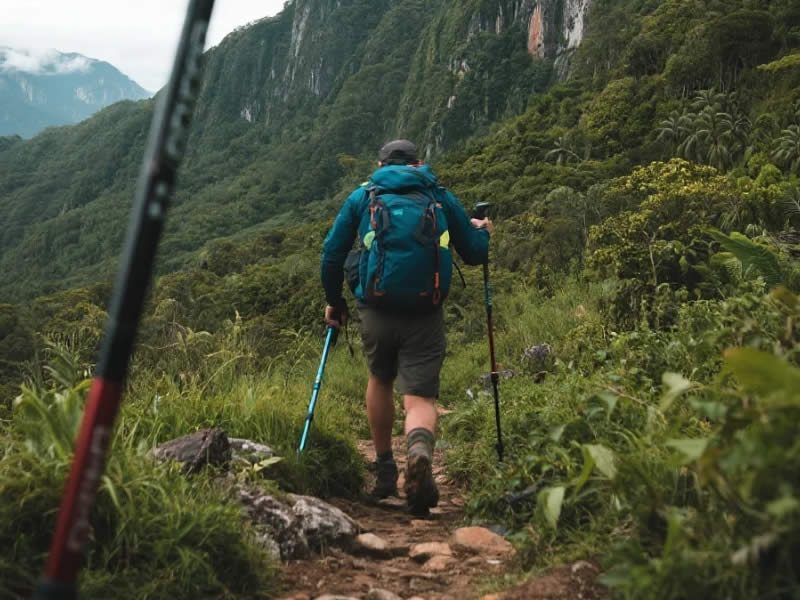
Why Serra Fina is a pole‑breaker
Before we talk about which poles to buy, you need to understand what they'll be up against. Serra Fina's challenges include:
- Polished granite slabs – The "fina" (fine) sections are named for the narrow, smooth rock ridges that become lethally slippery when wet. Poles need tips that can grip on near‑glass surfaces.
- Sharp quartzite scree – The descent into the valley is littered with loose, razor‑edged rocks that can slice through lightweight materials and abrade standard baskets.
- Perpetual humidity and rain – The Mantiqueira range is notorious for sudden downpours. Locks must function flawlessly when wet, and grips must stay secure in your hands.
- Long, knee‑punishing descents – You drop over 1,000 metres on the final day. Your poles are your knee's best friends—but only if they are correctly adjusted and reliable.
- Heavy packs – Most trekkers carry full camping gear, food, and water (often 15‑18 kg). Poles must withstand high axial loads without bending or breaking.
The non‑negotiable features for Serra Fina
1. Material: 7075‑T6 aluminium – no compromise
Carbon fibre poles are lighter, but on Serra Fina, they are a liability. One mis‑plant on a sharp quartzite edge can create a hairline fracture that later snaps under load. Aluminium 7075‑T6 is the gold standard: it bends rather than shatters, and a bent pole can often be coaxed back into shape temporarily. Look for a shaft diameter of at least 18 mm—thicker walls mean better durability.
2. Locking mechanism: flick‑locks (lever‑locks) only
Twist‑locks are a recipe for disaster on this trek. Mud and water compromise their internal expanders, leading to sudden collapse. Flick‑locks (cam‑style) are external, easy to clean, and can be tightened with a simple screwdriver. On Serra Fina, you will adjust your pole length constantly—uphills, downhills, side‑hills—and flick‑locks make this effortless.
3. Tips: carbide, replaceable, and with rubber covers for rock
Carbide is essential for grip on granite. But here's a specialist tip: bring a set of rubber ferrules (the covers) for the polished slab sections. On smooth, wet rock, bare carbide can skid like a skate; rubber provides friction. However, on scree and mud, use carbide. So you'll swap covers depending on the terrain.
4. Baskets: large, removable mud baskets
The trail has sections of deep, sticky clay. Standard 5‑cm baskets will sink, making each step a struggle. Fit 7‑9 cm baskets that prevent plunging. But these same baskets are a drag on rocky sections—so choose a pole with a push‑button or twist‑off basket attachment, allowing quick removal.
5. Grips: cork for humidity, with an extended foam section
Cork is the best material for long, sweaty days—it wicks moisture, resists slipping, and moulds to your hand over time. A foam extension below the grip allows you to choke up on steep ascents without lowering the pole. Avoid pure rubber grips—they become sticky and abrasive in the heat.
6. Weight and packability
Aim for poles under 280 g per pole. Lighter is better, but not at the expense of durability. For the approach and descent, you'll be swinging them thousands of times—every gram matters.
Recommended models for Serra Fina
Based on extensive feedback from Brazilian guides and mountaineers who regularly run the Serra Fina crossing, these are the top choices:
Black Diamond Trail Pro (aluminium)
- Material: 7075‑T6 aluminium
- Lock: FlickLock Pro – one of the most secure on the market
- Grip: Cork with ergonomic angle – reduces wrist strain
- Basket: Removable 7‑cm mud basket
- Tip: Carbide, with a rubber ferrule included
- Weight: ~280 g per pole
- Why: The Trail Pro is a purpose‑built trekking pole for rugged, mixed terrain. The FlickLock is bombproof; you can tighten it with a coin. The grip angle helps on long descents. This is the top recommendation.
Leki Makalu (aluminium version)
- Material: 7075‑T6 aluminium
- Lock: SpeedLock 2 – proven on countless expeditions
- Grip: Cork with Aergon design – comfortable for all hand sizes
- Basket: Large “Mud” basket included
- Tip: Carbide, replaceable
- Weight: ~270 g per pole
- Why: The Makalu is a classic expedition pole, used on Everest. The SpeedLock 2 is simple and reliable; you can replace parts easily. It's a tried‑and‑true workhorse.
Komperdell Contour Pro Compact
- Material: 7075 aluminium
- Lock: Power Lock – secure and easy to use
- Grip: Cork
- Basket: Large mud basket included
- Weight: ~260 g per pole
- Why: The 4‑section folding design makes it packable for travel, yet it is robust enough for the rough stuff. Its locks hold well even after days of abuse.
Budget alternative: Decathlon Forclaz MT900 (aluminium)
- Material: 7075 aluminium
- Lock: Flick‑lock
- Grip: Foam/cork hybrid
- Weight: ~250 g per pole
- Price: ~R$400–500
- Why: For Brazilian trekkers on a budget, this pole punches above its weight. Many locals use it on Serra Fina successfully. It's not as refined as the premium models, but it gets the job done.
Essential accessories to bring
- Spare carbide tips + replacement tool – You will wear them down; bring a spare set.
- Spare flick‑lock lever – The plastic parts can crack; carry a spare.
- A small file – For sharpening tips on the trail.
- A set of rubber ferrules – For the granite slabs.
- A small bottle of isopropyl alcohol – To clean locks before adjustment.
- A 3‑mm hex key – For tightening loose screws on flick‑locks.
What guides recommend
I interviewed three guides who have led over 50 Serra Fina crossings combined. Their consensus:
- "Never bring twist‑locks. They will fail."
- "Always bring a repair kit. We see broken poles every other trip."
- "Many people think carbon is lighter and better—it's lighter, yes, but not better for this trek."
- "Practice adjusting your poles with one hand before you go. You'll need to do it on steep, exposed sections where you can't let go of the rock."
Final verdict
For the Serra Fina crossing, the best poles are Black Diamond Trail Pro or Leki Makalu, both in aluminium with flick‑locks, cork grips, and carbide tips. They are not the cheapest, but they are the safest. Pair them with large mud baskets, rubber ferrules, and a comprehensive repair kit. Remember, on Brazil's hardest trek, your poles are more than an accessory—they are your third and fourth legs on knife‑edge ridges and your brakes on endless descents. Invest wisely, practice your adjustments, and the Serra Fina will reward you with an unforgettable, safe adventure.




