




What trekking poles work best on Pico da Pedra Maior’s rocky slopes?
Pico da Pedra Maior, standing at 2,200 metres in the Serra do Cipó region of Minas Gerais, is one of Brazil's most formidable hiking challenges. Its name—"Big Stone Peak"—is apt: the mountain is a colossal formation of quartzite, with steep, exposed slopes of loose scree, polished rock slabs, and boulder fields that test every ounce of your balance and endurance. If you're planning to conquer this peak, your choice of trekking poles can make the difference between a triumphant summit and a dangerous struggle. In this guide, I'll detail exactly which poles work best for this unique terrain, based on the experiences of local guides and seasoned mountaineers.
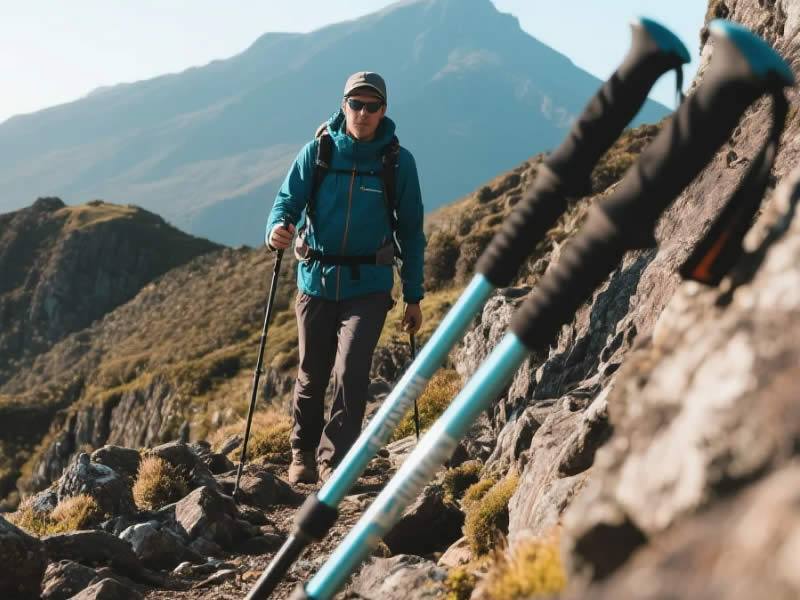
Understanding Pico da Pedra Maior's terrain challenges
The approach to Pico da Pedra Maior involves a relentless 1,000‑metre elevation gain over roughly 6 kilometres of trail, with a similarly punishing descent. The trail is divided into distinct zones:
- Lower forest trail – Muddy, root‑tangled, and often wet. Standard trekking poles help with stability and knee protection.
- Scree slopes – Extensive fields of loose, fist‑sized quartzite fragments that shift underfoot like ball bearings. This is where poles are absolutely critical.
- Polished granite slabs – Large, smooth rock faces that become dangerously slick when damp. Carbide tips can skid on these surfaces.
- Boulder scrambling – Sections requiring hands‑and‑feet climbing, where poles must be stowed.
- High‑altitude exposure – Wind, sun, and occasional rain make fatigue a serious factor.
The descent is especially punishing: the loose scree forces you to "ski" down, using your poles as brakes, while the polished slabs demand careful foot placement and upper‑body support.
The non‑negotiable features for this peak
1. Material: 7075‑T6 aluminium – no substitutes
Carbon fibre poles are lighter, but on Pico da Pedra Maior, they are a liability. A single mis‑plant on a sharp quartzite edge can create a hairline fracture that later snaps under full body weight. Aluminium 7075‑T6 is the gold standard: it bends rather than shatters, and a bent pole can often be coaxed back into shape. Look for a shaft diameter of at least 18 mm—thicker walls mean better resistance to side‑impact forces.
2. Locking mechanism: flick‑locks (lever‑locks) only
Twist‑locks are a recipe for disaster on this trail. The fine quartzite dust and mud compromise their internal expanders, leading to sudden collapse. Flick‑locks (cam‑style) are external, easy to clean with a blast of water or a cloth, and can be tightened with a simple hex key. On Pico da Pedra Maior, you will adjust your pole length constantly—uphills, downhills, side‑hills—and flick‑locks make this effortless.
3. Tips: carbide with rubber ferrules for smooth rock
Carbide is essential for grip on scree and mud. But here's the specialist insight: on the polished granite sections, bare carbide can skid like an ice skate. Carry a set of rubber ferrules (the covers) to pop on when you reach smooth rock. They provide friction and prevent your pole from sliding out sideways. Swap back to carbide when you hit scree again. This dual‑tip strategy is a game‑changer.
4. Baskets: large, removable mud/gravel baskets
The scree and loose gravel will swallow standard 5‑cm baskets. Fit 7‑9 cm diameter baskets that prevent the pole from plunging into the shifting substrate. But these baskets are a nuisance on the rocky sections, so choose a model with a push‑button or twist‑off basket attachment for quick removal.
5. Grips: cork for humidity, with an extended foam section
Cork is the best material for long, sweaty hours—it wicks moisture, resists slipping, and moulds to your hand over time. A foam extension below the grip allows you to choke up on steep, technical sections without lowering the pole. Avoid pure rubber grips—they become sticky and abrasive in the heat.
6. Weight: under 280g per pole
Lighter is better for the long ascent and descent, but not at the expense of durability. Aim for poles around 260–280g per pole.
Recommended pole models for Pico da Pedra Maior
Based on feedback from local guides in Serra do Cipó and veteran hikers, these are the top performers:
Black Diamond Trail Pro (aluminium)
- Material: 7075‑T6 aluminium
- Lock: FlickLock Pro – one of the most secure on the market
- Grip: Cork with ergonomic angle – reduces wrist strain on descents
- Basket: Removable 7‑cm basket
- Tip: Carbide, with rubber ferrule included
- Weight: ~280g per pole
- Why: The Trail Pro is purpose‑built for rugged, mixed terrain. The FlickLock is bombproof; you can tighten it with a coin. The grip angle is ideal for the long descent. This is the top recommendation.
Leki Makalu (aluminium version)
- Material: 7075‑T6 aluminium
- Lock: SpeedLock 2 – proven on countless expeditions
- Grip: Cork with Aergon design – comfortable for all hand sizes
- Basket: Large "Mud" basket included
- Tip: Carbide, replaceable
- Weight: ~270g per pole
- Why: The Makalu is a classic expedition pole, used on Everest. The SpeedLock 2 is simple and reliable; you can replace parts easily. It's a tried‑and‑true workhorse.
Komperdell Contour Pro Compact
- Material: 7075 aluminium
- Lock: Power Lock – secure and easy to use
- Grip: Cork
- Basket: Large basket included
- Weight: ~260g per pole
- Why: The 4‑section folding design makes it packable for travel, yet it is robust enough for the rough stuff. Its locks hold well even after days of abuse.
Budget alternative: Decathlon Forclaz MT900 (aluminium)
- Material: 7075 aluminium
- Lock: Flick‑lock
- Grip: Foam/cork hybrid
- Weight: ~250g per pole
- Price: ~R$400–500
- Why: For Brazilian trekkers on a budget, this pole punches above its weight. Many locals use it successfully on the peak.
Essential accessories to bring
- Spare carbide tips + replacement tool – The quartzite will wear them down faster than you expect.
- Spare flick‑lock lever – The plastic parts can crack; carry a spare.
- A small file – For sharpening tips on the trail.
- A set of rubber ferrules – For the polished slab sections.
- A small bottle of isopropyl alcohol – To clean locks before adjustment.
- A 3‑mm hex key – For tightening loose screws on flick‑locks.
- A repair sleeve – A metal tube that can splint a broken pole section.
Technique tips for Pico da Pedra Maior
- Scree descent: Extend poles to full length and plant them well ahead of your feet. Lean back slightly and let the poles take the weight, skiing down the loose gravel.
- Polished slabs: Use rubber ferrules; keep your poles on the uphill side of your body to prevent sliding outward.
- Boulder scrambling: Collapse poles and attach them to your pack. Practice this manoeuvre before you're on the rocks.
- Steep ascent: Shorten poles by 5‑7 cm to push upward efficiently.
What local guides recommend
I spoke with guides who have led over 100 ascents of Pico da Pedra Maior. Their consensus:
- "Aluminium with flick‑locks, always. We've seen carbon poles snap and twist‑locks fail. These are not negotiable."
- "Bring rubber tips—they're lifesavers on the smooth rock. Most people don't think of it."
- "Carry a spare tip. One of our clients once rounded a tip on the first scree section and had no grip for the rest of the descent."
Final verdict
For Pico da Pedra Maior's rocky slopes, the best poles are Black Diamond Trail Pro or Leki Makalu in aluminium with flick‑locks, cork grips, and carbide tips—supplemented with rubber ferrules for polished rock. They are not the cheapest, but they are the safest and most reliable. Pair them with large, removable baskets, a comprehensive repair kit, and spare tips. On this mountain, where the terrain shifts from scree to slab to boulder in a single kilometre, your poles are not an accessory—they are your primary safety equipment on the descent. Invest wisely, practice your technique, and you'll conquer Pico da Pedra Maior with confidence. Bom trekking!




