




Do I need trekking poles for coastal trail hiking in Paraty?
Paraty, a colonial gem on Brazil's Costa Verde (Green Coast), is famous not only for its cobblestone streets and cachaça distilleries but also for its spectacular coastal trails. These routes weave through pristine Atlantic Forest, linking golden beaches, crossing mangrove swamps, and traversing massive granite slabs that slope directly into the emerald sea. The most famous is the trail to Praia do Sono (Beach of Sleep), a 6‑kilometre trek that encapsulates everything coastal hiking offers—and demands. If you're planning to explore Paraty's trails, you're probably wondering: do I really need trekking poles? The short answer is strongly recommended for longer or multi‑day treks, but optional for short, easy beach walks. This article unpacks why, based on the unique characteristics of Paraty's coastal environment.
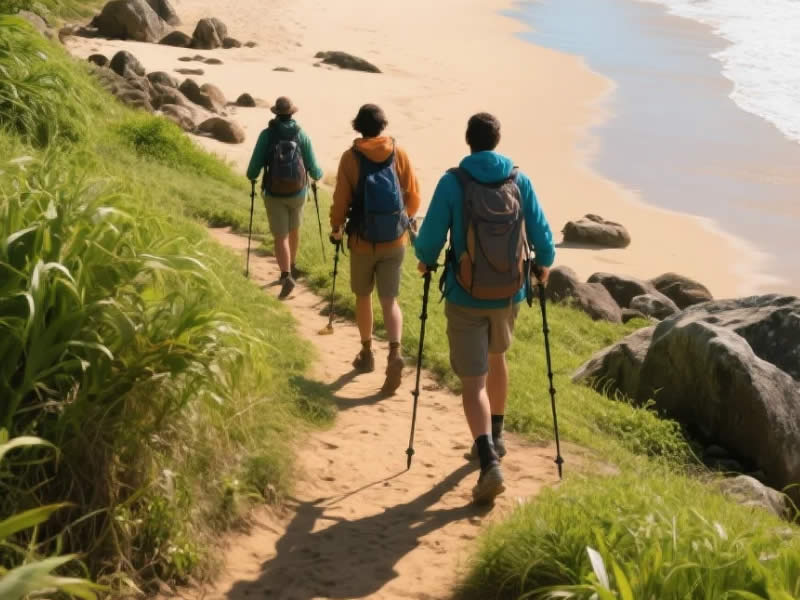
Understanding Paraty's coastal trail terrain
The trails around Paraty are not uniform. They are a mosaic of five distinct surfaces, each with its own challenges:
- Sandy beaches and dunes – Walking on soft sand is tiring; poles help you maintain rhythm and reduce calf fatigue.
- Polished granite slabs – The region's iconic "lajes" (rock slabs) are smooth and often wet from sea spray or rain. They are notoriously slippery.
- Muddy mangrove sections – Black, sticky mud that swallows your feet. Poles without baskets will plunge deep, making progress slow.
- Steep jungle climbs – Ascents with exposed roots, loose soil, and high humidity. You'll sweat profusely and need stable footing.
- River and stream crossings – Several trails require wading across freshwater streams that empty into the ocean.
Your gear must cope with all of these, often within a single hike. Trekking poles, when correctly chosen, are one of the few pieces of equipment that adapt to every one of these surfaces.
Why trekking poles are a major advantage
1. Stability on wet granite slabs
The granite slabs that give Paraty its dramatic coastal scenery are also its greatest hazard. When wet—which is common due to sea mist and tropical rains—they become as slick as ice. Carbide‑tipped poles give you two extra grip points, allowing you to test each step and prevent a potentially injurious fall. Many locals and guides consider poles essential for this reason alone.
2. Knee protection on steep jungle ascents and descents
The trails that climb from sea level to hilltop viewpoints can gain 200‑300 metres of elevation in just a kilometre. On the descent, your knees take a pounding. Poles transfer significant load to your arms, reducing impact on your joints. For multi‑day hikes, this cumulative protection is invaluable.
3. Assisting in muddy mangrove passages
The mangrove mud is deep and sticky. Without baskets, your poles would simply disappear into the mire. With large baskets, they act as stabilisers, helping you maintain balance and keep your feet from sinking too deep. You can also use the poles to probe the firmness of the mud before you commit your weight.
4. Sand walking efficiency
Walking on soft sand engages your calf muscles intensely. Poles allow you to use your upper body to push forward, reducing leg fatigue and helping you maintain a steadier pace over long beach sections.
5. Support on stream crossings
Many trails cross shallow rivers where the rocks are slippery and the current can be swift. Poles give you a third and fourth point of contact, allowing you to brace against the flow and keep your footing.
When poles are optional (or a hindrance)
- For short, easy beach walks – If you're just strolling between adjacent beaches on firm, dry sand, poles are overkill.
- On very flat sections – On level ground, some hikers find poles unnecessary; you can simply carry them in one hand or strap them to your pack.
- In heavy, thick jungle – In dense vegetation, poles can catch on vines and branches. However, this is less of an issue on the well‑maintained Paraty trails.
The saltwater and humidity factor
Paraty's coastal location means high humidity, salt air, and the chance of your poles being splashed by seawater. This has specific implications for your gear:
- Corrosion – Saltwater accelerates rust. Choose aluminium poles (they resist corrosion better than steel) and rinse them with fresh water after every coastal hike.
- Locking mechanisms – Twist‑locks can seize with salt crystals. Flick‑locks (lever‑locks) are more resistant to this problem and easier to clean.
- Grips – Cork is ideal; it absorbs sweat and provides a secure hold even when wet. Rubber grips can become sticky and uncomfortable in high humidity.
Choosing the right poles for Paraty
- Material: 7075‑T6 aluminium – corrosion‑resistant and durable. Carbon is lighter but can crack if wedged between rocks.
- Lock: Flick‑locks – easy to clean and adjust; they won't seize up from salt.
- Grip: Cork – moisture‑wicking and comfortable.
- Baskets: Large (7‑9 cm) – essential for sand and mud; removable for rocky sections.
- Tips: Carbide – for grip on rock. Bring spare tips; the granite and sand are abrasive.
- Weight: Under 280 g per pole.
Top recommendations: Black Diamond Trail Pro, Leki Makalu (aluminium), or Decathlon Forclaz MT900.
Essential post‑hike maintenance
After every coastal hike in Paraty, rinse your poles thoroughly with fresh water—especially the locking mechanisms and baskets. Allow them to dry completely before collapsing. Apply a light coat of dry lubricant (graphite powder) to the sliding surfaces to prevent sticking. This routine will extend the life of your poles significantly.
The verdict
For the classic coastal trails of Paraty—including the route to Praia do Sono, the Saco do Mamanguá, or the longer crossings between beaches—trekking poles are highly recommended. They are not strictly essential for short, easy walks, but for anyone tackling the longer, more technical routes, they significantly enhance safety, reduce fatigue, and protect your knees. The combination of slippery granite, deep mud, and soft sand makes poles a practical investment in your hiking comfort and safety.
So, before you pack your bag for Paraty, consider the length and difficulty of your planned hikes. If you're doing anything beyond a gentle beach stroll, bring a pair of aluminium flick‑lock poles with cork grips and large baskets—and don't forget to rinse them after. Your knees, ankles, and overall enjoyment will be the better for it. Bom caminho!




