




What are the best trekking poles for walking on Brazilian sandy beaches?
Brazil's coastline stretches over 7,000 kilometres, from the windswept dunes of Lençóis Maranhenses to the famous beaches of Copacabana and Ipanema. Walking on sandy beaches is a beloved activity for locals and tourists alike—whether it's a morning fitness walk, a sunset stroll, or a multi‑day trek along the Costa Verde. But if you've ever tried to walk any distance on soft sand, you know it can be exhausting. Your calves burn, your pace slows, and your balance wobbles. Enter trekking poles—but not just any poles. The unique demands of beach walking require a very specific set of features. In this guide, we'll cover exactly what to look for and recommend the best models for Brazilian sandy beaches.
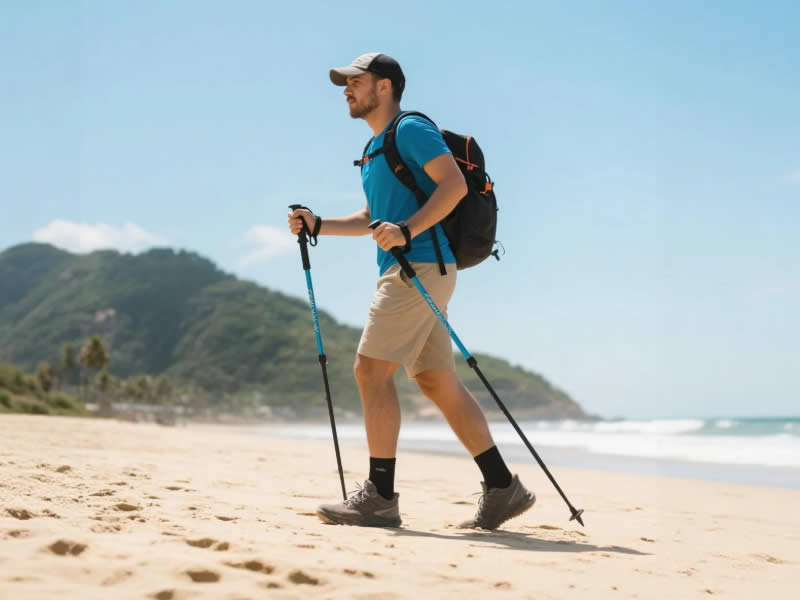
Why beach walking is different from mountain hiking
Walking on sand is biomechanically different from walking on firm trails:
- Soft, unstable surface – Your foot sinks slightly with every step, requiring more energy and engaging stabilizing muscles.
- Inconsistent firmness – Wet sand near the waterline is compacted and firm; dry sand above the tide line is loose and deep.
- Sloping terrain – Beaches often have a pronounced slope from the waterline to the dunes, which can stress one side of your body more than the other.
- Saltwater and sand – These are abrasive and corrosive to metal components and moving parts.
- Long distances – Beach walks can be many kilometres of continuous flat (but demanding) terrain, increasing repetitive strain on joints and muscles.
Trekking poles designed for beach walking must address these factors while being durable enough to withstand the harsh coastal environment.
Essential features for beach‑specific poles
1. Large baskets (7–9 cm) are non‑negotiable
On a mountain trail, standard 5‑cm baskets prevent the pole from sinking into soft mud. On a beach, you need larger baskets—like snow baskets—to spread the load over the soft sand. Without them, your poles will plunge deep into the sand with every plant, making them more of a hindrance than a help. Look for poles with removable large baskets, so you can swap them for smaller ones when walking on rocky or paved sections.
2. Material: aluminium over carbon
Carbon fibre poles are lighter, but beach sand is highly abrasive and can work its way into the weave of carbon laminates, causing wear and delamination over time. Aluminium, especially 7075‑T6, is more resistant to abrasion and is also less likely to fail if you accidentally wedge a pole between rocks. It's also easier to rinse and clean of salt residue.
3. Locking mechanism: flick‑locks (lever‑locks)
Sand is the enemy of twist‑locks. Fine grains infiltrate the expander mechanism, causing it to slip or seize. Flick‑locks, being external and open, are easy to clean with a quick rinse or a blast of air. They also allow you to adjust pole length quickly—essential if you're moving between soft sand (shorten slightly) and firm wet sand (lengthen for more reach).
4. Grip: cork or EVA foam
The humidity and sweat of beach walking call for a grip that doesn't become slippery. Cork is the best option—it wicks moisture, conforms to your hand, and provides a secure hold even with sweaty palms. Extended foam sections below the grip are useful for holding the pole lower when walking on steeper slopes.
5. Tips: carbide with rubber ferrules
Carbide tips penetrate compacted wet sand and provide stability. However, when walking on paved promenades or rocky headlands, carbide can skid and also damage surfaces. A set of rubber ferrules (tip covers) allows you to switch to a softer, quieter, and more friction‑friendly mode for hard surfaces.
6. Corrosion resistance
Saltwater spray and sweat are corrosive. Choose poles with stainless steel screws and anodised aluminium finishes. Rinse them after every beach use with fresh water—this is the most important maintenance step.
Top pole models for Brazilian beaches
Black Diamond Trail Pro (aluminium)
- Baskets: Removable 7‑cm snow/mud baskets included—perfect for soft sand.
- Lock: FlickLock Pro, external and sand‑resistant.
- Grip: Cork, comfortable for sweaty hands.
- Tips: Carbide, with rubber ferrules included.
- Weight: ~280 g per pole.
- Why: The Trail Pro's large baskets and reliable locks make it ideal for beach walking. It's durable, easy to clean, and the cork grip stays comfortable over long distances.
Leki Makalu (aluminium)
- Baskets: Large "Mud" basket included—similar to a snow basket.
- Lock: SpeedLock 2, a proven flick‑lock system.
- Grip: Cork with Aergon design.
- Weight: ~270 g per pole.
- Why: The Makalu is an expedition‑proven pole that performs equally well on sand. Its locking mechanism is simple and reliable, and replacement parts are widely available.
Budget alternative: Decathlon Forclaz MT900 (aluminium)
- Baskets: Comes with large baskets suitable for sand.
- Lock: Flick‑lock.
- Grip: Foam/cork hybrid.
- Weight: ~250 g per pole.
- Price: R$400–500.
- Why: For Brazilian beach walkers on a budget, this is an excellent choice. It's lightweight, durable, and easy to maintain. Many users report it handles soft sand well with the included baskets.
Tips for beach walking with poles
- Adjust length for slope: When walking along a sloping beach, keep the pole on the downhill side slightly shorter and the uphill side longer to maintain even arm positions.
- Wet sand vs. dry sand: On wet, firm sand, you can use smaller baskets or none at all. On dry, soft sand, always attach the large baskets.
- Wrist straps: Use them correctly—hand up through the strap, then grip. This allows you to push on the poles without squeezing, reducing hand fatigue.
- Pace and rhythm: A steady 2:2 rhythm (two steps, two pole plants) works well on flat sand. For soft sand, shorten the poles to create a more vertical plant.
- Sun protection: The beach is exposed. Choose poles with reflective markings or light colours (they stay cooler) and don't forget sunscreen on your hands if they are exposed.
Maintenance after beach use
Salt and sand are the biggest threats to your poles' longevity:
- Rinse the entire pole with fresh water immediately after each beach walk—especially the locks, baskets, and tip area.
- Shake off excess water and let them dry completely before collapsing.
- Periodically, wipe the sliding sections with a cloth to remove salt deposits.
- If the flick‑lock feels gritty, unscrew the lever and clean the cam surface with a small brush.
- Lubricate the threads of the lever screw with a tiny drop of oil (but never the sliding surfaces, which should remain dry).
The verdict
For walking on Brazilian sandy beaches, the best trekking poles are those with large, removable baskets, flick‑locks, cork grips, and aluminium construction. The Black Diamond Trail Pro and Leki Makalu are the top performers, with the Decathlon Forclaz MT900 offering an excellent budget alternative. With proper maintenance—especially rinsing after each use—these poles will serve you faithfully along Brazil's stunning coastline, turning a tiring sand slog into a rhythmic, enjoyable beach walk. Bom passeio!




