




What are the best lightweight trekking poles for coastal walking in Bahia?
Bahia's coastline is a treasure trove of natural beauty—from the pristine beaches of Porto Seguro to the dramatic cliffs of Morro de São Paulo, from the endless coconut groves to the crystal‑clear waters of the Costa do Sauípe. Walking these shores is a sensory delight, but it can also be physically demanding. The combination of soft sand, intense heat, high humidity, and salty air presents unique challenges that demand a carefully chosen trekking pole. If you're planning coastal walks in Bahia, you need poles that are lightweight, corrosion‑resistant, and equipped for sandy terrain. This guide will help you find the perfect pair.
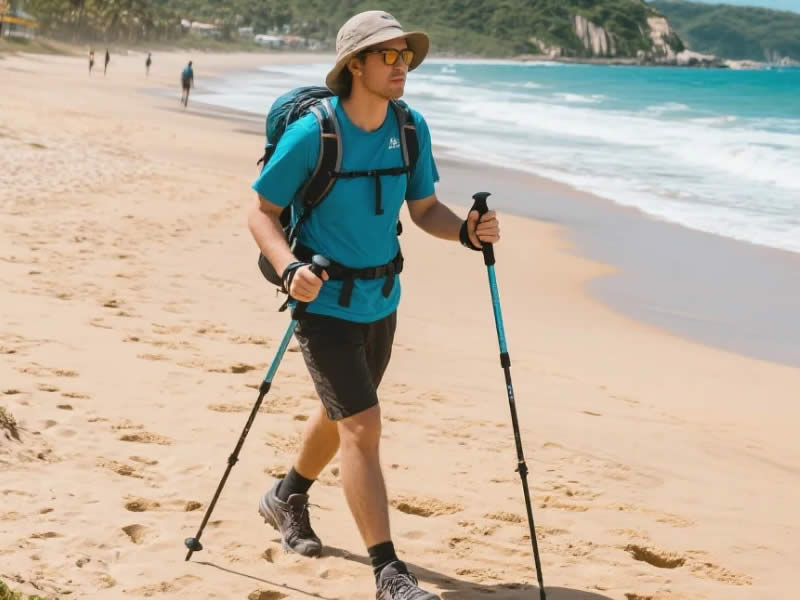
Why lightweight poles matter on Bahia's coast
In Bahia's tropical climate, every gram counts. The heat and humidity mean you'll sweat more, and the soft sand requires more effort per step. Carrying heavy poles adds to that fatigue, making even a moderate walk feel like a slog. Lightweight poles (under 250 grams per pole) reduce arm strain, allow a faster cadence, and make it easier to swing your arms naturally. You'll also appreciate the reduced weight when you need to carry the poles in one hand or stow them on your backpack during short breaks.
However, "lightweight" should not come at the expense of durability. The coastal environment is harsh: sand is abrasive, salt is corrosive, and the sun's UV rays degrade plastics and rubbers. The ideal pole must strike a balance between feather‑light construction and robust resilience.
Key features for Bahia's coastal conditions
1. Material: carbon vs. aluminium
Carbon fibre poles are the lightest (often under 200 g per pole) and dampen vibration, which is a boon on long, monotonous beach walks. However, they are more brittle—if a pole wedges between rocks or gets caught in a strong wave, it could crack. Aluminium poles, particularly those made from 7075‑T6 alloy, are slightly heavier (250‑280 g) but far more durable. They bend rather than shatter, and they resist abrasion from sand better over the long term.
Recommendation: For pure beach walking with no rocky sections, carbon is a great choice. If your route includes rocky headlands or coral reef areas, aluminium is the safer bet. Many coastal treks in Bahia mix both—so consider your specific itinerary.
2. Locking mechanism: flick‑locks over twist‑locks
Fine sand is the nemesis of twist‑locks. The abrasive particles infiltrate the internal expander, causing it to slip or seize entirely. Flick‑locks (lever‑locks) are external and easy to clean with a quick rinse or a blast of air. They also allow for rapid length adjustment—essential when moving between wet, firm sand and dry, soft sand. For Bahia's coast, flick‑locks are non‑negotiable.
3. Grips: cork for the heat
Bahia's humidity will make your hands sweat within minutes. Cork grips are superior because they wick moisture, remain comfortable even when wet, and conform to your hand over time. Foam grips are lighter but can become slippery with sweat. Rubber grips are generally too sticky in high heat. Choose cork—it's worth the extra grams.
4. Baskets: large, removable sand baskets
As discussed in our previous guides, large baskets (7‑9 cm) are essential for preventing poles from sinking into soft sand. For Bahia, ensure these baskets are removable—you'll want to take them off when walking on the paved promenades of Salvador or on rocky sections. Some poles come with a universal "sand/snow" basket system; others require specific models. Check compatibility before buying.
5. Tips: carbide with spare tips
Carbide tips provide excellent grip on compacted wet sand and the rare rocky outcrops. However, Bahia's sand is often quartz‑rich, which is highly abrasive. Your tips will wear faster than on mountain trails. Always carry a spare set and the tool to replace them. Some poles include a rubber ferrule (tip cover) for walking on hard surfaces—this is a useful accessory.
6. Corrosion resistance
Saltwater spray and sweat will corrode unprotected metal. Look for poles with stainless steel screws and anodised aluminium finishes. Rinsing after every beach walk is the single most important maintenance step, regardless of the pole's corrosion resistance.
Top lightweight pole recommendations for Bahia
Black Diamond Distance Carbon Z
- Material: Carbon fibre
- Weight: ~155 g per pole (ultra‑light)
- Lock: Z‑Pole twist‑lock (folding design) – quick to deploy
- Grip: EVA foam (lightweight, but not cork)
- Baskets: Sold separately—add the "Snow" or "Mud" baskets for sand
- Why: This is the lightest option available. It's ideal for long, flat beach sections where you want minimal arm strain. The folding design makes it highly packable. The downside: the foam grip is not as sweat‑resistant as cork, and the carbon is fragile on rocky terrain. Best for pure beach use.
Leki Micro Vario Carbon
- Material: Carbon fibre
- Weight: ~210 g per pole
- Lock: SpeedLock 2 (flick‑lock) – reliable and easy to adjust
- Grip: Cork – excellent for the heat
- Baskets: Large "Mud" basket included
- Why: The Micro Vario is a folding pole that packs down small but still offers a flick‑lock for adjustment. The cork grip is a winner for Bahia's humidity. It's a great all‑rounder for coastal walking with occasional rocky sections. Pricier than the Decathlon option, but very high quality.
Decathlon Forclaz MT900 (aluminium)
- Material: 7075‑T6 aluminium
- Weight: ~250 g per pole
- Lock: Flick‑lock
- Grip: Foam/cork hybrid
- Baskets: Large "sand/snow" baskets included
- Price: R$400‑500 – excellent value
- Why: For Brazilian walkers on a budget, this is the clear winner. It's durable, lightweight enough for long walks, and comes with the baskets you need. Many users report it holds up well against the salt and sand. The hybrid grip is not quite as good as pure cork, but it's adequate for most.
Essential accessories and maintenance
- Spare baskets – They can crack against rocks; a spare set is cheap insurance.
- Spare carbide tips + replacement tool – The abrasive sand will wear them down.
- A small hex key – For tightening flick‑lock screws if they loosen.
- Freshwater rinse – After every beach walk, rinse poles thoroughly, especially the locks and basket attachments. Salt left to dry is the main cause of lock failure.
- Dry lubricant – Apply graphite powder to the sliding surfaces occasionally to keep them smooth (never oil).
The verdict
For coastal walking in Bahia, the best lightweight trekking poles are those that combine low weight (under 250g), flick‑locks, cork grips, and large removable baskets. The Leki Micro Vario Carbon offers the best balance of weight, features, and quality, while the Decathlon Forclaz MT900 is the top budget choice. If you're looking for extreme lightness and are walking only on sand, the Black Diamond Distance Carbon Z is unbeatable—just remember to add the large baskets.
Whichever you choose, maintain them well: rinse after every use, store them dry, and replace tips when worn. With the right poles, Bahia's stunning coast is yours to explore comfortably, efficiently, and with knees that stay happy. Bom caminho!




