




What are the best trekking poles for crossing peat bogs in the Peak District?
The Peak District is a walker's paradise—rolling hills, dramatic gritstone edges, and wide, open moorland that feels like the roof of England. But for every stunning view, there's a hidden challenge lurking beneath your feet: peat bogs. These deep, dark, and often treacherous expanses of saturated sphagnum moss and decaying vegetation can turn a pleasant hike into a nightmare. One wrong step and you're knee‑deep in black, sucking mud. In this environment, your trekking poles are not just an aid—they are a critical safety tool. But not just any pole will do. This guide will tell you exactly what features you need and which models are best for conquering the Peak District's boggy terrain.
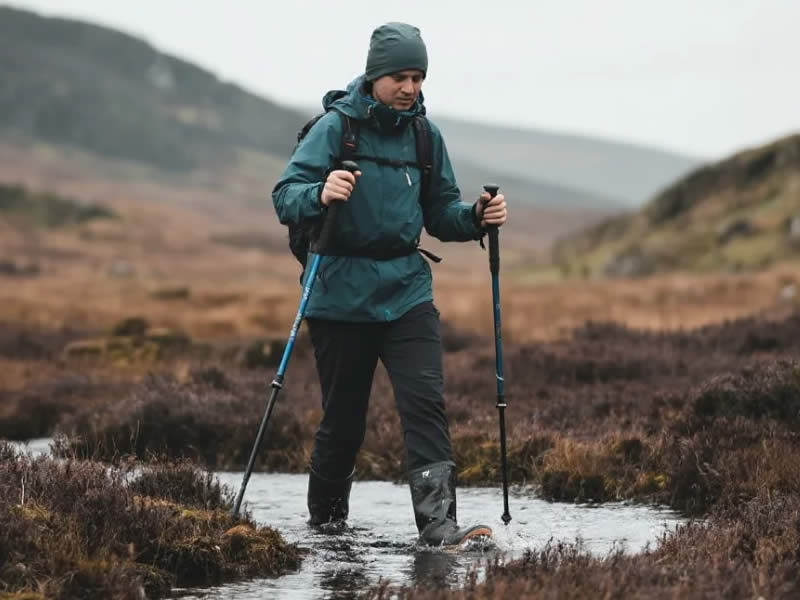
Why peat bogs are a unique challenge
The bogs of the Peak District are different from the muddy trails you might encounter elsewhere. They are:
- Deep and unstable – The peat can be several metres thick and is often soft enough to swallow a pole (or a leg) entirely.
- Acidic and abrasive – Peat is highly acidic and contains fine, gritty particles that wear down metal and plastic components.
- Wet, cold, and muddy – You'll be working in constant moisture, with mud that clings to everything.
- Hiding rocks and roots – Beneath the surface, there are often hidden stones and tree roots that can trap or bend your pole.
Your poles must be able to handle all of these conditions while providing reliable support and stability.
Essential features for bog‑crossing poles
1. Large, deep‑penetration baskets (9 cm or larger)
On soft peat, standard 5‑cm baskets will sink immediately, offering no support. You need large, mud‑specific baskets (often called "mud baskets" or "snow baskets" in the UK) that are at least 9 cm in diameter. These act like flotation devices, spreading the load and preventing your poles from plunging into the abyss. Some walkers even use customised plates or discs for extreme bog conditions.
Pro tip: Choose baskets that are removable so you can swap them for standard ones when you reach rocky or paved sections.
2. Material: aluminium over carbon
Carbon fibre poles are lighter, but they are more brittle. In a bog, you'll often plant your pole into an unseen crevice between rocks, and a sudden lateral twist can snap a carbon shaft. Aluminium 7075‑T6 is far more forgiving; it bends rather than shatters, and a bent pole can often be straightened enough to get you back to the trailhead. For the Peak District's bogs, aluminium is the safer choice.
3. Locking mechanism: flick‑locks are non‑negotiable
Twist‑locks are a disaster on bogs. The fine peat and grit infiltrate the internal expander mechanism, causing it to slip or seize. Flick‑locks (lever‑locks) are external and can be cleaned simply by dipping the pole in a stream or wiping it with a cloth. They also allow you to adjust the pole length quickly—essential when you're probing the depth of a bog before stepping into it.
4. Grips: cork for moisture management
In the wet, cool climate of the Peak District, your hands will be damp. Cork grips are the best choice because they absorb moisture, stay comfortable, and provide a secure hold even when muddy. Foam grips can become slippery; rubber grips are too sticky and abrasive. Cork also conforms to your hand over time, improving comfort on long days.
5. Tips: carbide with a sharp profile
Carbide tips are essential for gripping the hidden rocks and roots that lie beneath the peat. A blunt tip will skid on stone, compromising your balance. Replaceable tips are a must—you'll wear them out quickly on the gritty peat. Carry a spare set and the tool to change them.
6. Weight: under 280g per pole
You'll be swinging these poles for hours, possibly over 15–20 km of boggy terrain. Each gram matters, but don't sacrifice durability. An aluminium pole weighing 260–280g strikes the right balance.
Top pole models for peat bogs
Based on feedback from Peak District walkers, local guides, and gear reviews, these models stand out:
Black Diamond Trail Pro (aluminium)
- Material: 7075‑T6 aluminium
- Lock: FlickLock Pro – extremely reliable and user‑serviceable
- Grip: Cork with ergonomic angle – reduces wrist strain
- Baskets: Removable 9‑cm mud baskets included
- Tips: Carbide, replaceable
- Weight: ~280 g per pole
- Why: The Trail Pro is the workhorse of bog crossings. The large baskets are perfect for soft peat, the FlickLock is bombproof, and the cork grip stays comfortable in the damp. It's the top recommendation.
Leki Makalu (aluminium)
- Material: 7075‑T6 aluminium
- Lock: SpeedLock 2 – quick and secure
- Grip: Cork with Aergon design
- Baskets: Large "Mud" basket included (9 cm)
- Tips: Carbide, replaceable
- Weight: ~270 g per pole
- Why: The Makalu is a classic expedition pole that performs brilliantly on the moors. Its locking mechanism is simple, reliable, and easy to repair in the field. Many UK walkers swear by it.
Pacerpoles (aluminium)
- Material: 7075‑T6 aluminium
- Lock: Flick‑lock
- Grip: Ergonomic with a forward angle – unique design that reduces wrist strain
- Baskets: Large mud baskets available as an accessory
- Weight: ~270 g per pole
- Why: Pacerpoles are a British brand and are particularly popular in the Peak District. The ergonomic grip angle encourages a natural arm swing and reduces fatigue on long traverses. They are a bit unusual but highly effective for boggy terrain.
Decathlon Forclaz MT900 (aluminium)
- Material: 7075 aluminium
- Lock: Flick‑lock
- Grip: Foam/cork hybrid
- Baskets: Large sand/mud baskets included
- Weight: ~250 g per pole
- Price: Budget‑friendly
- Why: For walkers on a budget, this pole performs admirably in bogs. The large baskets and flick‑locks make it suitable for the terrain, and the weight is impressively low. It's a great entry‑level option.
Essential accessories for bog walking
- Spare baskets – The large baskets can crack against hidden rocks; carry a spare pair.
- Spare carbide tips + replacement tool – The abrasive peat will wear them down faster than normal.
- A small hex key – For tightening flick‑lock screws if they loosen.
- A small cloth or sponge – To wipe mud and grit off the locks before adjusting.
- A water bottle – You can use it to rinse the locks if they get clogged.
Technique tips for crossing bogs
- Probe before you step: Use your pole to test the depth of the bog ahead of you. If the pole sinks more than 30 cm without resistance, find another route.
- Plant widely: Keep your poles planted wide to create a stable tripod (two poles plus one leg). This is especially important when the footing is uncertain.
- Shorten for deep sections: If the bog is particularly soft, shorten your poles by 5‑7 cm. This reduces the leverage that causes the tip to sink deeper.
- Wear gaiters: Not directly pole‑related, but they'll keep mud and water out of your boots, making the crossing more comfortable.
Maintenance after bog crossings
Peat is acidic and corrosive. After a boggy day:
- Rinse thoroughly with fresh water—pay special attention to the locks and basket attachments.
- Dry completely before collapsing.
- Lubricate sparingly—a tiny drop of light oil on the flick‑lock lever can prevent sticking (but never on the sliding surfaces).
- Check the tips—if they're rounded, replace them before your next walk.
Final verdict
For crossing peat bogs in the Peak District, the best poles are Black Diamond Trail Pro or Leki Makalu in aluminium, with flick‑locks, cork grips, and large (9 cm) removable mud baskets. These poles are durable, reliable, and designed to handle the harsh conditions of the moor. If you're on a budget, the Decathlon Forclaz MT900 is a solid alternative. Remember: in boggy terrain, your poles are more than an accessory—they are your first line of defence against a wet, cold, and potentially dangerous misstep. Equip them wisely, and the Peak District's bogs will become just another beautiful part of the landscape. Happy walking!




