




Do trekking poles work well on chalky, crumbly downland in the South Downs?
The South Downs National Park, with its rolling white cliffs, sweeping valleys, and iconic Seven Sisters, is a hiker's paradise. But its defining feature—the soft, crumbly chalk that gives the landscape its luminous glow—also presents a unique set of challenges underfoot. Whether you're tackling the steep scarp slopes or traversing the exposed ridgelines, you may wonder: are trekking poles actually helpful here, or do they just sink into the chalky dust and cause more trouble? The short answer is yes, they work exceptionally well—provided you choose the right tips, baskets, and locks. This article delves into why poles are a game‑changer on the South Downs and how to optimise them for this special terrain.
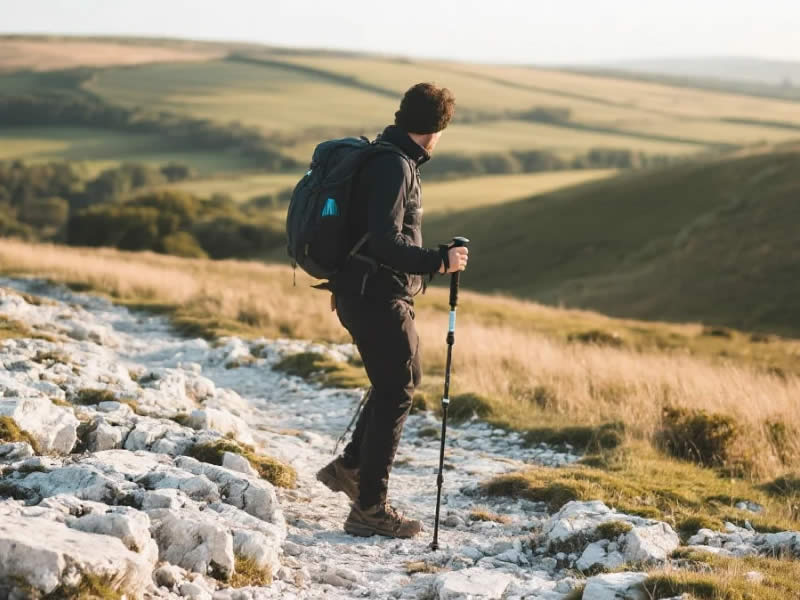
The nature of South Downs chalk
Chalk is a soft, porous limestone formed from marine plankton. On the surface, it weathers into a fine, powdery dust in dry conditions, and becomes a slick, slippery paste when wet. The trails are often narrow, winding along the edges of steep combes, with loose flint nodules scattered among the chalk. This means you're dealing with a triple threat: unstable footing on steep slopes, slippery surfaces after rain, and deep chalk dust that can swallow a standard pole basket.
Why trekking poles are a great match for this terrain
1. Superior grip with carbide tips
On chalk, the surface is generally too soft for rubber ferrules—they skid across the powdery or wet surface like a car on ice. Carbide tips, however, are designed to bite. Their hard, pointed profile penetrates the chalk's surface, providing a firm anchor even on steep, loose slopes. This is especially crucial when you're descending the notorious scarp faces, where a slip could lead to a nasty tumble.
2. Knee protection on relentless descents
The South Downs Way (and its many branch trails) is famous for its "up and down" nature—you gain and lose hundreds of metres of elevation repeatedly. Each descent sends shockwaves through your knees. By transferring 20‑30% of your body weight to your arms, poles dramatically reduce impact, allowing you to walk longer and recover faster.
3. Stability on narrow, crumbling ridges
Many sections of the Downs are perched on narrow, exposed ridges with steep drops on either side. The chalk edge often crumbles underfoot. Two extra points of contact give you a much wider base of support, so you can step confidently even when the ground gives way. Planting a pole before each step lets you test the firmness of the ground ahead, avoiding unexpected collapses.
4. Preventing sinkage in chalk dust
In dry summer months, the chalk paths can be covered in a thick layer of fine, flour‑like dust. Standard small baskets will sink into this powder, making the poles heavy and ineffective. Fitting large mud or snow baskets (7‑9 cm) spreads the load and keeps the tips near the surface, so you get consistent support without the drag.
Key considerations for South Downs pole use
Locking mechanism: choose flick‑locks
Chalk dust is fine and highly abrasive. It can infiltrate the internal expanders of twist‑lock poles, causing them to jam or slip unpredictably. Flick‑locks (lever‑locks) are external and much easier to clean—just a quick wipe or a blast of air clears the dust. They also allow rapid adjustment, which is handy when you move from a steep downhill to a flat ridge.
Baskets: removable and large
As mentioned, large baskets are essential for dry, dusty conditions, but they can be a nuisance on the grassy, firmer sections. Opt for removable baskets so you can swap them or remove them entirely when not needed. Many walkers carry a spare set of smaller baskets in their pack for variety.
Tips: keep them sharp
Chalk is abrasive and can blunt carbide tips over time. Check your tips regularly—a rounded tip will skid on hard flint or compacted chalk. Bring spare tips and a replacement tool for longer walks.
Post‑walk cleaning
Chalk is alkaline and can corrode aluminium and steel if left to dry on the pole. After a South Downs hike, rinse your poles thoroughly with fresh water—especially the locks and basket attachments. A soft brush can help remove stubborn chalk dust. Dry them completely before collapsing.
When you might prefer to go without poles
While poles are beneficial on most of the South Downs, there are a few situations where they might be more trouble than they're worth:
- Very short, gentle strolls – If you're doing a flat, grassy section for just a couple of kilometres, the benefit is marginal.
- Very narrow, overgrown paths – In dense scrub or tunnel‑like sections, poles can get tangled. Collapse them and carry them.
- If you're a very experienced walker with perfect knees – Some fit hikers simply prefer the freedom of hands‑free walking. However, even they often appreciate poles on the steep descents.
Recommended poles for the South Downs
Given the terrain, the ideal pole is aluminium (7075‑T6) with flick‑locks, cork grips, carbide tips, and removable large baskets. Top models include:
- Black Diamond Trail Pro – reliable locks, comfortable cork grip, and large baskets included.
- Leki Makalu – expedition‑proven, excellent mud baskets, and a secure SpeedLock.
- Decathlon Forclaz MT900 – a budget‑friendly alternative that performs well on chalk.
Final verdict
Yes, trekking poles work exceptionally well on the chalky, crumbly downland of the South Downs. Their carbide tips bite into the soft chalk, large baskets prevent sinkage, and the added stability is a lifesaver on steep, narrow ridges. With the right maintenance—especially thorough cleaning after each walk—they will become an indispensable companion on this beautiful, challenging landscape. So grab your poles, adjust your baskets, and enjoy the sweeping views of the South Downs with confidence. Happy hiking!




