




Can I use trekking poles with mud baskets on the boggy sections of the Pennine Way?
The Pennine Way—Britain's oldest national trail—stretches for 268 miles from Edale in the Peak District to Kirk Yetholm in the Scottish Borders. It's a walker's dream and a gear tester's nightmare. The trail is notorious for its long, wet, and often bottomless peat bogs, particularly across the high moorland sections of the Peak District, the Yorkshire Dales, and Northumberland. If you're planning to tackle this iconic route, you'll quickly realise that a standard trekking pole setup won't cut it. The question is: can you use trekking poles with mud baskets on these boggy sections? The short answer is not just "yes," but "absolutely essential." In this guide, I'll explain why mud baskets are a non‑negotiable piece of gear for the Pennine Way, how to choose the right ones, and how to use them effectively.
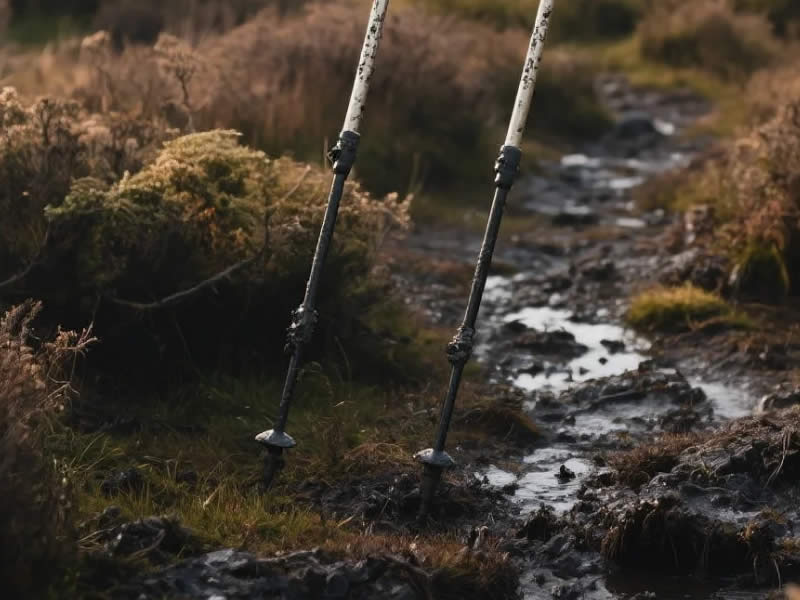
Why mud baskets are essential on the Pennine Way
The bogs of the Pennine Way are not like the muddy patches you might find on a forest trail. They are deep, unstable, and often covered with a deceptive layer of vegetation that can collapse under your weight. Standard trekking pole baskets (4‑5 cm in diameter) are designed for firm ground. When you plant them in a peat bog, they simply punch through the surface and disappear into the black, watery mire. The pole sinks deep, and instead of providing support, it becomes a hindrance—you're now spending energy pulling it out rather than propelling yourself forward.
Large mud baskets (9‑12 cm in diameter) change this dynamic. They act like snowshoes for your poles, spreading the load over a wider area and preventing the tip from plunging into the soft ground. This keeps the pole near the surface, giving you the leverage and stability you need to cross the bog safely. On the Pennine Way, where a misstep can land you knee‑deep in freezing peat, this is not a convenience—it's a safety feature.
Choosing the right mud baskets for the Pennine Way
Not all mud baskets are created equal. Here's what to look for:
1. Diameter: 9 cm or larger
The larger the basket, the more flotation it provides. For the deepest Pennine Way bogs, some walkers use 10‑12 cm "snow" baskets, which offer maximum surface area. The downside is that they can be cumbersome on drier, rocky sections. Opt for a basket that is at least 9 cm and, ideally, removable so you can swap it out when you reach harder ground.
2. Open or slotted design
Choose baskets with an open lattice or slots (like Leki's Mud Basket or Black Diamond's Mud basket). These allow the sticky peat to squeeze through as you plant and lift the pole, rather than building up inside a solid cup. This self‑cleaning feature reduces the weight and drag of mud accumulation.
3. Compatibility with your pole brand
Not all baskets fit all poles. Check that the basket's attachment system matches your pole (push‑button, twist‑on, or screw‑on). Major brands like Black Diamond, Leki, Komperdell, and Decathlon offer universal baskets that fit a wide range of poles. If in doubt, bring your pole to a store to test the fit.
4. Flexibility
A basket that can flex slightly is less likely to crack if you accidentally plant it on a hidden rock. Rigid plastic baskets can shatter under the pressure of a sudden impact.
The best pole and basket combinations for the Pennine Way
Top recommendation: Black Diamond Trail Pro with large mud baskets
- Pole: 7075‑T6 aluminium, FlickLock Pro, cork grip.
- Basket: Black Diamond's 9‑cm "Mud" basket, which has a slotted, self‑cleaning design.
- Why: The FlickLock is bombproof in wet conditions, the cork grip stays comfortable, and the mud basket offers excellent flotation without clogging.
Top recommendation: Leki Makalu with Leki Mud Basket
- Pole: 7075‑T6 aluminium, SpeedLock 2, cork grip.
- Basket: Leki's "Mud" basket (cross‑shape, 9 cm).
- Why: Leki's mud basket is a classic design that sheds mud effectively. The SpeedLock 2 is secure and easy to adjust, even with cold, wet hands.
Budget alternative: Decathlon Forclaz MT900 with large sand/snow baskets
- Pole: 7075 aluminium, flick‑lock, foam/cork hybrid grip.
- Basket: The large "sand/snow" basket (9 cm) sold separately.
- Why: This budget combination performs admirably on the Pennine Way. The basket is slightly more cup‑shaped, so it may need more frequent tapping to shed mud, but it's effective.
On‑trail techniques for using mud baskets in bogs
Having the right basket is only half the battle. How you use it makes a big difference:
1. Probe before you step
Use your pole as a probe to test the depth of the bog ahead of you. Push the tip into the ground; if it sinks more than 30‑40 cm without resistance, the bog is deep and you should find an alternative route (stepping on tussocks or vegetation).
2. Plant firmly and lift vertically
When you plant the pole, push it in with a firm, decisive motion. The basket will spread the load and stop the tip from sinking too deep. When you lift, pull the pole straight up—avoid twisting or waggling, which can enlarge the hole and make the next plant unstable.
3. Tap to shed mud
After a particularly muddy section, tap the two baskets together firmly. The impact will dislodge the sticky peat before it has time to dry and harden. This keeps the baskets light and functional.
4. Adjust length for the terrain
Shorten your poles by 5‑7 cm when crossing deep bogs. This reduces the leverage that drives the tip downward, making it less likely to sink deep. When you reach firmer ground, lengthen them back to your normal height.
Maintenance after the Pennine Way
Peat is acidic and highly abrasive. After a day of bog‑bashing, your poles need care:
- Rinse thoroughly with fresh water—especially the baskets, locking mechanisms, and tip threads.
- Dry completely with the locks open to prevent corrosion.
- Inspect the baskets for cracks and the tips for wear. Replace them if needed.
- Apply a dry lubricant (graphite powder) to the locking mechanisms to keep them smooth.
When to remove mud baskets
On the Pennine Way, you'll alternate between bog, grass, rock, and paved sections. Mud baskets are essential on the bogs, but they can be a nuisance on rocky ground (they catch on rocks and add unnecessary weight). If your baskets are removable, take them off when you're on well‑drained, firm terrain. Keep a small cloth bag in your pack to store them safely.
The verdict
Can you use trekking poles with mud baskets on the boggy sections of the Pennine Way? Yes—and you absolutely should. Large mud baskets are not a luxury; they are a practical necessity for crossing the deep, unstable peat bogs that define this iconic trail. They keep your poles from sinking, provide essential stability, and reduce the physical toll of navigating the bogs. Choose baskets of at least 9 cm diameter, preferably with a slotted or open design, and pair them with reliable aluminium poles with flick‑locks. With the right setup and a bit of practice, you'll cross the Pennine Way's bogs with confidence, keeping your poles—and your sanity—above the mire. Happy walking!




